
Turkish Cypriot researcher and author Mete Hatay has called for a clear distinction between territorial negotiations and the individual right to private property. He criticised the Turkish side’s longstanding policy of postponing the resolution of property claims until a comprehensive Cyprus settlement is reached.
Hatay argued in a social media post that the European Court of Human Rights ruling in the Titina Loizidou case demonstrated that this approach could no longer be sustained on legal grounds.
Territory and private ownership are separate
Hatay said the Turkish side’s strategy had for years been based on the position that both territory and property formed part of the wider negotiations. Under this approach, no property should be returned before a comprehensive settlement.
“Territory and private property are not the same thing. Territory concerns political sovereignty and the borders of the constituent state, while private property concerns the rights of the individual,” he said.
Criticism of the Immovable Property Commission
Hatay also referred to the so-called Immovable Property Commission in the north, noting that it was established to address individual rights violations and offers three forms of remedy: restitution, financial compensation and property exchange.
He argued, however, that the Turkish side had failed to provide sufficient funds for compensation, leaving Turkey to cover much of the financial burden.
Hatay recalled that, during the commission’s early years, priority was supposed to be given to returning properties that had no current users. In practice, he said, the number of properties returned has remained extremely limited.
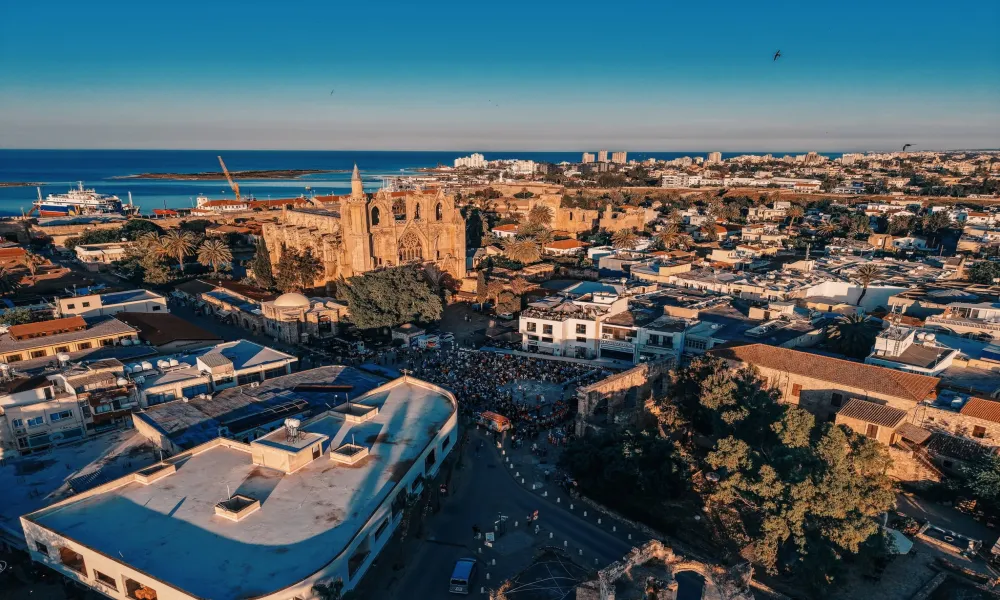
He also highlighted Maronite properties within military zones and the fenced-off area of Famagusta, which remain unresolved in the name of a comprehensive settlement.
According to Hatay, concrete steps in these areas could address the property claims of at least 35,000 to 40,000 displaced Maronites and Greek Cypriots.
He said the demilitarisation of the three Maronite villages in the north and the return or use of Varosha should be treated as measures to remedy human rights violations, rather than as territorial concessions by the Turkish side.
Returning property does not change sovereignty
“If a Greek Cypriot wishes to reclaim a property that has no current user and live in the north, there should be no objection based solely on their ethnic identity,” Hatay said.
He added that this approach should apply particularly to Maronites and all properties belonging to them.
Hatay rejected the argument that recognising an owner’s rights would alter the sovereignty or political status of the area in which the property is located.
“Territory is one thing and private property is another,” he said, stressing that returning a property does not amount to handing the surrounding area to the other community.
Hatay estimated that returning Varosha and approximately 6,000 to 7,000 donums from the roughly 1.5 million donums of Greek Cypriot-owned land in the north could initially remedy the injustice experienced by tens of thousands of displaced people.
Such a step would not fundamentally alter the property structure in the north, he argued. Instead, it would reduce the legal, financial and humanitarian burden that any future comprehensive settlement would have to address.
Human rights are not bargaining chips
Hatay said the Cyprus problem was not simply a dispute over buildings and land. Property rights, he argued, were closely connected to the ability of displaced people to return to their homes, villages and past.
Keeping human rights as a bargaining chip was not a strategy for achieving a settlement, he concluded. Instead, it increased the cost of division, damaged relations between the two communities and turned the law into an instrument of political confrontation.