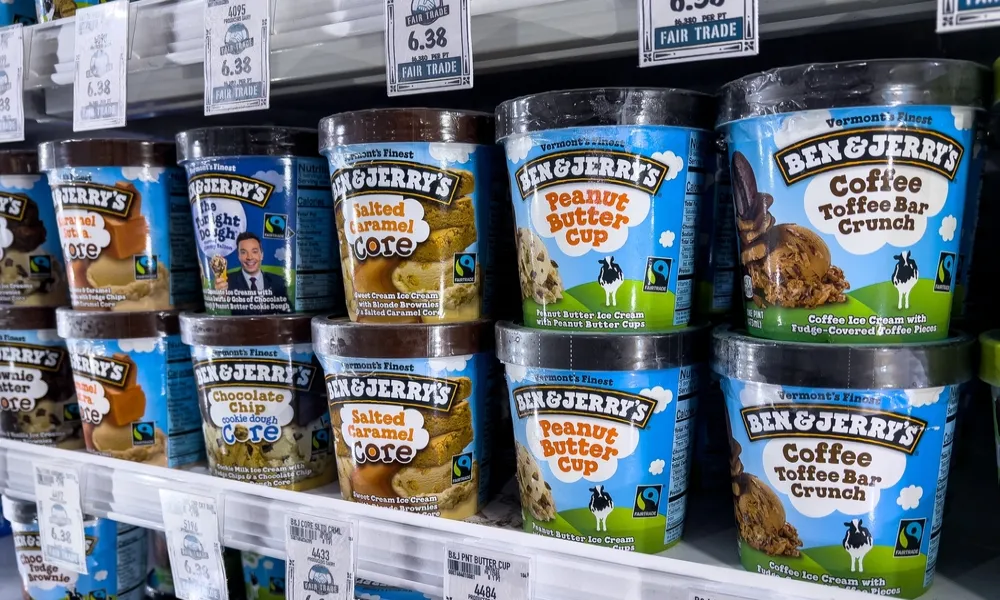

Ben Cohen had spent decades building Ben & Jerry's into one of the world's most recognisable ice cream brands. But in recent years, the 75-year-old found himself fighting not to grow the company, but to get it back.
Speaking to The Guardian, Cohen said the battle wasn't just about ownership – it was about preserving the values that had made Ben & Jerry's different from the start. He even used one of the company's latest products to illustrate his point. While he said the ice cream in the classic tubs still tasted as it always had, he argued the newer chocolate-coated bars felt "fluffier", suggesting more air had been added. To him, it reflected a brand that had slowly lost some of its substance.
Ice cream turned political
When Ben & Jerry's was sold to Unilever in 2000, the founders agreed to the deal on one condition: an independent board would continue to safeguard the company's social mission. That unusual arrangement allowed the brand to keep speaking out on issues it cared about, from marriage equality and racial justice to the Iraq War, even after becoming part of a multinational company.
According to Cohen, that independence began to disappear in 2021, when Ben & Jerry's announced it would stop selling its products in the occupied Palestinian territories because doing so no longer aligned with its values. The decision triggered a bitter dispute with Unilever and marked the beginning of a wider clash over who ultimately controlled the company's public voice.
The conflict escalated in 2024, when Ben & Jerry's sued Unilever, alleging it had blocked the company from expressing support for Gaza and had breached the agreement protecting its independence. After Unilever later spun off its ice cream business into the Magnum Ice Cream Company, Cohen launched a campaign calling on the new owner to sell Ben & Jerry's and return it to independent ownership.
Activism over profit
The rift only deepened. Ben & Jerry's said its chief executive had been removed because of disagreements over the company's social mission, while co-founder Jerry Greenfield resigned from the independent board, saying it no longer had the authority it was created to protect.
Magnum rejected those claims. The company said Ben & Jerry's remained committed to its three-part mission of social impact, product quality and financial performance, and insisted the brand was not for sale. It also pointed to strong sales and said the company continued to campaign on causes it believed in.
Cohen remained determined. Convinced that Ben & Jerry's activism was one of the main reasons people connected with the brand, he urged supporters to boycott other Magnum-owned ice cream brands in the hope of putting pressure on the company. While some experts questioned whether such a campaign could ever succeed against a global corporation, Cohen believed loyal customers would ultimately back the cause.
For him, the fight was never simply about buying back an ice cream company. It was about reclaiming a business he believed had always stood for something bigger than profit.
Source: The Guardian