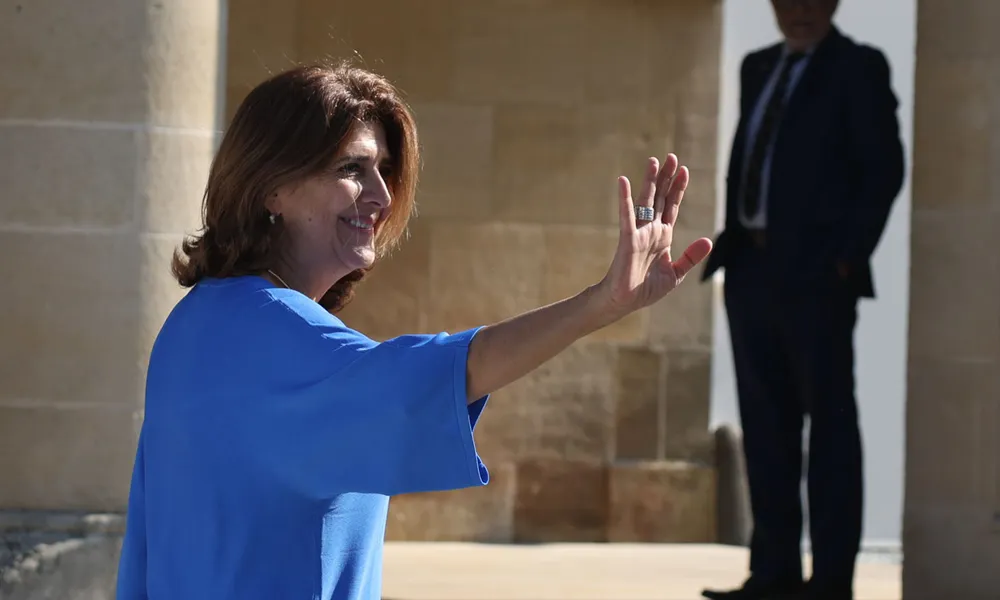

UN Personal Envoy María Ángela Holguín returns to Cyprus on Thursday, 10 September, marking her first visit since UN Secretary-General António Guterres came to the island late July.
Politis sources confirmed Holguín will miss the leaders meeting on Wednesday, 9 September, arriving the following day, but will stick around for the next meeting the leaders will have the following week. During her stay, the UN envoy will also hold a series of meetings with different stakeholders.
According to Ankara-based journalist Yusuf Kanlı, initially, Holguín had planned to meet with Guterres in New York and the new British Minister for Europe in London before arriving in Cyprus on Monday, 7 September. However, plans were changed due to illness. She will now come on Thursday and stay on island to attend the following leaders’ meeting, which Kanlı reports is scheduled for 16 September.
Holguín is still expected to meet Guterres at UN headquarters in New York before coming.
Negotiations’ history
Holguín will likely come with a prepared UN document compiling the body of work completed in the negotiations up to and including the talks in Crans-Montana in 2017.
It remains to be seen how Holguín will utilise the document. Will the envoy simply hand it over to the two sides, suggesting implicit acceptance acceptance – at least in principle – of past convergences but also of the point at which negotiations were interrupted? Or will the UN seek more overt confirmation from the relevant actors of the body of work collected?
Searching for signs of progress
The two leaders have committed to weekly meetings to advance discussions on confidence-building measures (CBMs), methodology and issues of substance. This week’s meeting was postponed following the ferry disaster off the Kyrenia coast on Sunday.
Before leaving Cyprus on 29 July, Guterres said he would convene a meeting on the Cyprus issue in a broader format – including the guarantor powers – once the two leaders made adequate preparations.
To date, the leaders have yet to achieve significant agreement on either CBMs, methodology or substance. In an interview with Politis, Holguín clarified that progress on all three was necessary for there to be forward movement, noting that the UN would not risk holding another 5+1 that ended in failure.
The former Colombian foreign minister also stipulated that CBMs were a “sina qua non” when it came to deciding whether to hold an expanded meeting or not before Guterres’ term ends this December.