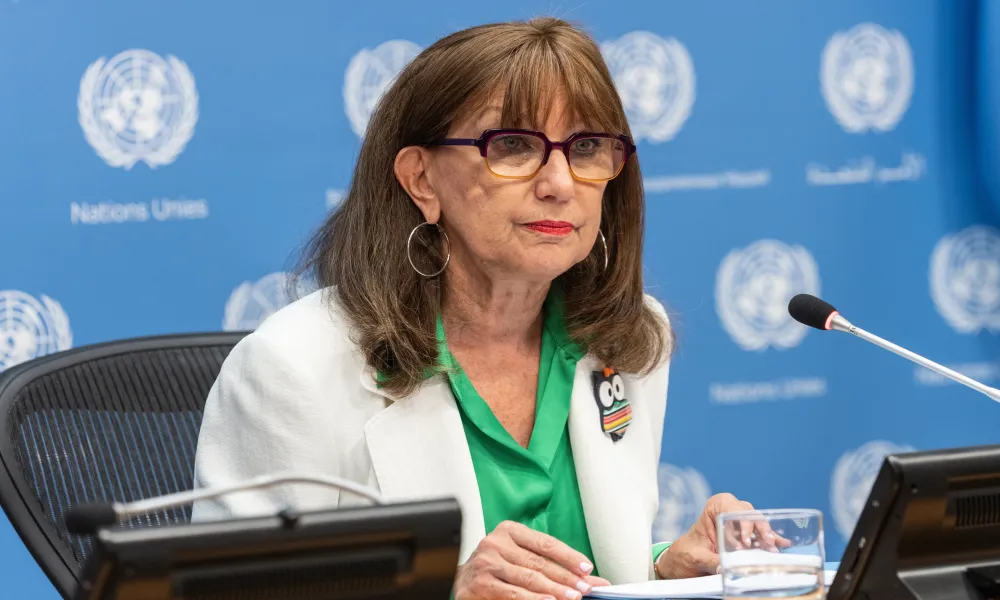

Rebeca Grynspan of Costa Rica strengthened her position in the fourth informal UN Security Council ballot to select the next United Nations Secretary-General, receiving 10 “encourage” votes, three “discourage” votes and two “no opinion” votes.
In the previous round, Grynspan had secured nine positive and five negative votes. Carolyn Rodrigues-Birkett of Guyana placed second in the fourth ballot with eight “encourage” votes, six “discourage” votes and one “no opinion” vote.
Grossi also secures eight votes
Rafael Mariano Grossi of Argentina also received eight positive votes, alongside seven negative votes and no “no opinion” votes.
He was followed by Olara Otunnu of Uganda, with five positive votes, eight negative votes and two “no opinion” votes.
Macky Sall of Senegal received five positive votes, nine negative votes and one “no opinion” vote.
María Fernanda Espinosa of Ecuador received three positive votes, 10 negative votes and two “no opinion” votes, while Ivonne A-Baki, also of Ecuador, received one positive vote, 11 negative votes and three “no opinion” votes.
Grynspan passes nine-vote threshold
The result puts Grynspan above the nine positive votes required in a formal Security Council vote.
It remains unclear, however, whether any of her three negative votes came from a permanent member of the Security Council. The fourth informal ballot used the same ballots for the five permanent and 10 elected members, meaning the source of individual votes cannot be identified.
The permanent members have veto power in the final selection.
Greece takes Security Council presidency
The ballot was held a few days before Greece assumes the presidency of the Security Council on 1 October.
As the selection process enters a critical phase, it is possible that the choice of the candidate to be recommended to the General Assembly will be completed during the Greek presidency.
The informal ballots are used to indicate the level of support for each candidate before the Security Council takes its formal decision.
Under Article 97 of the UN Charter, the Secretary-General is appointed by the General Assembly upon the recommendation of the Security Council.
Bachelet withdrew after third ballot
Former Chilean president Michelle Bachelet withdrew her candidacy on 20 September, following the third informal ballot.
She had received one “encourage” vote, 11 “discourage” votes and three “no opinion” votes.
In that third round, Grynspan moved into first place with nine positive and five negative votes, while Rodrigues-Birkett followed with eight positive and six negative votes.
In the fourth ballot, Grynspan increased her positive tally by one and reduced her negative votes by two, while Rodrigues-Birkett remained on eight positive and six negative votes.
Permanent members’ positions remain key
The next critical stage is expected to involve different-coloured ballots for permanent and elected Security Council members.
This would make clear whether any candidate faces opposition from one or more of the Council’s five permanent members, a decisive factor in determining who can ultimately secure the Security Council’s recommendation.
Source: CNA