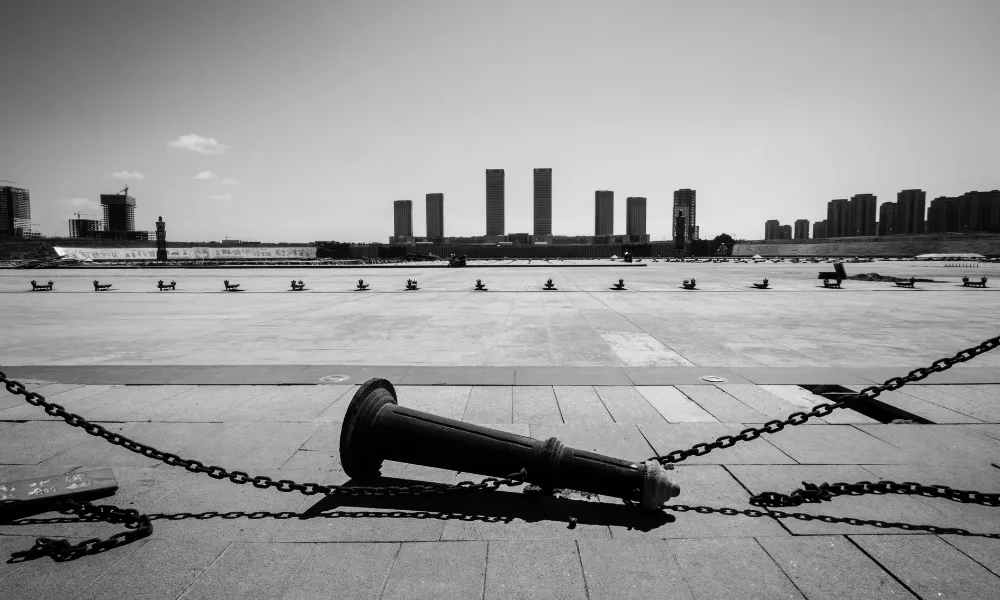
Kangbashi was built as a showcase of China’s urban future, but for years its avenues, museums and apartment blocks stood far ahead of the population they were meant to serve.
Kangbashi did not grow in the usual way. It was not shaped by a port, a railway junction, an old marketplace or generations of families expanding a settlement street by street. It was planned, funded and built at speed, on land selected by local authorities in Ordos, a coal-rich city in Inner Mongolia.
The result became one of the most discussed urban projects in China: a new district with monumental public buildings, broad roads, cultural centres, housing compounds and carefully designed civic spaces, but too few people to make it feel complete.
For years, Kangbashi was described internationally as the world’s most famous “ghost city”. The phrase was useful, but never quite sufficient. It captured the emptiness of the early years, not the forces that created it, and not what happened later.
A boomtown built on coal
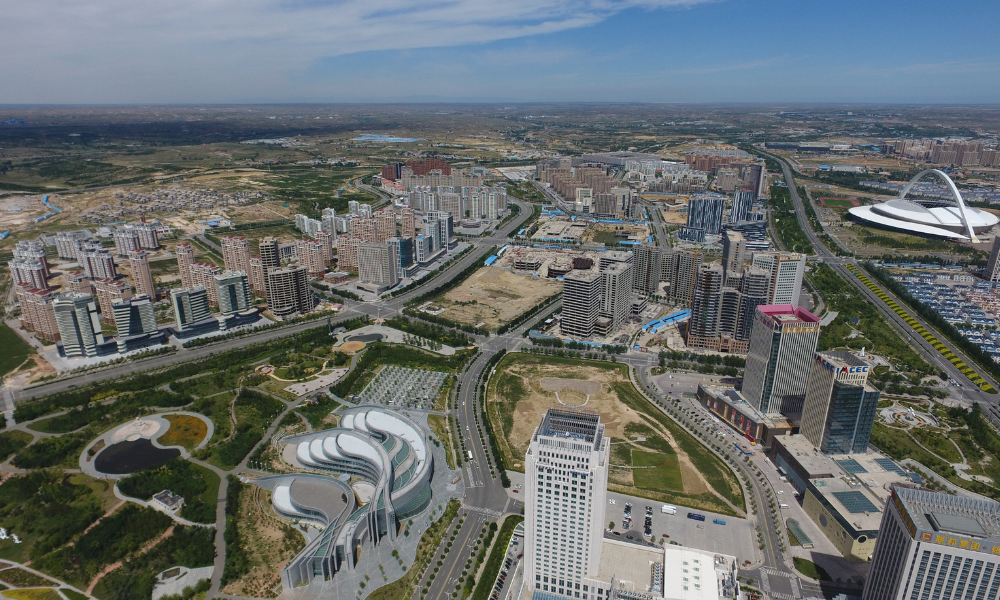
Photo: Charlie fong / Wikimedia Commons / CC BY-SA 4.0
The story begins with Ordos itself. In the early 2000s, the city became one of China’s great resource boomtowns. Its surrounding region held vast coal reserves, and the money generated by mining gave local officials the confidence, and the means, to think on a much larger scale.
The older urban centre of Ordos, Dongsheng, was growing quickly but had limited room to expand. Kangbashi, around 25 to 30 kilometres away, offered something different: open land on which an entire administrative and cultural centre could be designed almost from zero.
The area had previously been known as the Qingchunshan Development Zone. In 2004, it was renamed Kangbashi and placed at the centre of a new plan for the future of Ordos. Construction began that year. In 2006, the municipal government moved its offices there, giving the district an official purpose before it had developed the habits of a normal city.
The ambition was enormous. Kangbashi was promoted as a new urban centre that could eventually accommodate up to one million people. By 2010, China Daily reported that around 17 billion yuan had already been spent turning the district into a modern cityscape of government towers, museums, libraries, theatres, sculpture squares, residential blocks and large avenues.
But the population had not kept pace with the concrete. By the end of April 2010, the district had only about 28,000 residents.
The city arrived first
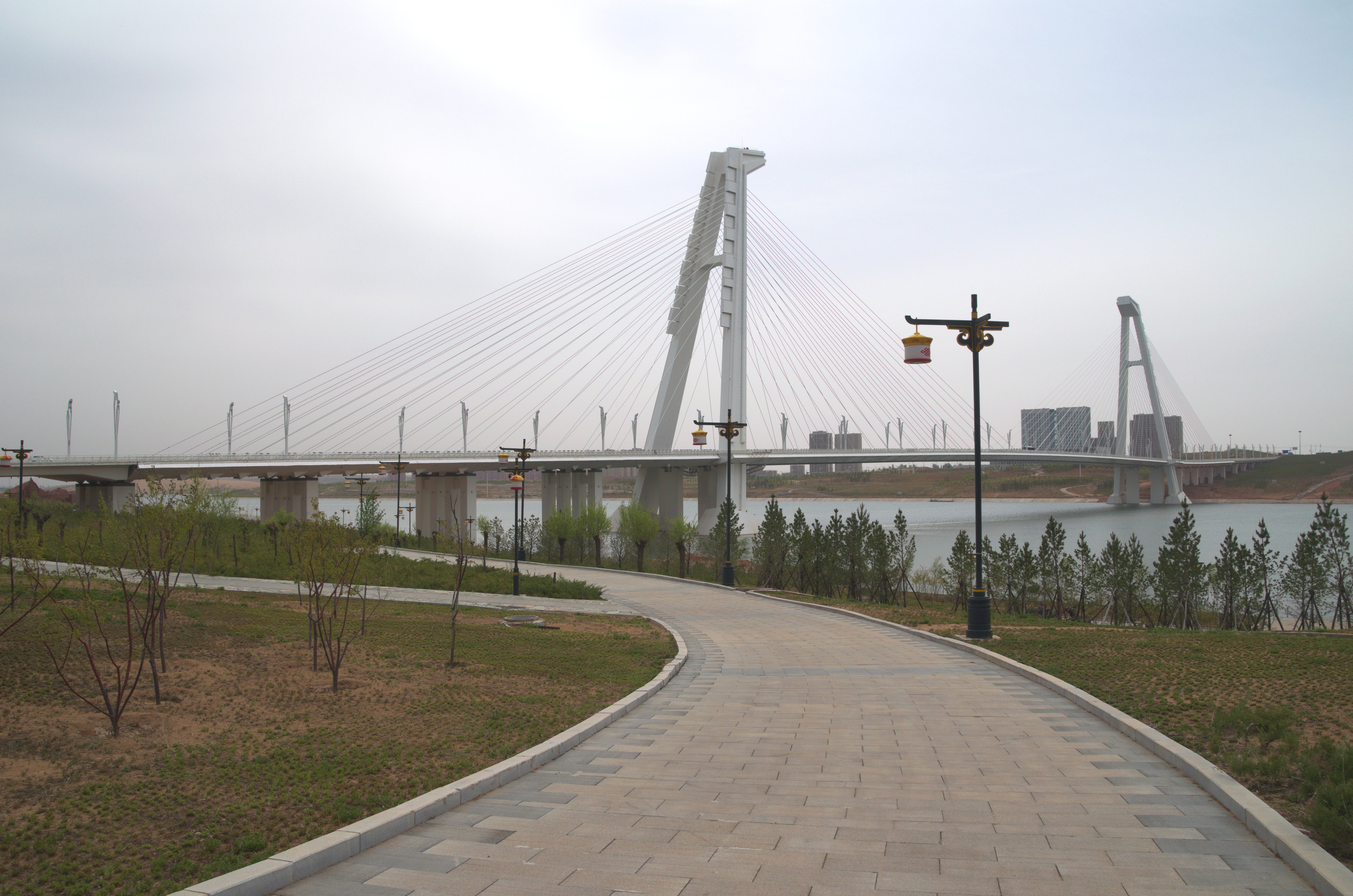
That imbalance became Kangbashi’s defining image. Roads had been laid before there was traffic. Housing had been built before there were enough households. Public squares had been completed before a public had arrived to use them.
The photographs travelled quickly: empty boulevards, vast plazas, pristine buildings, little movement. They appeared to show the excesses of China’s construction boom in one place. Kangbashi became a shorthand for a development model that believed infrastructure could summon demand if built at sufficient scale.
In many cities, growth begins with pressure. People arrive first, then housing, schools, shops and transport follow. Kangbashi reversed the order. The hardware of the city came before the social life of the city.
That reversal was not accidental. It reflected a wider pattern in China’s fast-growth years, when local governments used land, credit and construction to generate economic activity and signal progress. New districts were often more than planning exercises. They were political statements, meant to show confidence, capacity and future prosperity.
In Kangbashi, the statement was visible everywhere. One of its most recognisable buildings, the Ordos Museum, was designed by MAD Architects and commissioned by the local government as a centrepiece of the new district. Its rounded metallic form, set against the open landscape, gave the area an instantly recognisable landmark. It also underlined the central tension of the project: the city had symbols of civic life before civic life had fully taken root.
More than a ghost story
The label “ghost city” was powerful because it was simple. It suggested failure, waste and artificial growth. In the early years, it was not hard to see why.
But Kangbashi was never only an abandoned real estate story. It was also an administrative relocation project, a resource-boom project and a test of whether state planning could create an urban centre ahead of demand.
Over time, the picture became more complicated. Government offices stayed. Schools opened. Public services moved in. Families relocated. Businesses followed slowly. The district did not fill at the speed imagined in the original plans, but neither did it remain the empty stage set described in its most famous photographs.
Research on the district has also cautioned against treating Kangbashi as permanently uninhabited. Its population remained far below early projections, but residential occupancy and daily activity grew over time. The problem was not that no one ever came. It was that the city had been built for a much larger future than the one that arrived.
The 2020 census recorded 118,796 residents in Kangbashi. That figure is far from the one million once associated with the plan, but it is also far from a deserted city. The district became something more awkward than either success or failure: a place that slowly gained life after being built too early.
The lesson of Kangbashi
Kangbashi’s story matters because it exposes the limits of measuring development by construction alone. A city can have roads, museums, apartment towers and government offices, yet still lack the everyday density that makes urban life work.
People do not move into a place because a master plan says they should. They move because there is work, education, family, services, routine and a reason to stay. A city is not just a collection of completed projects. It is the accumulation of ordinary decisions repeated every day.
Kangbashi is no longer the empty symbol it once was. But it remains one of the clearest examples of a city built ahead of its population, and of the risks that come when growth is treated as something that can be engineered from above.
Its streets are less empty now. Its schools, homes and public buildings are used by more people than before. Yet the question Kangbashi raised has not disappeared: if a city is built before enough people need it, is it a vision of the future or a warning about believing too much in the plan?
Source: protothema.gr