The US–Iran agreement, just days before its formal signing, is exposing deep fractures both in relations between Washington and Israel and within the Trump administration itself.
According to a report by Israeli newspaper Hayom, President Donald Trump is considering removing senior officials who opposed the agreement with Tehran, with Defence Secretary Pete Hegseth and CIA Director John Ratcliffe reportedly first on the list.
“The dispute with Iran is over. Anyone who opposed the deal may pay a personal price,” a senior US official said, describing the climate inside the White House.
By contrast, Secretary of State Marco Rubio appears to enjoy 'immunity,' having avoided public criticism and maintaining strong internal support within the administration.
The battle has now been decided
This rift follows a tense meeting at the White House a few weeks earlier, where two opposing schools of thought clashed, with serious disagreements even between Trump and his vice president.
JD Vance, special envoy Steve Witkoff and Jared Kushner, who managed contacts with Tehran, supported reaching an agreement, assessing that the Iranian regime is unlikely to collapse in the short term and taking into account pressure from Gulf states, particularly Qatar.
Opposing them, Rubio and Hegseth, backed by senior Pentagon and State Department officials, argued that the Iranian regime is weakening under economic pressure and that further strengthening sanctions could lead to concessions or even regime change.
Last week, at a critical meeting, Trump ultimately adopted Vance’s position, deciding to proceed with the memorandum of understanding.
An intervention by Treasury Secretary Scott Bessent, who warned about the risks of fully lifting sanctions if the US were to reimpose them in future, led only to limited adjustments. Within the administration, the sense is that the internal dispute has now been decisively settled in favour of the Vance camp.
A front with Israel
While Vance publicly reiterates US support for Israel’s right to self-defence, he is reported to be privately urging Trump to curb Prime Minister Benjamin Netanyahu’s actions, accusing him of deliberately attempting to undermine the Iran agreement, particularly following Israeli operations in Lebanon and the recent strike against a Hezbollah target on the outskirts of Beirut.
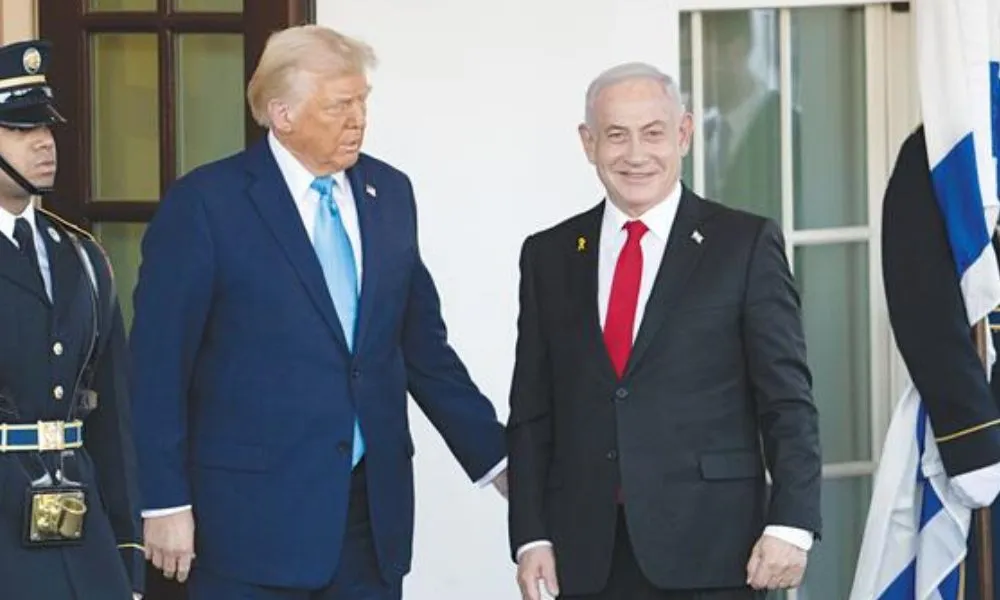
Speaking at the G7 summit in France, Trump himself hinted at criticism of the Israeli prime minister.
“I have a good relationship with Bibi, but now he needs to show greater respect towards Lebanon,” he said, even suggesting that Syria would “do a better job” in handling Hezbollah, as “the conflicts in Lebanon are going on far too long.”
Despite these remarks, Trump reaffirmed that the agreement rules out any nuclear capability for Tehran, warning that if Iran acquires nuclear weapons “the gates of hell will open against it.”
He also described the deal as “fair,” noting that the US is not committed to investing in Iran, although it retains the option to do so in the future if it chooses.
Behind the scenes, officials say that friction between Trump and Netanyahu is not new, with the US president having repeatedly described the Israeli prime minister in recent weeks as “difficult” and “ungrateful,” while at the same time praising Iran’s new supreme leader Mojtaba Khamenei as a “realistic” interlocutor.
The signing
Meanwhile, the Swiss Foreign Ministry confirmed to AFP that the official signing of the memorandum of understanding is scheduled for Friday at Bürgenstock, a mountain resort in central Switzerland overlooking Lake Lucerne.
The location was chosen due to its remote and secure setting, following a proposal by Pakistani and Qatari mediators, with the agreement of both the United States and Iran.
At the same time, Israel’s Channel 12 reported that Washington refused to provide Israel with the full text of the agreement, leaving the Israeli government without a complete picture of the details of the fourteen provisions that, according to Iranian media, the memorandum includes.
Trump has committed to presenting the text “word for word” after the signing.
On the economic front, Qatar is intensifying preparations for the reopening of the Strait of Hormuz. According to Bloomberg, QatarEnergy has informed its clients that it expects to restore LNG production to 50% of capacity initially and to 80% within two months.
Two production lines at the Ras Laffan complex will take years to be fully restored. Full resumption of operations remains uncertain, however, as mine-clearing in the area is required first.