The political repercussions of the Filo Jet shipwreck off Kyrenia continue to reverberate through the north, with the dismissal of Erhan Arıklı as "transport minister" and the subsequent withdrawal of his party from the coalition leaving the administration of Ünal Üstel without a parliamentary majority.
The development has significantly altered the political landscape, raising questions about the coalition's ability to govern and reviving discussion about the possibility of early elections.
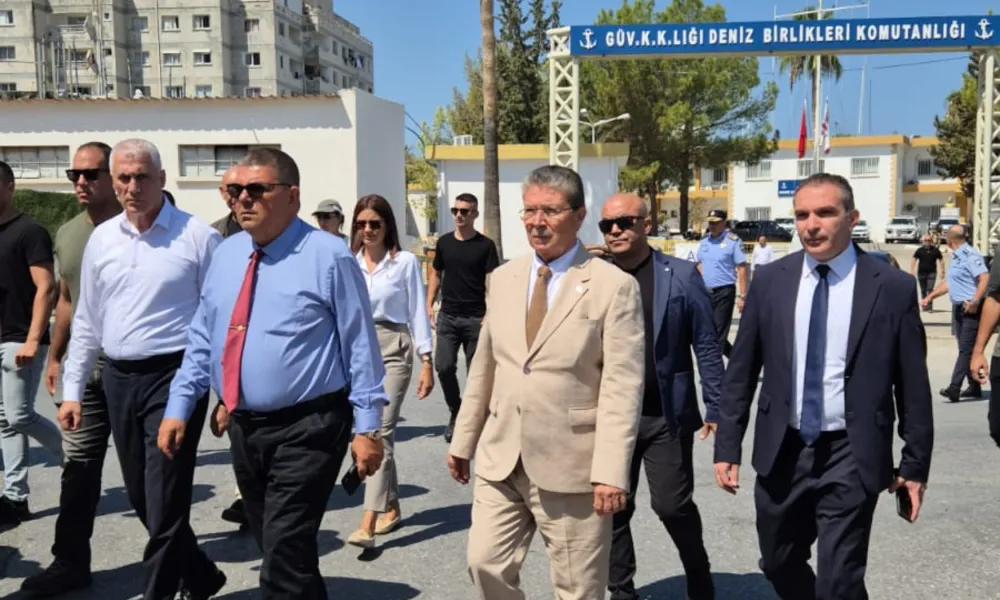
From the first days after the disaster, relatives of victims and missing passengers voiced complaints about alleged omissions and failures that they claimed contributed to the tragedy. Many sought a meeting with Arıklı at Kyrenia harbour, but no such meeting took place.
Under growing public pressure, Üstel moved to remove Arıklı from office. Although he stressed that the decision was not directed against the Rebirth Party (YDP), the party opted to withdraw from the coalition altogether. Arıklı subsequently criticised the manner of his dismissal, saying he was informed of the decision by telephone.
Coalition support falls to 25 seats
Following the departure of the YDP, the coalition's parliamentary support has fallen to 25 of the 50 seats in the "assembly".
The National Unity Party (UBP) controls 23 seats, while the Democratic Party (DP) holds two.
The development does not automatically trigger the collapse of the administration, but it leaves Üstel governing without the parliamentary comfort previously provided by the YDP.
Attention has now turned to independent "MP" Hasan Tosunoğlu, who previously left the DP. His vote could prove decisive in closely contested parliamentary votes, with Turkish Cypriot media speculating over whether he will support the administration.
The December election challenge
The new political reality carries additional significance because of upcoming elections.
Local elections are scheduled for 6 December, while the coalition had been considering holding early "parliamentary elections" on the same day instead of waiting until the end of the legislature in January 2027.
The proposal had already received approval from the "cabinet" and was expected to proceed to the "assembly".
Following the YDP's departure, however, the arithmetic has become more complicated.
The combined 25 seats of the UBP and DP are no longer sufficient to secure parliamentary approval, meaning Üstel would require support from at least one additional legislator.
At the same time, observers believe the prospect of early parliamentary elections has become less likely because of the short timeframe until the already scheduled local elections.
The financial cost of organising two separate electoral contests, as well as logistical and political considerations, remain important factors. Although the early-election scenario remains on the table, it is no longer viewed as either straightforward or inevitable.
Limiting the political damage
Arıklı's removal is widely seen as an attempt by Üstel to contain the political fallout from the shipwreck.
The "prime minister" argued that removing the transport minister was necessary to ensure that the investigation could proceed without questions about possible political interference.
Politically, the move allows Üstel to argue that he acted when questions of political responsibility emerged, even at the cost of coalition unity.
The price, however, was the loss of a governing partner and the opening of a new front with a former minister.
Arıklı declared that the responsibilities he carried within the administration had now ended.
"We have now taken a step that I should have taken one-and-a-half years ago," he said.
He also pointed to upcoming elections, arguing that his party would now be able to prepare with greater freedom of movement.
Erhürman also faces pressure
The shipwreck has also placed Tufan Erhürman in a politically delicate position.
As Turkish Cypriot leader, he does not bear direct responsibility for the operation of ports or the inspections that preceded the disaster. However, his constant presence in Kyrenia alongside relatives of victims and missing passengers placed him at the centre of the crisis and public scrutiny.
Criticism intensified after a photograph emerged showing him embracing Arıklı.
Erhürman explained that the image had been taken on the first day of the tragedy while he was expressing condolences to those present.
His decision to remain visibly alongside Üstel and members of the administration from the outset of the crisis also attracted attention.
Rather than distance himself from the administration and its handling of events, Erhürman adopted what many viewed as a more institutional approach.
Unlike opposition figures, including members of his own party, he refrained from publicly assigning political responsibility and instead sought to present himself as a figure focused on managing and de-escalating the crisis.