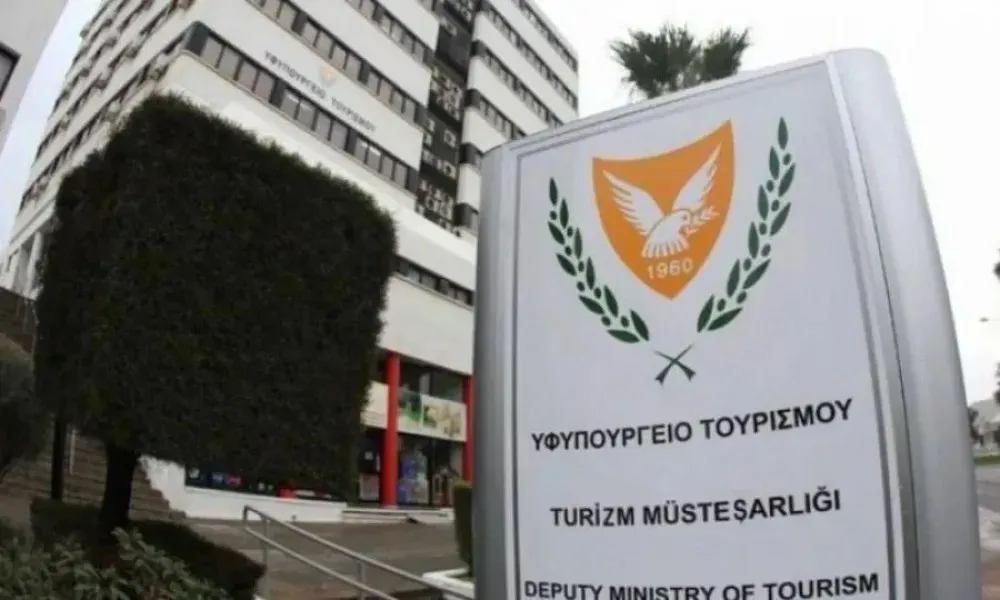

The Deputy Minister of Tourism, Kostas Koumis, has accused his Director General, Neophytos Papadopoulos, of negligence of duty. He has initiated procedures to launch an investigation against him, while also requesting his removal from the deputy ministry by submitting a request to the PSC for his suspension. During a recent Cabinet meeting, the deputy minister briefed members on the allegations against Mr Papadopoulos.
Objection before the PSC
According to information obtained by Politis, the investigation against the Director General of the Deputy Ministry of Tourism has been assigned to a state prosecutor. The request for suspension will be examined by the PSC on Thursday.
According to the same sources, Mr Papadopoulos’ lawyer, Chris Triantafyllides, has filed an objection seeking annulment of the suspension request. He argues, among other points, that Mr Koumis unlawfully holds the office of deputy minister, as the Constitution of the Republic of Cyprus does not provide for the creation of deputy ministries.
Speaking to Politis yesterday, Mr Triantafyllides said that if his client is placed on suspension, he will take legal action to annul the PSC decision, raising, among other arguments, the unconstitutionality of the deputy ministries.
Suspension of criminal prosecutions
Over the past two years, Politis has published reports revealing cases pending before the courts in which the Legal Service, acting as the prosecuting authority, chose not to proceed to final judgment. Instead, it suspended criminal prosecutions against defendants facing charges related to the illegal operation of restaurants and tourist establishments.
As reported, this decision was linked to avoiding examination of issues concerning the constitutionality of the deputy ministries, given that the complaints originated from the Deputy Ministry of Tourism.
Such cases were handled by lawyers Christos Clerides and Savvas Zannoupas. In their pleadings before the courts, they argued that their clients should not face criminal prosecution, as the Deputy Ministry of Tourism lacked legal standing to act in this manner due to its alleged unconstitutional establishment and operation.
Following these arguments, the Legal Service suspended prosecutions without publicly disclosing the reasons for its decision. At the same time, it is noted that citizens who violate the law cannot remain unpunished, while the issue extends beyond the Deputy Ministry of Tourism to decisions taken by other deputy ministries under the same framework.
If the PSC decides tomorrow to suspend the Director General, Neophytos Papadopoulos, it will no longer be possible to conceal such a serious constitutional issue.
Legal opinion before Parliament
A legal opinion by Poly Polyviou has been on record in Parliament for the past two years. According to information obtained by Politis, it concludes that the establishment and operation of the deputy ministries violate the Constitution of the Republic of Cyprus.
The opinion had been requested by Parliament when it was examining the bill for the establishment of the sixth deputy ministry – the Deputy Ministry of Migration and Asylum.
The view that the deputy ministries were established in violation of the Constitution has also been expressed at times by other prominent legal experts.
Six deputy ministries
During the second term of President Nicos Anastasiades (2018–2023), five deputy ministries were established: Research, Innovation and Digital Policy; Social Welfare; Shipping; Culture; and Tourism.
President Nikos Christodoulides later followed suit by establishing the Deputy Ministry of Migration and Asylum.
The first deputy ministry to be created was the Deputy Ministry of Tourism, by law passed in 2018 and entering into force on 2 January 2019. This was followed by the Deputy Ministry of Research, Innovation and Digital Policy, established on 1 March 2020.
The relevant bills for the creation of these deputy ministries were subject to legal review by the Legal Service during the tenure of former Attorney General Costas Clerides. The remaining bills were prepared and reviewed during the tenure of the current Attorney General, George Savvides.
€1.5m in additional salaries
With Parliament’s approval on 29 February 2024 of the bill establishing the Deputy Ministry of Migration and Asylum, the total number of new public office positions created over the past six years rose to 12.
The total annual wage cost is estimated at approximately €1.5 million, covering six deputy ministers and six directors general of deputy ministries.