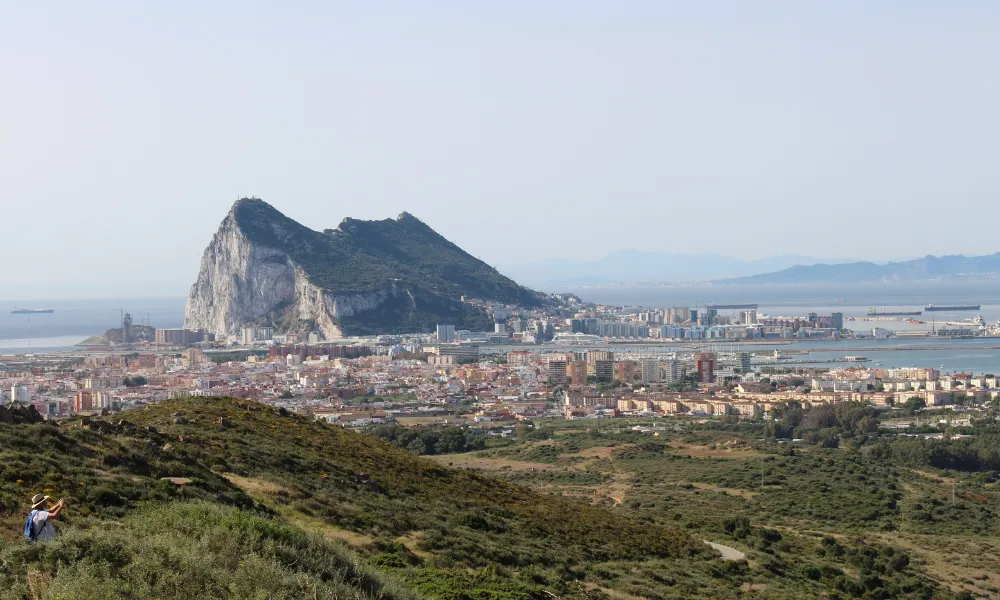

Six years after Brexit formally took effect, the United Kingdom and the European Union have settled one of the most complicated pieces of unfinished business left over from Britain's departure: the status of Gibraltar. The agreement, signed between the UK, Spain and the EU, is being described by many as the final major institutional act of Brexit, since it creates a new framework for the movement of people and goods into the British overseas territory, which had remained outside the Trade and Cooperation Agreement in force since 2020.
Years of difficult talks
According to the Financial Times, the deal is the product of long and difficult negotiations between London, Madrid, Brussels and the Government of Gibraltar. The central aim was to avoid a "hard border" between Gibraltar and Spain, one that would have seriously threatened economic activity in the area and disrupted thousands of workers who cross the border daily.
The stakes are significant. Around 15,000 workers cross from Spain into Gibraltar every day, accounting for more than half of the territory's workforce. Without a specific agreement, full third-country border checks would have applied after Brexit, causing serious delays and economic disruption both in Gibraltar and in the neighbouring Spanish region of Campo de Gibraltar.
How the new border system works
The new framework removes systematic checks at the land border entirely. Instead of being carried out at the frontier, checks move to Gibraltar's airport and port, where a "dual-check" system will operate: Gibraltar's own authorities will carry out their entry and exit checks, while Spanish officials, acting on behalf of the Schengen area, will carry out the corresponding European checks. It is an unprecedented cooperation formula that attempts to combine free movement with the EU's security requirements.
The agreement also includes an extensive framework for customs cooperation. In practice, it creates a customs union between Gibraltar and the EU, allowing goods to move freely without checks at the land border. Customs duties on goods entering from third countries will be applied at Gibraltar's own points of entry rather than at the border with Spain. In exchange, Gibraltar commits to aligning with a significant part of EU legislation on products, customs and indirect taxation, to protect the integrity of the single market.
Sovereignty stays off the table
Notably, the agreement does not resolve the long-standing question of sovereignty. Britain continues to regard Gibraltar as British territory, while Spain maintains its own claim. The text of the agreement includes an explicit "without prejudice" clause, meaning none of the arrangements adopted can be used as an argument for or against either country's position on sovereignty. In effect, both sides have chosen to manage practical cooperation without opening the politically sensitive question of the territorial dispute.
For London, the deal is also seen as a political win, since it ensures British military installations in Gibraltar remain outside the scope of the new arrangements. The UK government has stressed that the operation of the military base and Britain's defence activities remain under full British control, while members of the British armed forces and their families are exempt from certain Schengen procedures.
What it means for Brexit, and for Gibraltar itself
The wider significance lies in what the deal signals for Brexit as a whole. Since 2021, Gibraltar had existed in an unusual "grey zone" in relations between London and Brussels, having been left out of the Trade and Cooperation Agreement altogether. With the new treaty, the last major institutional loose end from Britain's withdrawal from the EU appears to be resolved. The deal does not undo Brexit, but it does suggest that the post-Brexit era is moving towards greater pragmatism and cooperation in areas of shared interest.
It is not by chance that the Starmer government has presented the deal as evidence of its effort to reset relations with the EU. For its part, the EU secures the application of key single market and Schengen rules in a strategically important area, without disturbing the wider political balance.
For residents of Gibraltar and southern Spain, however, what matters most is that the prospect of a new wall at the border has been avoided. Free movement for workers, easier trade and closer economic cooperation offer a measure of stability to a region that spent years at the centre of Brexit-era uncertainty. Perhaps that is the most telling feature of the new agreement: it does not redraw the map of sovereignty, but it does change daily life for thousands of people.