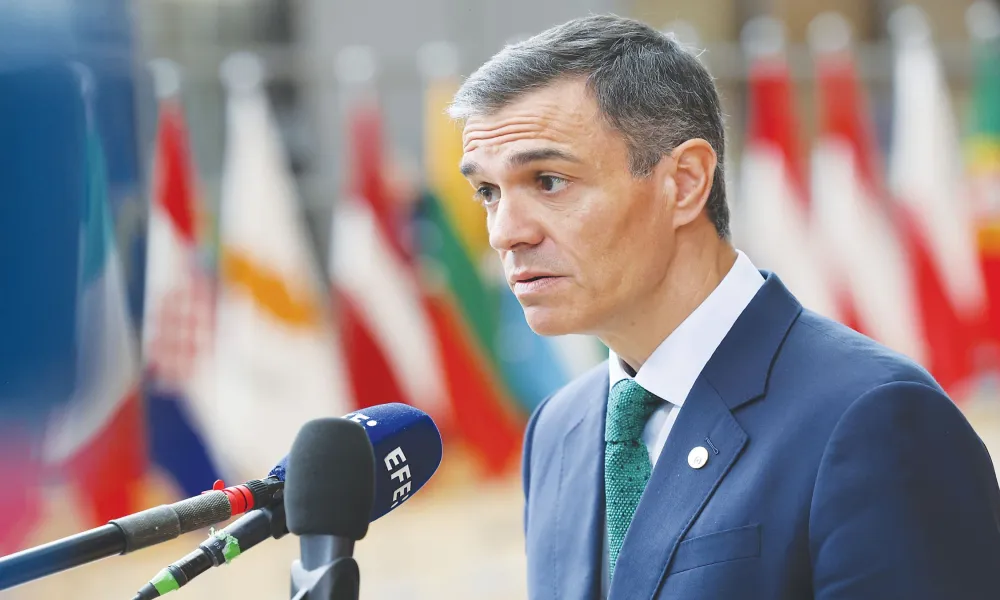

Spanish Prime Minister Pedro Sanchez, who visited Ceuta and described the mass crossing of migrants into the Spanish enclave as a "violation of Spain's territorial integrity", remains at the centre of efforts to manage a crisis that is far from over.
Days after the initial influx, between 3,000 and 5,000 people remain in the Spanish enclave in North Africa, according to Ceuta President Juan Jesus Vivas. Many are staying in an improvised camp on a beach, while the city's two reception centres, one for adults and another for minors, have effectively collapsed under the pressure, he said.
The Spanish government says around 69,500 migrants have been returned to Morocco in recent days, compared with an initial estimate that about 50,000 people had crossed the border.
The official death toll reported by the Spanish authorities stands at 83, including 72 deaths on Spanish territory and 11 on Moroccan territory.
Morocco's Interior Ministry, meanwhile, has reported approximately 40,000 people taking part in attempts to cross into Ceuta and 1,135 individuals prevented from entering Melilla. It has confirmed 11 deaths, mainly from drowning, and said it is verifying reports of additional victims.
Sanchez points to traffickers and disinformation
Mr Sanchez has attributed the mass crossing to disinformation spread by human trafficking networks following a decision by Spain's Supreme Court.
He has also publicly thanked Morocco for its cooperation in return operations.
The Moroccan Interior Ministry has advanced a similar explanation, attributing the surge to misleading information circulated through social media and migrant smuggling networks.
According to Spanish media reports, Spanish intelligence services believe Morocco did not plan the mass crossing but allowed it to happen by relaxing border controls during celebrations marking Throne Day.
"What happened was an attack, a violation of Spain's territorial integrity," Mr Sanchez said.
Hundreds of unaccompanied minors remain
Mr Sanchez has also stressed that irregular migration to Spain had been declining steadily in recent years, with a reduction of approximately 36 to 37 per cent this year and 40 per cent last year, before the recent developments in Ceuta.
At the same time, authorities are still dealing with 862 unaccompanied migrant minors in Ceuta, who are protected by special legal safeguards against deportation.
New barriers at the border
The Spanish government has begun installing a 500-metre barrier at the Tarajal crossing point, alongside floating barriers deployed by the navy, in an effort to prevent further sea crossings.
Interior Minister Fernando Grande-Marlaska remains in Ceuta to monitor developments and has denied reports of tensions with Spain's National Intelligence Centre (CNI) over whether authorities received sufficient warning about the increase in migrant flows.
EU ministers to hold emergency talks
The European Union has convened an emergency videoconference of member states' interior ministers for today to discuss the management of the crisis.