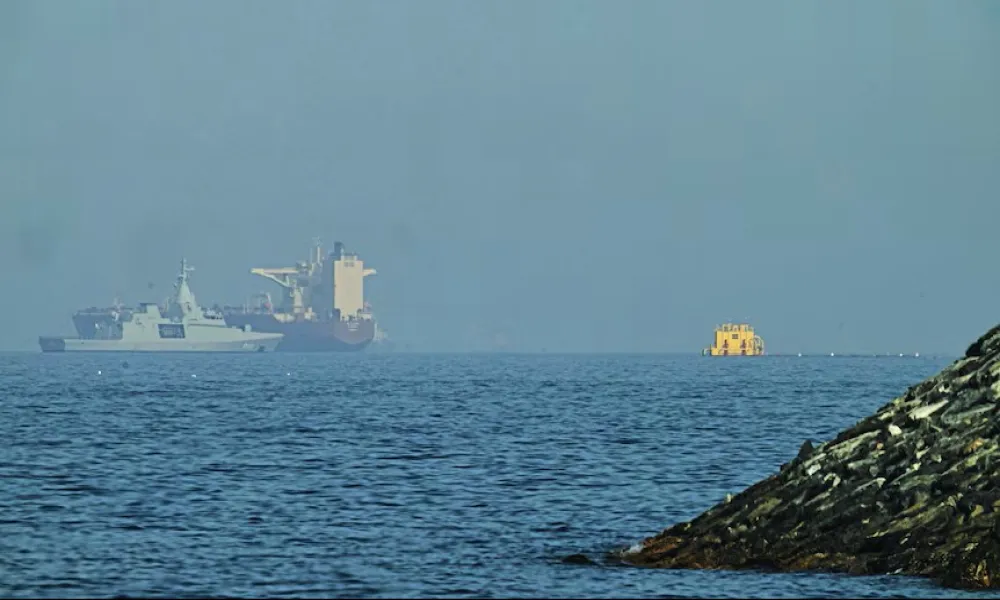


Iran announced the full closure of the Strait of Hormuz to all shipping on Thursday, in direct retaliation for fresh US military strikes on its southern Hormozgan province, in a significant escalation of the conflict that has roiled global energy markets since late February.
Iran's military headquarters announced the complete closure of the strait to all vessels, including oil tankers and commercial ships, due to what it described as insecurity in the region. It warned that "any movement" through the strait would be targeted. The Persian Gulf Strait Authority, the Iranian body responsible for managing the waterway, separately confirmed the decision, stating the strait "will be closed until further notice" due to what it called the aggression of US forces in the region.
Clashes erupted early Thursday between Iranian and US forces in the waters of the Gulf and the Gulf of Oman. Initial reports indicated that US ships near the strait were targeted by Iranian missiles and drones, while blasts were heard across Hormozgan province, including in Bandar Abbas, Minab, Jask, and on Qeshm and Hengam islands. The US Central Command said American forces had started launching "additional self-defense strikes" against multiple targets in Iran.
Oil prices jumped on Thursday, with Brent futures rising to $94.58 a barrel and US West Texas Intermediate climbing to $91.74, as markets absorbed the news. The moves reversed a month of gradual declines that had followed earlier, tentative ceasefire signals. Earlier on Thursday, Cypriot authorities had announced they expected further fuel price reductions in the coming days based on falling international platts prices, a forecast that now looks considerably less certain.
The strait has been the central flashpoint of the conflict since the US-Israel war on Iran began on 28 February 2026. Iran has maintained a de facto blockade since that date, but until Thursday had been allowing a limited number of vessels, around 20 per day, to pass. Thursday's formal closure removes even that limited passage, and marks the most severe restriction on the waterway since the conflict began. The strait handles roughly 20% of the world's oil supply.
Turkey's foreign minister, Hakan Fidan, called on both sides to halt renewed attacks and return to negotiations to avoid further escalation. There were also unconfirmed reports that US and Iranian negotiators had earlier been close to agreeing a 60-day extension of the ceasefire, though the fresh strikes appear to have set those efforts back significantly. Iran's foreign ministry said US actions had pushed diplomacy further out of reach.
Cyprus, which imports most of its refined petroleum products from Greek refineries and is among Europe's most energy import-dependent countries, will be directly exposed to any sustained rise in global oil prices that follows.