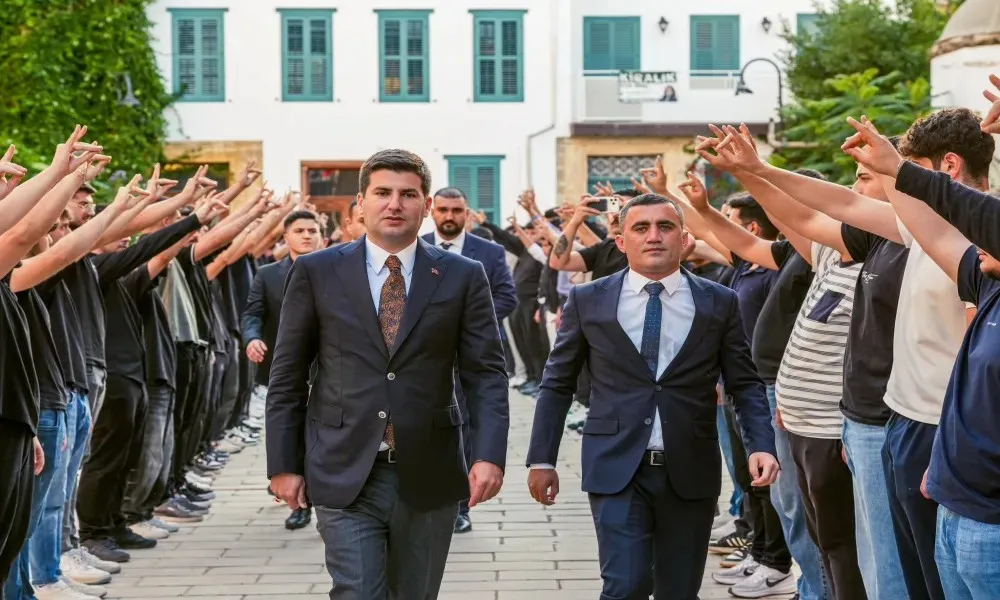
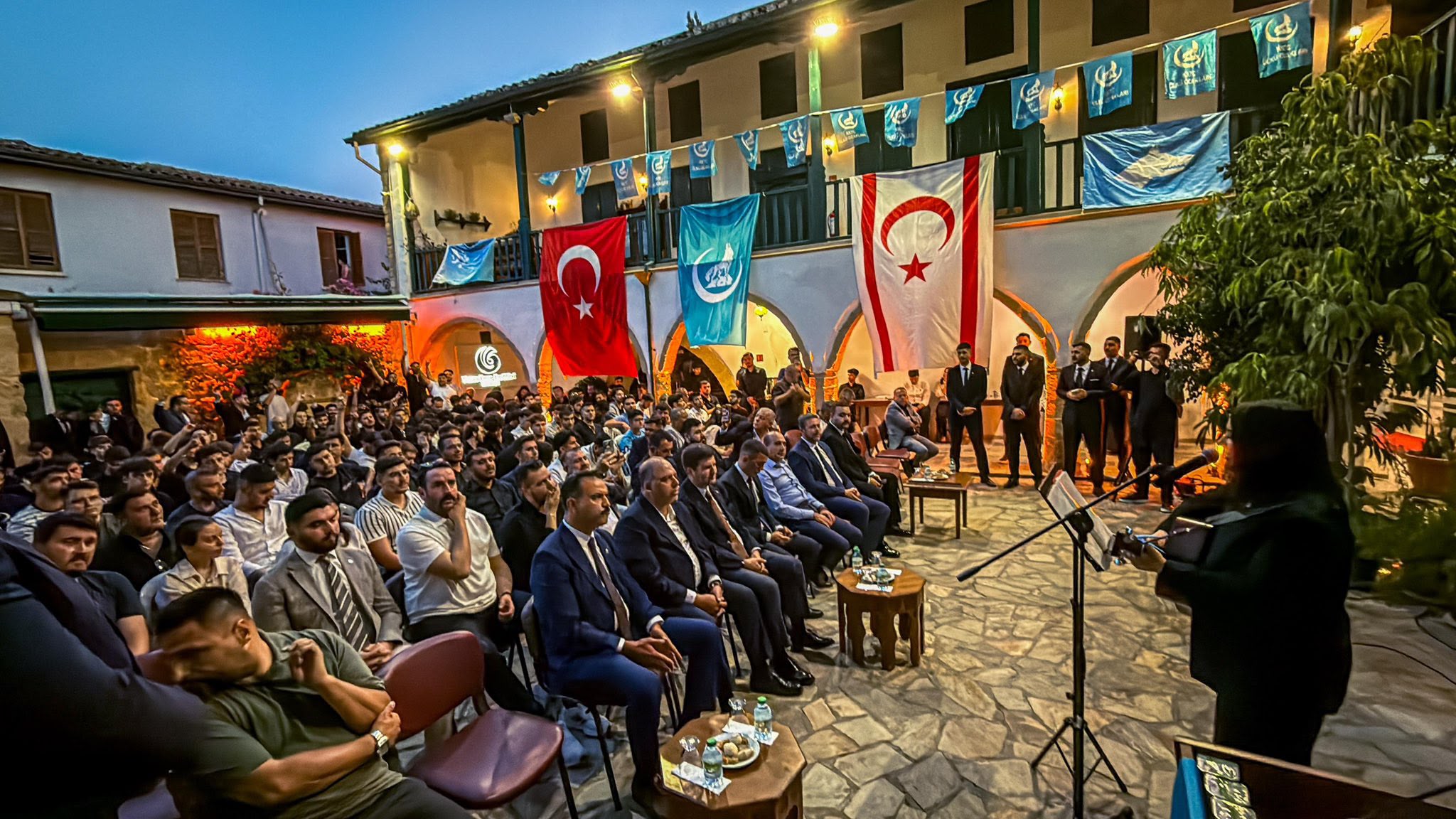
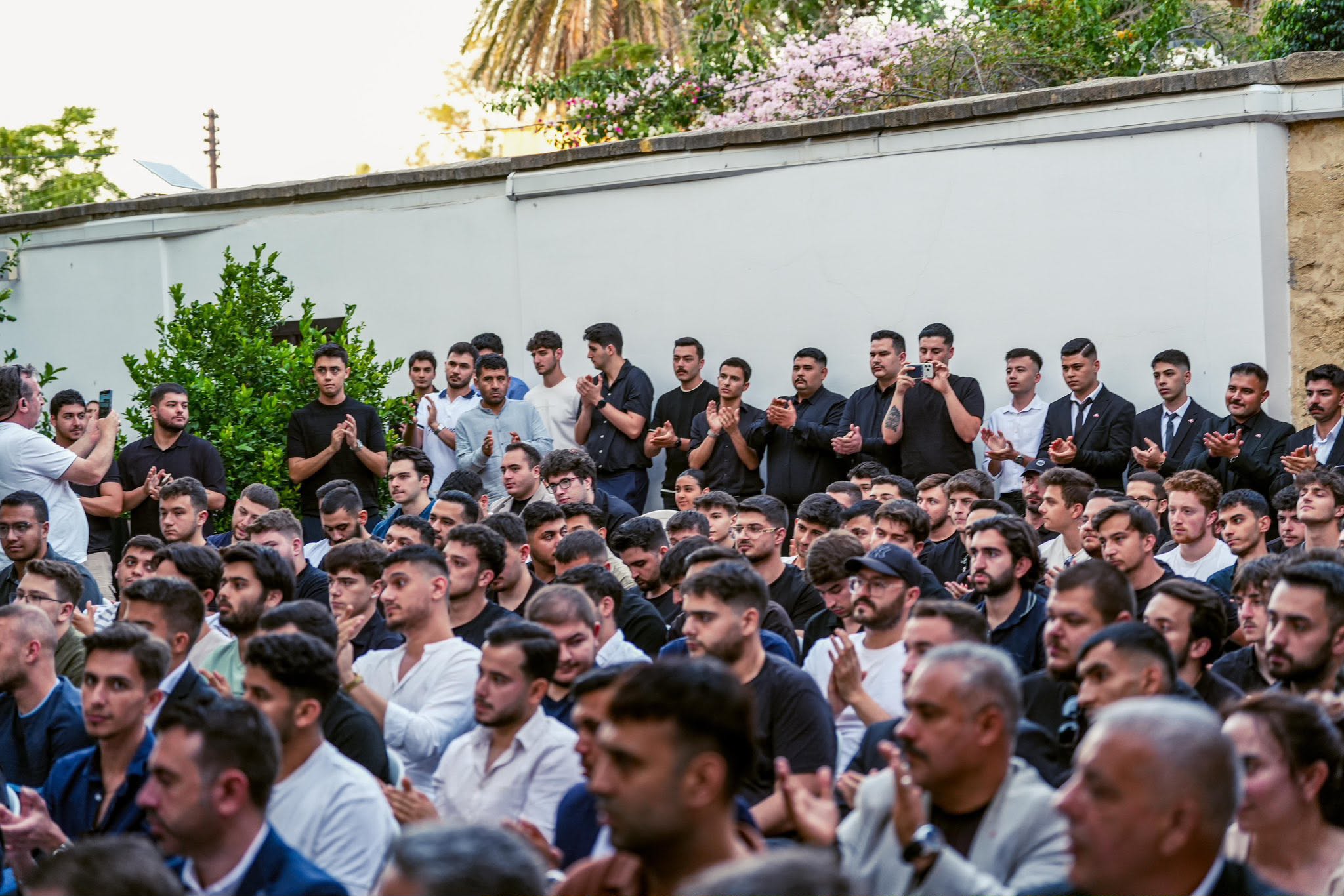
According to a statement by the Grey Wolves, Yıldırım “attended an awards ceremony for young people who excelled in sports, technology and education, as well as a concert organised by the group.”
However, photographs from the event, showing dozens of attendees making the Grey Wolves hand salute, have reignited public debate on issues surrounding Turkish Cypriot identity, Ankara’s influence in the north and broader political developments affecting the Cyprus problem.
Images spark discomfort
Writing in Yeni Düzen, Turkish Cypriot journalist Cenk Mutluyakalı said the images caused discomfort among a significant part of Turkish Cypriot society, including people who maintain strong ties and affection towards Turkey.
He noted that many Turkish Cypriots seek a close relationship with Turkey, but not at the expense of losing their own identity. According to him, the display of nationalist symbols is linked to a broader process of political, demographic and cultural consolidation by Turkey in the north after 1974. In recent years, competition between political Islam and Turkish nationalism for influence has intensified.
Mutluyakalı warned that ongoing debates over identity and population undermine the prospect of a shared future on the island and make a political settlement increasingly difficult. He said the reactions to such images go beyond a simple gesture or symbol, reflecting deeper concerns about identity, the future and the position of Turkish Cypriots in Cyprus.
AKP office controversy
The debate over the Grey Wolves visit and the salute comes amid wider concerns in the Turkish Cypriot community about the growing political and ideological influence of Ankara in the north.
A recent example was the reaction to the establishment of a “representation office” of Turkey’s ruling Justice and Development Party (AKP) in a historic building within Nicosia’s old city walls.
According to Turkish Cypriot media reports, the building, classified as a protected monument, had been granted restoration permits for tourism and commercial use. Its conversion into a party office was reportedly carried out without the required approvals.
The issue triggered reactions from local stakeholders and professionals, who raised concerns about the use of a historic building as a political headquarters. It also brought renewed attention to the extent of political and ideological influence exercised by Turkey in the north.