
Before wheat and barley, there may have been the fig. Botanical remains dating back approximately 11,400 years, discovered in the Jordan Valley, have led scientists to suggest that the fig tree was among the first plants domesticated by humans.
Thousands of years later, fig trees remain an integral part of the Greek landscape. They grow in gardens, terraces and dry-stone walls, withstand high temperatures and produce one of the Mediterranean’s most distinctive summer foods.
A fruit unlike any other
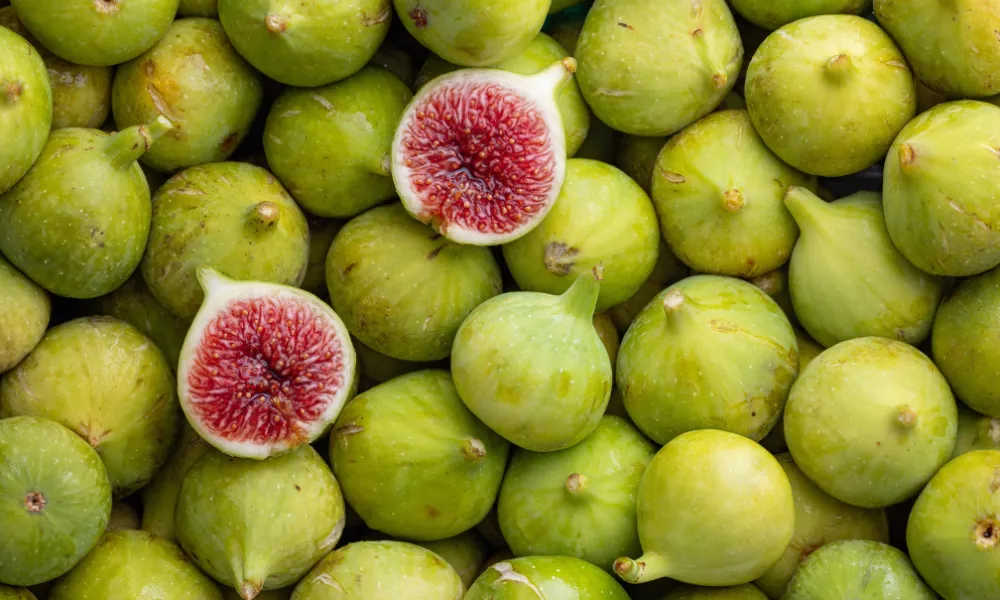
Botanically, the fig is not a conventional fruit but a specialised structure known as a syconium. Hundreds of tiny flowers grow inside it, eventually developing into the small seeds that give figs their characteristic texture.
This unusual structure has made the fig tree a subject of botanical study for centuries.
Figs in ancient Greece
The relationship between Greeks and figs stretches back to the Neolithic period. Fig remains have been discovered at Neolithic and Mycenaean settlements, while Linear B tablets indicate that they were already an important food during the Mycenaean era.
In ancient Greece, dried figs, known as ischades, were stored throughout the year and valued as a reliable source of energy. They appear in the works of Aristophanes and other ancient writers, while Hippocrates and Dioscorides included them in their medical texts.
Attica’s figs became so renowned that their illegal trade was reportedly treated as a serious offence. One widely cited theory connects this practice to the origin of the Greek word sykophantis, meaning informer or slanderer, although its precise etymology remains disputed.
A variety brought by refugees
Following the Asia Minor Catastrophe, families from the Smyrna region settled in Taxiarchis in northern Evia. They brought with them the Smyrna fig variety, along with their knowledge of fig cultivation and natural drying techniques.
The variety adapted well to the area’s microclimate and became the foundation of a local tradition that continues today.
The truth about fig wasps
The claim that “every fig contains a wasp” is one of the most persistent myths surrounding the fruit. The reality is more complicated.
Some varieties, including Smyrna-type figs, depend on the tiny wasp Blastophaga psenes for pollination. Most varieties currently cultivated in Greece, however, are parthenocarpic, meaning they can produce fruit without pollination by the insect.
The familiar claim therefore does not apply to most fresh figs sold in markets and greengrocers during the summer.
Greek varieties and PDO products
Greece has dozens of local fig varieties, but two products have received Protected Designation of Origin status from the European Union.
Kymi Figs PDO, produced in southern Evia from the Smyrna variety, are among Greece’s best-known dried figs. They are distinguished by their thin skin, light colour and concentrated sweetness.
Dried Taxiarchis Figs PDO are produced in northern Evia and continue the cultivation tradition introduced by Asia Minor refugees. They are known for their rich aroma and natural flavour.
Other prominent products include the Vasilika figs of Markopoulo, one of Greece’s most historic fresh fig varieties, and the tsapelosyka grown in Messinia, Laconia, Arcadia and elsewhere in the Peloponnese.
Internationally, widely cultivated varieties include Black Mission, Brown Turkey, Kadota, Adriatic, Calimyrna and Bursa Black, each with different colours, flavours and culinary uses.
Greek fig production
Greece does not match Türkiye or Iran in overall production volumes, but it retains a strong position in the high-quality dried fig market.
According to the latest international estimates, Greek dried fig production is expected to reach approximately 5,500 tonnes during the 2025/26 season, more than double the previous year’s total following the sector’s recovery from adverse weather conditions.
Greek dried figs are mainly exported to European Union countries, as well as the United States, Canada and Australia. Although production remains considerably lower than in Türkiye, the world’s leading producer, Greek figs command added value through their quality, traditional drying methods and the country’s two PDO-certified products.
How to choose ripe figs
A ripe fig should feel soft when pressed gently but should not be mushy. Its skin should be smooth and its aroma strong and sweet.
Unlike many other fruits, figs do not continue to ripen significantly after harvesting. If picked too early, they will not develop the same flavour. Fresh figs are consequently highly perishable and usually keep in the refrigerator for only two or three days.
How figs are eaten
Fresh figs can be enjoyed on their own or paired with feta, goat’s cheese, blue cheese, prosciutto and other cured meats. They also add sweetness to green salads and can be made into jam, chutney, spoon sweets and sykomagida, a traditional fig preparation.
Dried figs are commonly used in bread, cakes, cereal bars and cheese platters.
Source: Cantina, Proto Thema