
I had, in fact, considered not writing about the detail I am about to recount. There are certain pieces of information that a journalist does not publish the moment they are obtained, keeping them in reserve for a while so as not to damage the process and to allow diplomacy at least some room to manoeuvre. Yet a journalist's duty is not merely to report the news of the day. Writing history may be the task of historians, but leaving accurate and complete notes for those who will one day write the history of our times is also among the responsibilities of journalism.
I would therefore like what follows to be read not simply as a piece of diplomatic gossip, but as a small yet important record that may help explain the central impasse that has remained unresolved in the Cyprus problem for more than half a century. For the conflict is not rooted solely in constitutional provisions, maps, property arrangements or security guarantees. At its core lies the fact that two sides accepted as equal at the negotiating table are not treated as equal once that table is left behind.
Equal at the table, unequal afterwards
The intercommunal negotiations in Cyprus are conducted under the Good Offices Mission entrusted to the UN secretary-general by the United Nations Security Council. Whether formal or informal, every negotiating format involving the two sides rests on the assumption of political equality. The Greek Cypriot leader and the Turkish Cypriot leader, or the negotiators authorised by them, sit at the table as equal parties.
It could hardly be otherwise. Had one side been regarded as a state and the other as a minority community rebelling against that state's authority, there would have been no need for the secretary-general's Good Offices Mission, for meetings between the two leaders or for five-plus-one formats. What would be taking place in such circumstances would not be an intercommunal settlement process, but an internal political or administrative dialogue between a central government and its own citizens.
Yet the greatest contradiction of the Cyprus problem begins precisely here. When the doors of the negotiating room are closed, the two leaders are treated as equal interlocutors. Once those doors open, however, the Greek Cypriot leader again becomes the "head of state," while the Turkish Cypriot leader is reduced to the representative of a community in dispute with the central government and seeking certain collective rights.
No genuine partnership state can be built so long as this double standard continues. A partnership cannot be established between a superior party and a subordinate one, but only between equal partners who recognise one another's rights and constituent will.
Cyprus suffers above all from a balance deficit
As I have long argued, the central problem in Cyprus is not merely a constitutional deficit. It is, above all, a deficit of balance. From the 1977 and 1979 High-Level Agreements to the parameters of a bicommunal, bizonal federation, from the Annan Plan to the Guterres Framework discussed at Crans-Montana, the common purpose of every formula has been to establish a sustainable political balance between the island's two peoples.
Yet the political equality accepted on paper has never been fully reflected in international practice. The Greek Cypriot community may possess the numerical majority, but the Turkish Cypriot people are not a community that should exercise certain minority rights at the discretion of that majority. Turkish Cypriots were one of the two constituent elements of the 1960 partnership republic and must also be the politically equal partner, not the second-class citizen, of any future settlement.
Political equality does not, of course, require a mechanical fifty-fifty division of population or parliamentary seats. What matters is that one side must not be able to decide on behalf of the other, that the will of both peoples must be present in the fundamental decisions of the common state, and that neither community should fall under the rule of the other.
This is why Tufan Erhürman's insistence on political equality, effective participation, time-bound negotiations, the preservation of past convergences and a guarantee that there will be no return to the old status quo after another failure is so important. Erhürman has brought the federal framework back onto the agenda, while also making clear that federation cannot mean decorating the Greek Cypriot majority's unitary state and then offering it to Turkish Cypriots.
Looking across the Green Line as though into a zoo
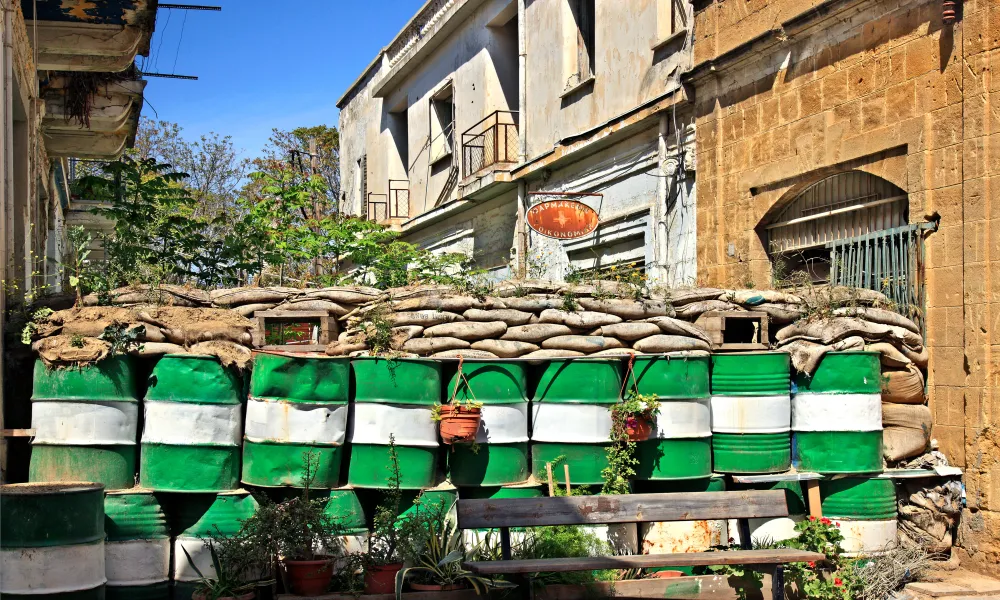
The practice of taking European Commission President Ursula von der Leyen and other foreign heads of state and government visiting the Republic of Cyprus to look north through the barrels and barriers of the Green Line has, regrettably, become the visual expression of this approach to status. Northern Cyprus is not a political zoo to be observed from a distance. Nor are Turkish Cypriots an exotic community to be shown to visitors through binoculars and then forgotten.
Perhaps this is not the intention of those visitors. Yet the message conveyed by the resulting image is unmistakable: "Unless you submit to the existing structure of the Republic of Cyprus, you will continue to live under international isolation."
In diplomacy, images and perceptions matter as much as intentions. Meeting the Greek Cypriot leader in his palace while merely looking towards the Turkish Cypriot side from afar, or receiving the Turkish Cypriot leader only in the buffer zone, reinforces the sense that the two parties are not accorded equal value. Far from encouraging a settlement, this demeaning approach nourishes the belief among Turkish Cypriots that they will never truly be accepted as equal partners in the Greek Cypriot mind.
It is also one of the factors that have weakened support for federation and strengthened the search for a two-state solution. One cannot offer people a partnership while simultaneously attempting to render them invisible and then expect them to place their trust in that partnership.
It was Guterres' decision, not Erhürman's invitation
Let us now turn to a detail known to very few people. The decision by UN Secretary-General António Guterres to cross to the north and visit Tufan Erhürman at his office was not made in response to a special invitation from the Turkish Cypriot leader. It was the secretary-general's own decision, and the task of conveying the programme to the parties was given to his Personal Envoy, María Ángela Holguín.
Unable to reach the two leaders directly, Holguín tried to contact their negotiators. She could not reach the Greek Cypriot negotiator, Menelaos Menelaou, and therefore called the Turkish Cypriot negotiator, Mehmet Dana. When Dana answered, an intriguing coincidence emerged: Dana and his wife were at a social gathering, dining together with Menelaou and his wife.
At Holguín's request, the call was placed on speaker. Dana and Menelaou thus learned at the same time that the secretary-general would be coming to the island and heard the programme he had prepared. It was perfectly clear. Guterres would visit both leaders at their own offices, host them at a joint dinner, hold a trilateral meeting the following day and then leave the island after giving a press conference.
There was therefore no invitation manoeuvre devised by Erhürman, nor any last-minute attempt by the Turkish Cypriot side to insert such a visit into the programme. The UN secretary-general had decided, in the context of his Good Offices Mission, to visit both leaders at their respective offices. Presenting this as a "status upgrade" had neither a legal nor a diplomatic basis.
Had international status been attainable through a single visit, the Cyprus problem would have been resolved long ago.
Such visits were not unprecedented
Guterres' visit to Erhürman at his office was by no means unprecedented in the history of Cyprus. During his 2010 visit to the island, UN Secretary-General Ban Ki-moon met the then Turkish Cypriot leader Mehmet Ali Talat at the presidential offices in the north. At the time, Greek Cypriot political circles again reacted fiercely, claiming that the visit amounted to a "status upgrade" and would give the Turkish Cypriot side a political advantage.
What happened afterwards? Did the north become a member of the United Nations? Were Security Council resolutions changed? Was northern Cyprus internationally recognised? Of course not. Ban Ki-moon's visit was simply a meeting with one of the two equal interlocutors in the intercommunal negotiations then under way, held at that interlocutor's own place of work.
A similar example occurred in 2014. During his visit to the island, then US Vice President Joe Biden met the Turkish Cypriot leader of the time, Derviş Eroğlu, in the north. That visit did not lead to recognition of the north, did not produce any legal change in US policy on Cyprus and did not harm the international status of the Republic of Cyprus.
Since the time of Kofi Annan, UN special representatives, foreign ministers, ambassadors, officials of European institutions and many senior diplomats have visited Turkish Cypriot leaders at the presidential offices. None of those contacts automatically produced recognition.
In diplomacy, recognition does not arise because an official walks through a particular doorway or holds a meeting in a certain building. It comes through explicit legal and political decisions by states and international organisations. It is impossible to believe that the Greek Cypriot side does not know this. The uproar, therefore, is less about protecting status than about keeping the international visibility and diplomatic standing of the Turkish Cypriot side at the lowest possible level.
The programme was leaked and a crisis was engineered
When Guterres' programme became known, alarm bells began to ring on the Greek Cypriot side. The schedule was leaked to the press, and what should have remained a diplomatic visit was turned into an instrument of domestic politics. Nikolas Papadopoulos and those around him, in particular, attempted to transform the issue into a means of political pressure extending even to the threat of a government crisis.
During Ban Ki-moon's 2010 visit, the storm had broken after the meeting had taken place. This time, the intention was to provoke the crisis before the visit and, if possible, prevent the meeting in the north altogether. When another colleague and I reported the development in good time, the political game being constructed was largely disrupted.
It was later conveyed through appropriate channels that cancelling a visit included in the programme drawn up by the UN secretary-general, without any invitation or personal initiative from Erhürman, would carry serious consequences. Had the secretary-general yielded to Greek Cypriot domestic political pressure and abandoned a meeting with the Turkish Cypriot leader at his office, it would have dealt a severe blow to the UN's claim of maintaining equal distance from the two sides.
In the end, the issue was quietly taken off the agenda without being allowed to escalate further, and the visit proceeded as planned. Yet the controversy it left behind once again exposed the deep obsession with status that continues to shape Greek Cypriot politics.
Not a status upgrade, but procedural equality
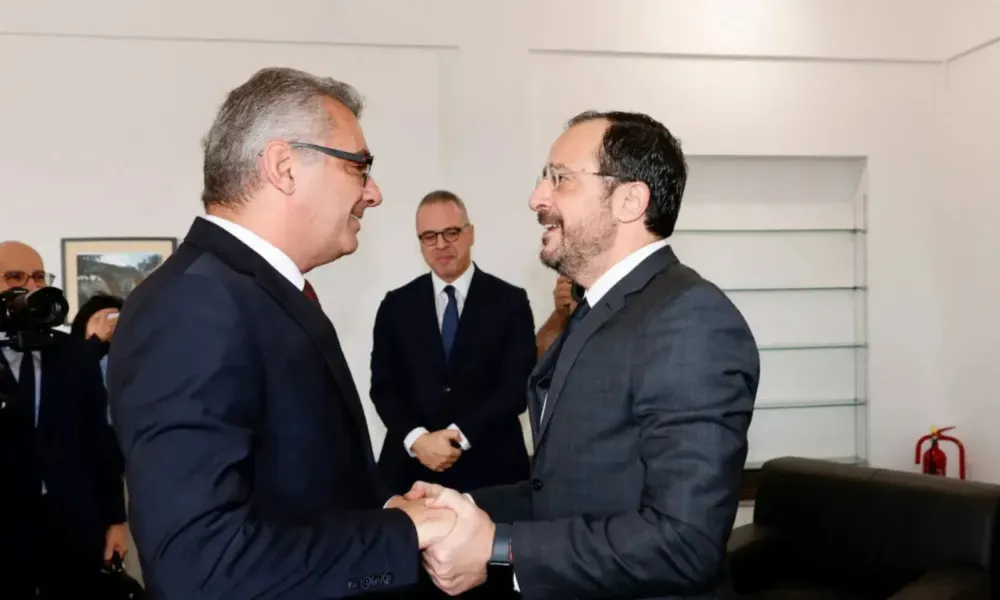
Guterres' decision to visit both leaders at their offices was not legal recognition. It was procedural equality. Had the UN secretary-general met one side's leader at the presidential palace while summoning the other only to the buffer zone, he would not have been treating the two parties to the negotiations equally.
Procedural equality should not be confused with sovereign equality or international recognition. Establishing an equal relationship of diplomatic interlocution with the Turkish Cypriot side does not automatically amount to recognition of the north. It does, however, confirm that the Turkish Cypriot people are an equal party to the settlement process.
That is, in any case, the minimum requirement for the survival of the UN process. To regard a meeting at the office of a leader accepted as an equal party at the negotiating table as excessive is to empty the principle of political equality of all substance.
If the Greek Cypriot side truly seeks a federal settlement, it must abandon the habit of treating the political visibility of Turkish Cypriots as a threat. Federation is not the incorporation of the Turkish Cypriot community into the existing Greek Cypriot state. It is the creation of a new and common order by two constituent peoples.
The image of a "state" and a "rebellious minority"
A settlement will remain extraordinarily difficult so long as Greek Cypriots are perceived as the "state" and Turkish Cypriots as a "rebellious minority." Genuine political equality cannot be established in an order where the Greek Cypriot leader is treated as the internationally recognised head of state and the Turkish Cypriot leader as the head of a community in dispute with the government.
This outlook is not confined to the Greek Cypriot side. A significant part of the international community has adopted the same pattern of behaviour, largely because of practical convenience and the international recognition enjoyed by the Republic of Cyprus. While relations with the Greek Cypriot side are conducted on a state-to-state basis, contacts with the Turkish Cypriot side are kept as invisible and low-profile as possible.
This approach does not resolve the problem. It entrenches it. It tells the Greek Cypriot side that it can remain the sole owner of the existing state without changing its behaviour, while telling Turkish Cypriots that they will remain isolated for as long as they insist on equality.
Such a system of incentives cannot produce compromise. It reinforces the belief that the Greek Cypriot side has no need to share power, while the Turkish Cypriot side has no option other than submission.
Whatever its name, there are two equal peoples
Perhaps the hydrocarbon resources of the Eastern Mediterranean will one day compel cooperation. Perhaps the geopolitical transformation of the region, Europe's security needs or a reconfiguration of relations between Türkiye and the European Union will open a new window. Perhaps another development, one we cannot yet foresee, will force the parties into the compromise they have resisted for so long.
Yet however much external conditions may change, the fundamental reality will remain the same: there are two peoples on this island, and neither is the minority of the other. If Turkish Cypriots and Greek Cypriots are to build a common future, they must do so not through the subordination of one side to the other, but on the basis of mutually accepted equality.
The settlement may be called a federation. It may be a looser federation, a partnership with confederal characteristics or another model not yet agreed upon. The powers of the common state may be limited, while those of the constituent states remain broad. Cooperation may come first, followed later by constitutional partnership.
Whatever the name or form, however, the indispensable condition will remain political equality. An arrangement without effective participation, a rotating presidency, at least one affirmative Turkish Cypriot vote and mechanisms protecting the will of both sides would not be a federation, but majority rule.
The real test before Guterres
Guterres cannot resolve the Cyprus problem on his own. As he approaches the end of his term, the most important contribution he can make is to compel the parties to answer the fundamental question clearly: Do the two peoples genuinely wish to build a common state on the basis of political equality, or have they reconciled themselves to the permanent division of the island?
There are some positive elements in the present circumstances. The UN secretary-general is directly engaged in the process. The Greek Cypriot leader says he is ready for negotiations to resume. The Turkish Cypriot leader does not rule out the federal framework, but insists that the method and political equality must first be secured. The European Union is seeking a more active role, while Ankara continues to stress that no process can succeed if the inherent rights of the Turkish Cypriot people are ignored.
Yet none of these elements will be sufficient so long as the status wall remains in place. If an ordinary meeting at the office of the Turkish Cypriot leader can trigger talk of a government crisis on the Greek Cypriot side, the question of how genuine power-sharing in a common state could ever be accepted remains unanswered.
Ban Ki-moon came and met Mehmet Ali Talat at his office. Joe Biden came and met Derviş Eroğlu. António Guterres has now come and visited Tufan Erhürman at his office. None of these meetings brought recognition to the north, nor did they erase the status of the Republic of Cyprus.
Each visit did, however, remind us of another truth: the Cyprus problem cannot be resolved by rendering the Turkish Cypriot people invisible. A people treated as equal at the negotiating table but as a minority outside the room cannot be expected to place its trust in a partnership state.
Until the status wall is broken down, no balance can be established. Without balance, trust cannot be created. And without trust, no shared future can be built in Cyprus.