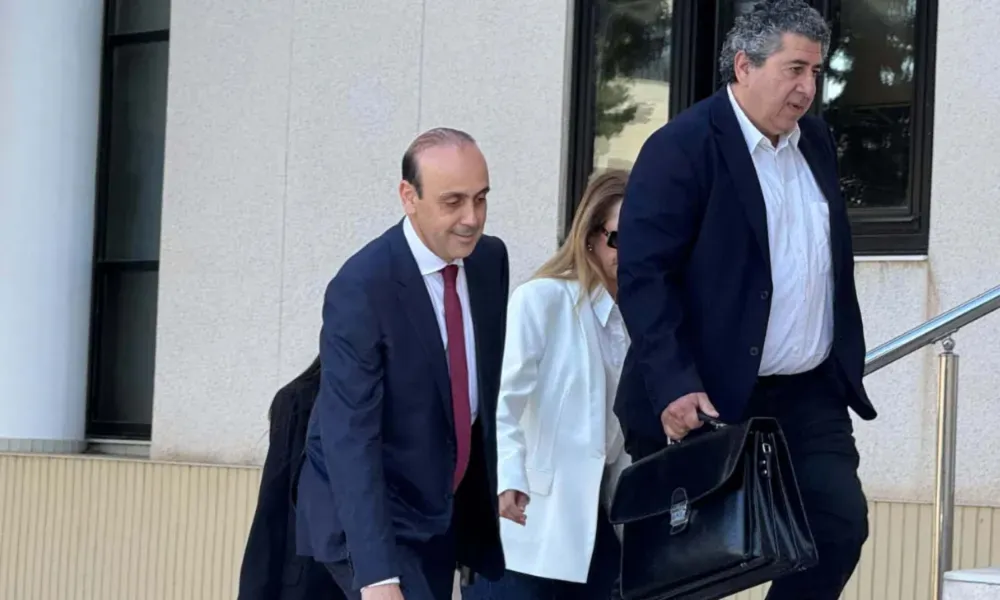

The trial of suspended Paphos Mayor Phedonas Phedonos continued on Tuesday before the Permanent Assize Court sitting in Paphos, with witness testimony forming part of the ongoing proceedings.
The trial is being conducted behind closed doors following a court ruling granting a request by the prosecution.
The prosecution is being led throughout the proceedings by Senior Counsel of the Republic Mikaella Pasiardi. Prior to the filing of the indictment, the case had been handled by the Paphos office of the Legal Service under prosecutor Eirini Savva.
Phedonos faces five charges, including:
- Rape;
- Indecent assault against a woman;
- Indecent assault against a woman by another act;
- Assault occasioning actual bodily harm;
- Administering a drug or other substance capable of stupefying or overpowering a person's resistance.
He has denied all charges.
Following the submission of evidence, the court began hearing witnesses, initially members of the investigating team, as the prosecution seeks to substantiate the allegations against the defendant.
Hearing schedule
According to the court's schedule, the case is being heard over five consecutive hearing days, from 27 to 31 July.
New dates for the continuation of the proceedings, likely in September, are expected to be set on Friday.
Defence sought public hearing
Phedonos' defence lawyers, Christos Pourgourides and Epaminondas Korakides, had requested that the trial be conducted in public.
However, the president of the Assize Court ordered that the proceedings take place behind closed doors.
In its ruling, the court said that, given the nature of the alleged offences and material contained in the case file, there was a clear risk of violating the complainant's privacy and of affecting her testimony through fear, anxiety or potential social stigma.
The court also held that the defendant's rights would remain fully protected despite the exclusion of the public.
It further rejected the possibility of closing only part of the proceedings, such as during the complainant's testimony, noting that sensitive personal information could emerge through other witness testimony as well.