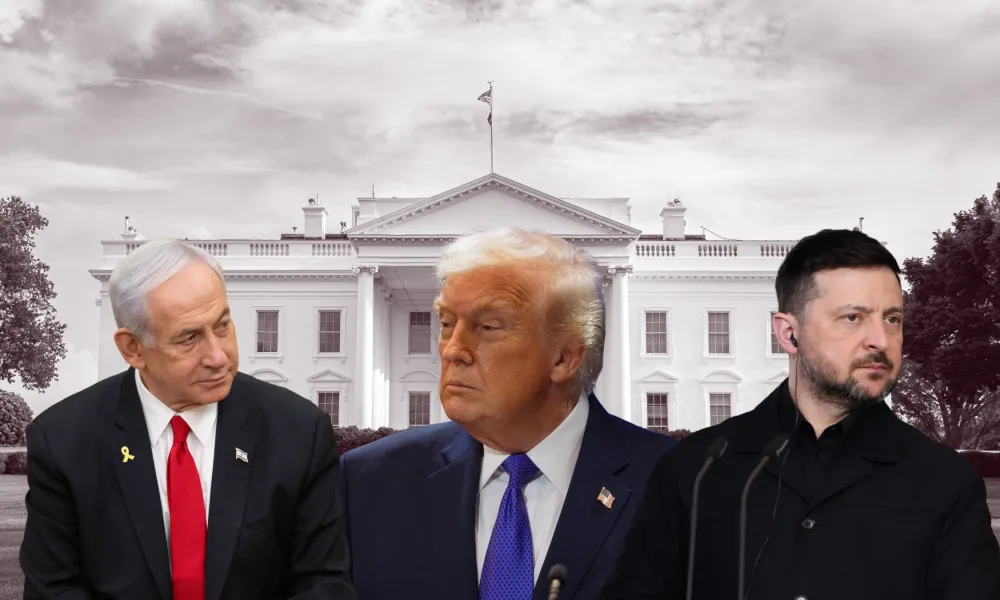

President Donald Trump is holding separate meetings on Tuesday with Israeli Prime Minister Benjamin Netanyahu and Ukrainian President Volodymyr Zelenskyy. The wars in Iran and Ukraine are both at delicate turning points, and Washington's relationship with each leader is on a different trajectory.
Both leaders are in the US capital primarily to attend memorial and funeral services for Senator Lindsey Graham, a hawkish Republican and one of Trump's closest allies in the Senate. Graham passed away on 11 July at the age of 71 from an aortic dissection, just days after returning from a trip to Ukraine where he met Zelenskyy and toured a drone factory. Services began at the Capitol on Tuesday, followed by a funeral at Washington National Cathedral, before Graham's remains are taken to South Carolina for a further service on Wednesday.
A pause, not a peace, in the Iran war
The backdrop to Netanyahu's visit is a fragile and temporary halt in the conflict between the United States and Iran. After nearly two weeks of intensifying American airstrikes, which followed the collapse of an earlier ceasefire, the Pentagon suspended its bombing campaign late last week. Iran has reciprocated by holding fire, although its foreign ministry has stated that there are currently no active negotiations with Washington, only ongoing talks with Oman regarding the future of the Strait of Hormuz. Shipping through the strait remains significantly below pre-war levels, and Iran-backed Houthi rebels have opened a second front by threatening Saudi oil tankers in the Red Sea, pushing oil prices sharply higher.
Trump has indicated that the pause is intended to give diplomacy a chance, while warning that strikes will resume if no new deal is reached. It is against this uncertain backdrop that he and Netanyahu will discuss Iran, Lebanon, and the wider region on Tuesday.
Netanyahu arrives politically exposed
Netanyahu's position at home has weakened considerably. Israel's parliament has confirmed that national elections will take place on 27 October, the last date allowed by law, marking the first time since 1988 that a Knesset has served a full term. The vote is widely seen as a referendum on Netanyahu's leadership during the wars in Gaza, Lebanon, and Iran. Polling this year has shown his approval ratings falling sharply, and a survey by the Hebrew University of Jerusalem found a large majority of Israelis believe Iran, not Israel, emerged ahead in the conflict with Tehran. Former military chief Gadi Eisenkot has emerged as his most serious challenger, with ex-prime minister Naftali Bennett also positioning for a run.
In this context, a warm public meeting with Trump would be a political asset that Netanyahu desperately needs. The relationship between the two leaders has been strained at times, most notably by a heated phone call in June during which Trump used an expletive to describe Netanyahu. This call was first leaked and later confirmed by Trump himself. More recently, however, Trump has spoken positively of the Israeli leader, telling reporters that "Bibi's been great."
Discussions are expected to cover Iran, tensions between Israel and Lebanon, and the Abraham Accords, the normalisation agreements Trump brokered between Israel and several Arab states. The White House is pushing to bring Saudi Arabia into the accords, although Riyadh has so far resisted doing so without progress toward Palestinian statehood.
Zelenskyy in a stronger position
Zelenskyy's meeting with Trump comes from a markedly different position. Ukraine has recently blunted Russian advances and intensified strikes on Russia's oil industry, leading to improved relations between Kyiv and Washington, which were openly hostile earlier in Trump's second term. Zelenskyy has stated that air defence cooperation, including Patriot missile interceptors, is his top priority in Washington, alongside progress on a drone deal and discussion of Trump's pledge at the NATO summit to license Ukrainian production of Patriot interceptors.
Zelenskyy is expected to have a brief private meeting with Trump before addressing the full US Senate. His visit coincides with the Pentagon informing Congress that it will not release the remaining 400 million dollars in authorised Ukraine aid until the 2029 fiscal year, a decision that has drawn criticism from members of both parties given Ukraine's ongoing shortage of weapons to counter Russian missile attacks.
Why the two meetings will look so different
The contrast between Tuesday's two encounters is likely to be stark. Netanyahu needs a visible show of solidarity from Trump to bolster his re-election prospects, at a moment of real doubt over whether the Iran conflict has been resolved or merely paused. Zelenskyy, in contrast, arrives with battlefield momentum and a narrower, more technical set of requests focused on air defence and weapons supply. Both meetings will be closely observed for signs of how firmly Washington intends to support each leader in the months ahead, with an Israeli election and an unresolved war with Iran on one side, and a protracted conflict in Ukraine on the other.