
On 4 May 2026, independent researcher and administrator of the ‘1974 Witness Accounts and Evidence’ Facebook page Odysseas Christou posted a photograph of a blindfolded Greek Cypriot prisoner of war (POW) in military attire from 1974 with the aim of identifying him and determining his fate.
Speaking to Politis on 12 May, Christou explained that he colourised and edited the original photo to focus attention on the “giant prisoner”, but also on the black Mercedes seen in the background. This specific German automobile is well known among those investigating the fate of missing persons as it was used to transport detainees for interrogation. It’s mere presence in the photo is ominous.
Christou said the first goal was to gather information on the circumstances of the POW’s capture and fate. The next step would be to focus on the blindfolded civilian also seen in the original photo, and then on the Turkish journalist posing with the detainees. The researcher said the man could have access to key archival footage that would help ascertain the fate of missing persons.
A few days earlier in a televised interview, Christou spoke of a TV crew bearing witness to an execution during that period. He argued that a certain important television journalist “must know something”.
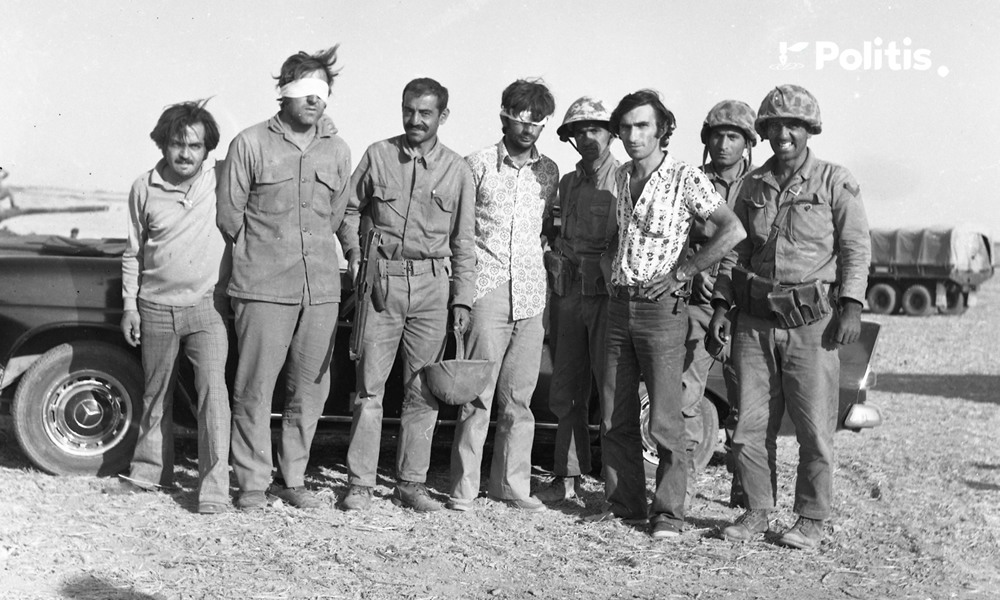
Following the photo’s publication, Christou announced that the blindfolded POW had been identified as the then 28-year-old reservist, Makis Sergides, who worked on a horse farm in Mia Milia. He is on the list of missing persons under investigation by the Committee on Missing Persons (CMP). The second captive was not identified, though there is a possibility he may have been released later at Ledra Palace.
Christou noted that 14 people went missing from that area of the Mesaoria plain during the war – only three have been found to date.
There are currently 933 people still missing in Cyprus – 746 Greek Cypriots and 187 Turkish Cypriots.
International law
Under the 1949 Geneva Convention, POWs are afforded strong legal protection as captives. Article 4 provides for: protection from violence, intimidation and torture; humane treatment; and access to the Red Cross.
The definition of a prisoner of war includes army reservists and war correspondents, provided they take no part in hostilities. The latter are protected from prosecution for lawful acts of war reporting.
Article 130 provides that any mistreatment, disappearance or execution of prisoners constitutes a grave breach of international law.
European Parliament
DIKO MEP Costas Mavrides is holding an event in Brussels on Wednesday, 10 June, titled, ‘New Findings and Testimonies About Missing Persons of Cyprus’ in the presence of the Standing Rapporteur for Missing Persons in Cyprus, MEP Francois-Xavier Bellamy.
Christou, who will be present, told Alpha News he welcomes “the opportunity to present some things that have to do with the so-called Turkish archives, and particularly about Turkish television.”
The photo’s origin
The original photo in black-and-white shows two blindfolded men with their hands behind their backs – a POW and a civilian detainee – flanked by four Turkish soldiers, and two civilians. They stand in front of a shiny black Mercedes with the front wheel hubcap displaying the famous three-pointed star. One civilian, shorter in height, is seen stretching his arm over the neck of the ‘giant prisoner’ in a domineering manner. He is believed to have been a member of the Turkish Resistence Organisation (TMT) formed in 1957, though he has yet to be identified by name. The other civilian, in the more presentable attire, is Selim Esen – 31 at the time; a television journalist and war correspondent for Turkish Radio and Television Corporation (TRT).
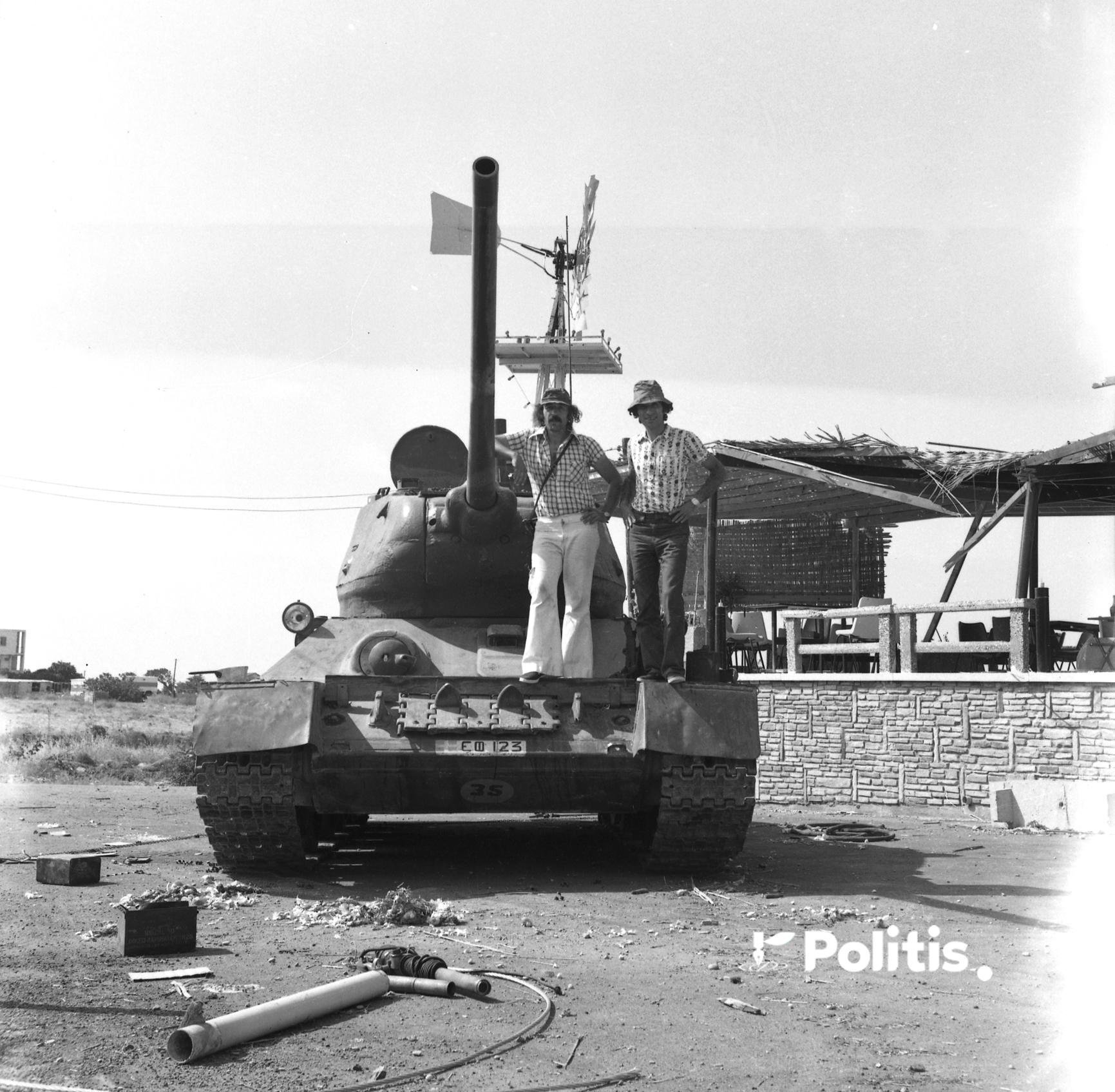
The Turkish public broadcaster sent several teams of journalists to the island in the summer of 1974 to report on the invasion.
Esen was flown to Cyprus from Mersin’s Ovacik base by helicopter on 10 August, along with journalist Ceyhan Baytur and two cameramen, Vedat Güres and Sonat Konor.
Esen later went on to establish the visual section of Anadolu Agency while Baytur served as the agency’s director general.
It was either Güres or Konor who took the photo of Esen with the two blindfolded captives.
Two Turkish journalists
Politis tracked down two of the four-man TRT television crew that covered the war in Cyprus in August 1974 – Selim Esen, 83, and Ceyhan Baytur, 85 – holding a video call with them in late May. Turkish Cypriot journalist Yusuf Kanlı, vice-chair of the Association of Journalists in Ankara, acted as interpreter for the two.
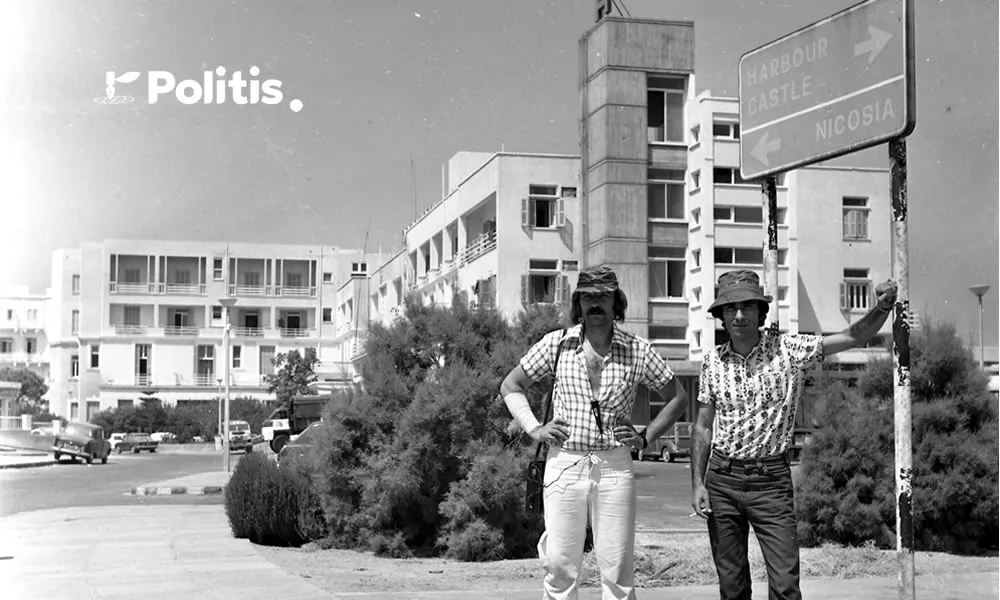
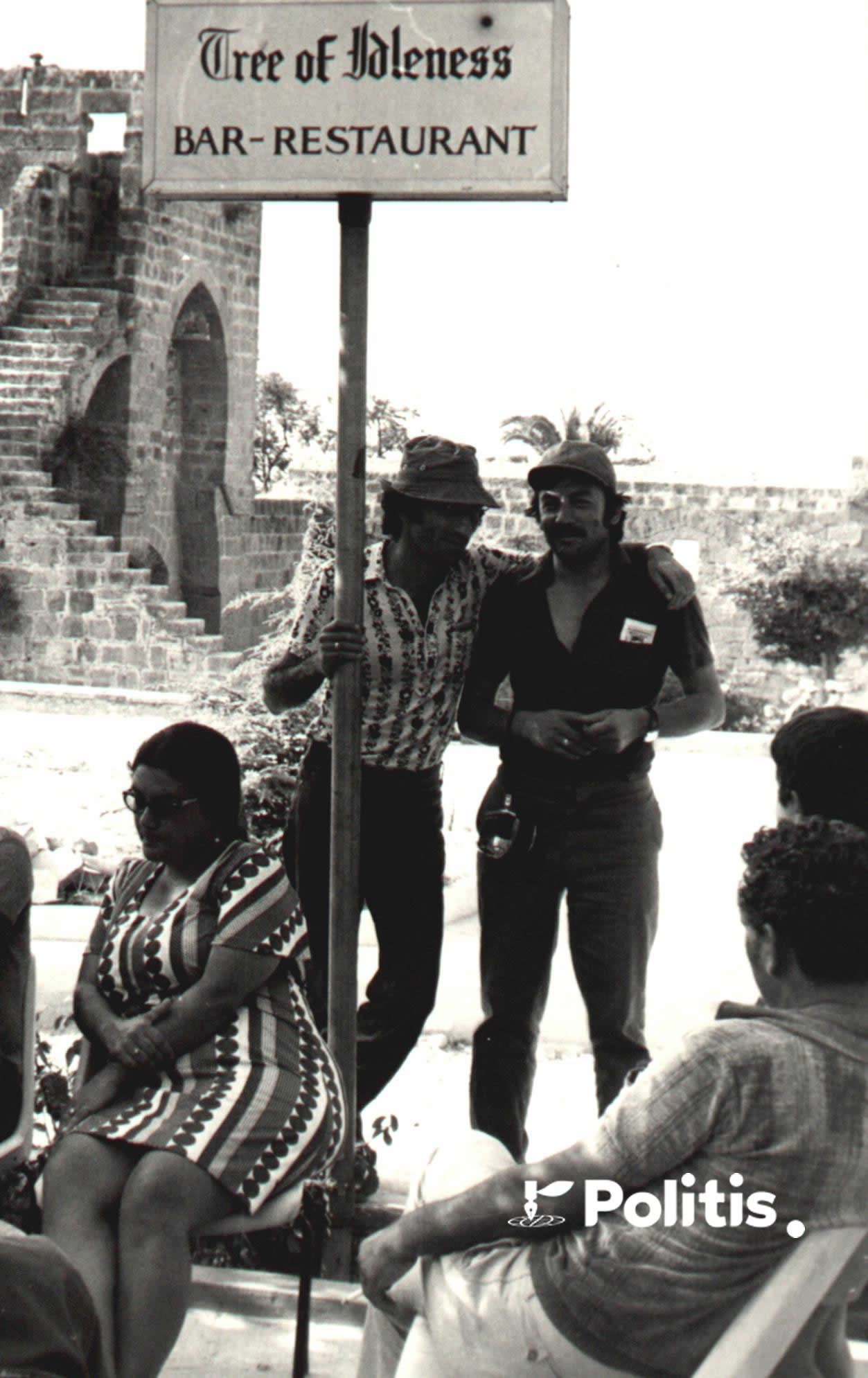
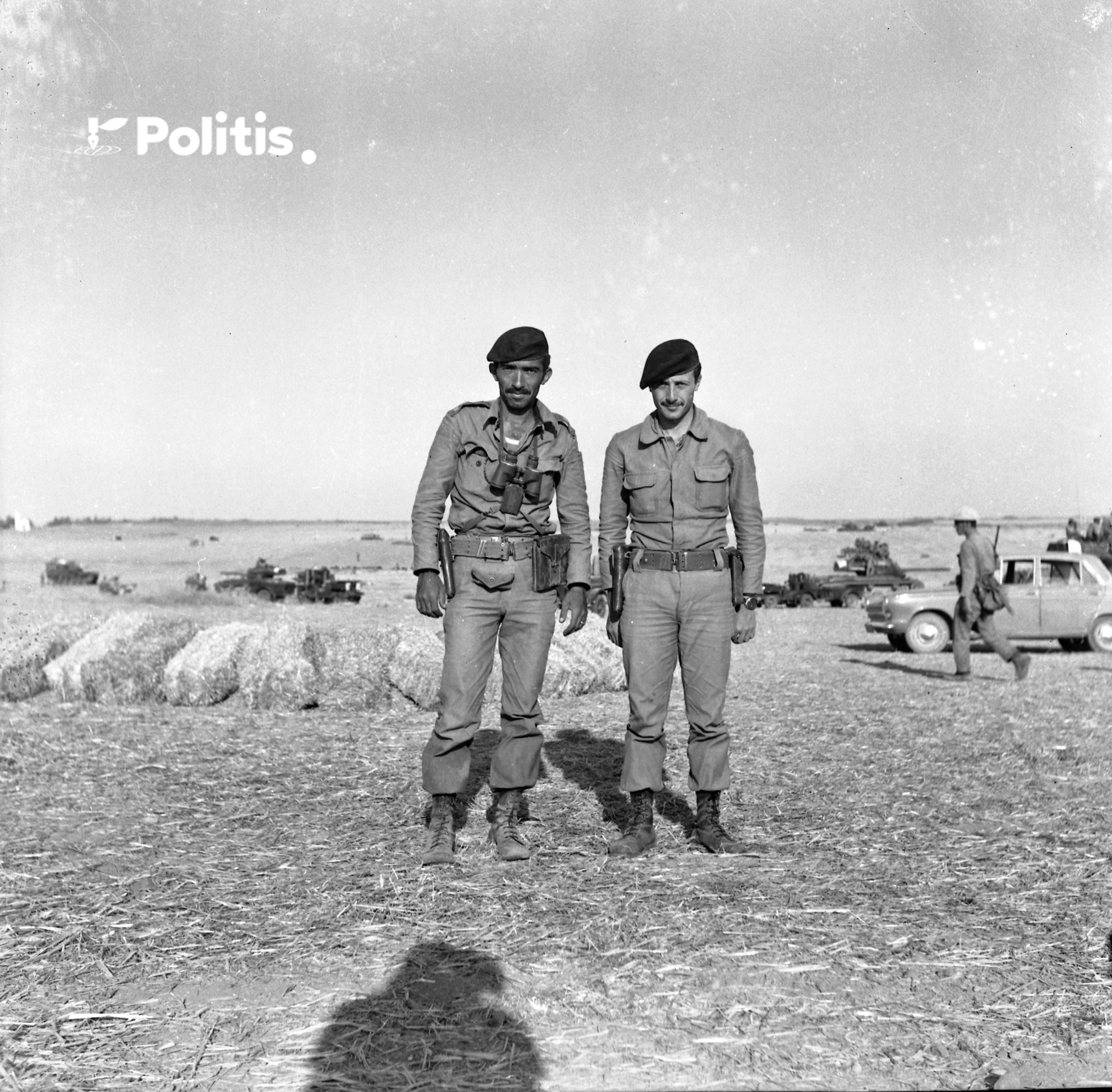
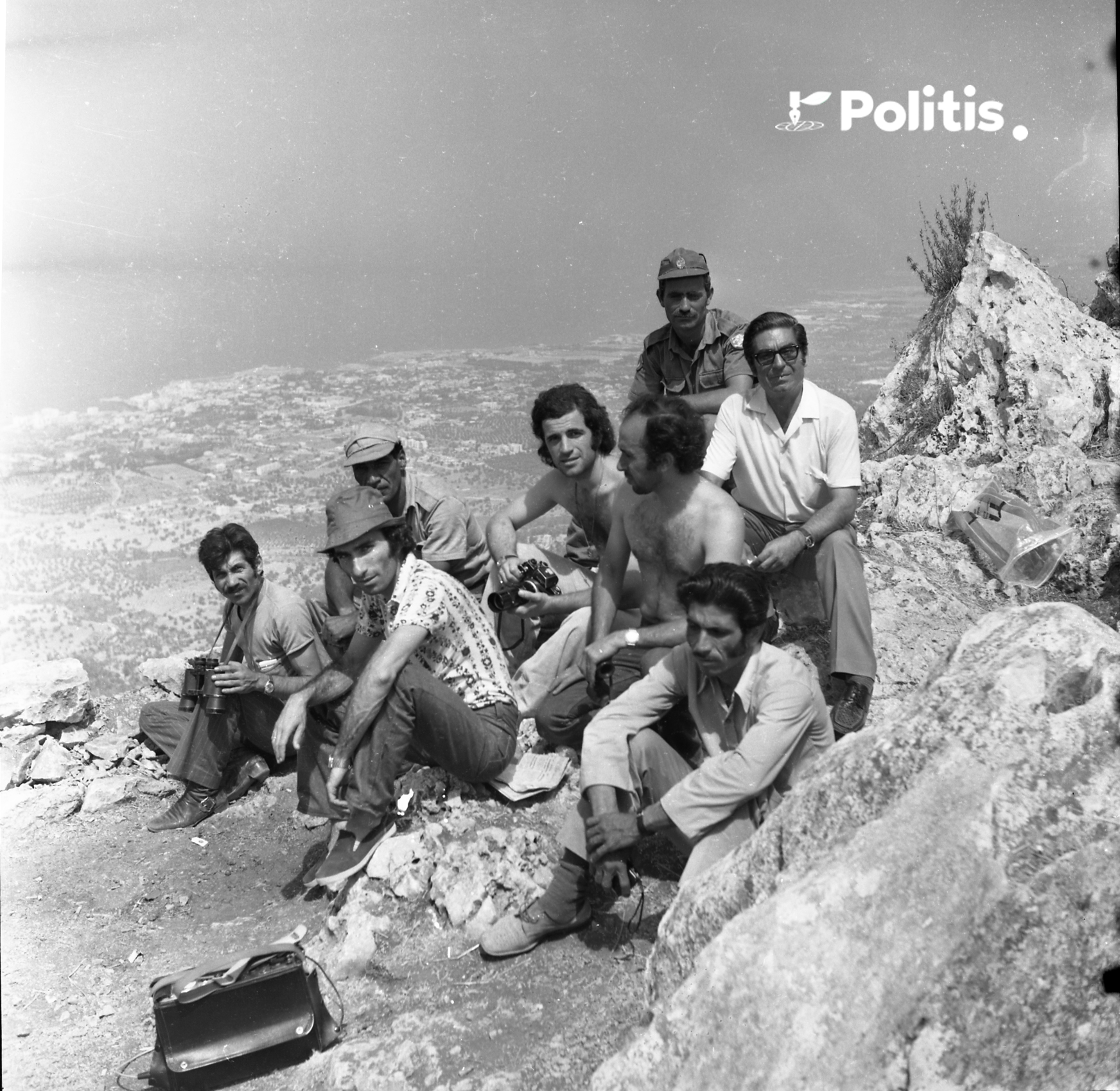
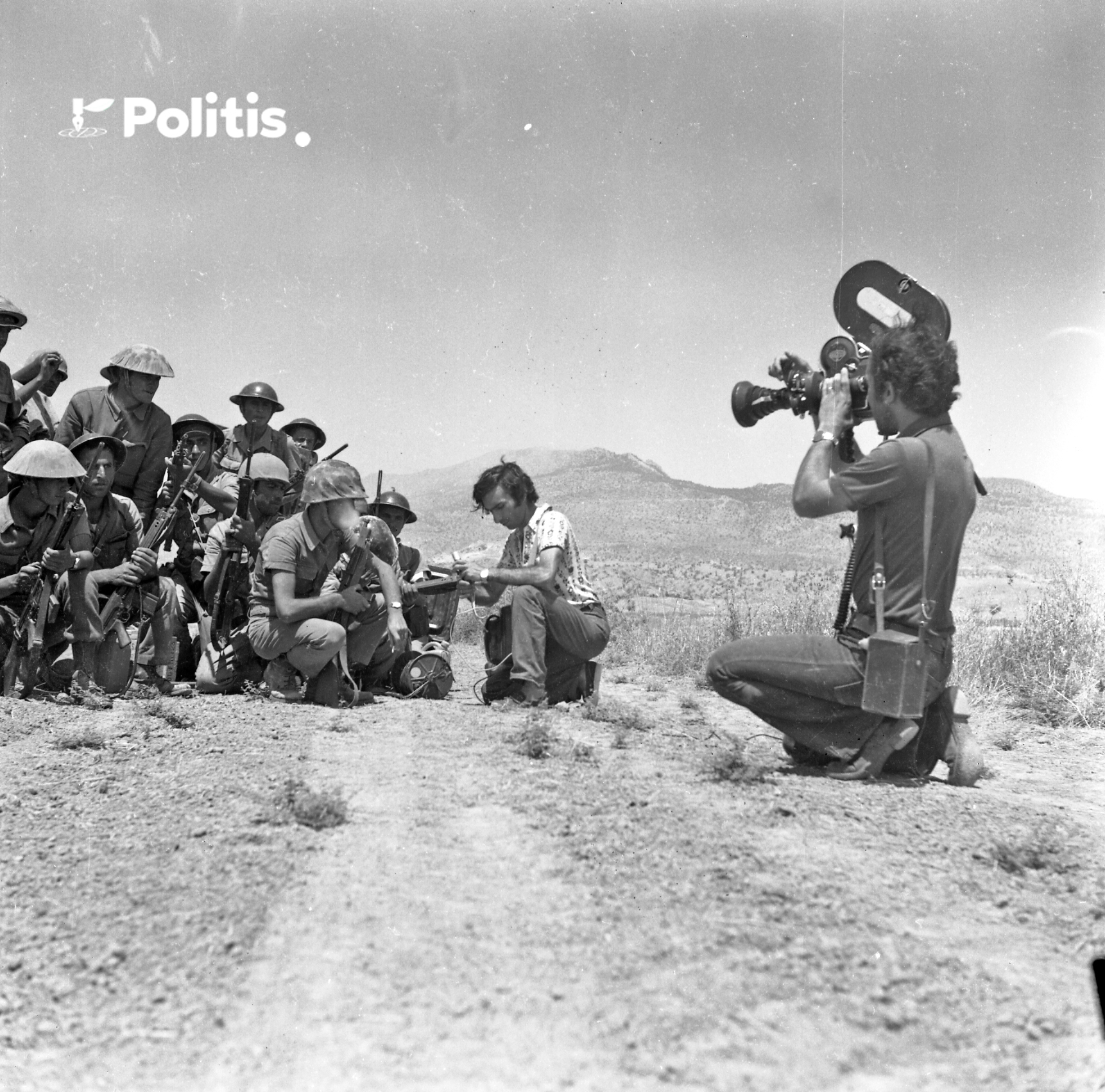
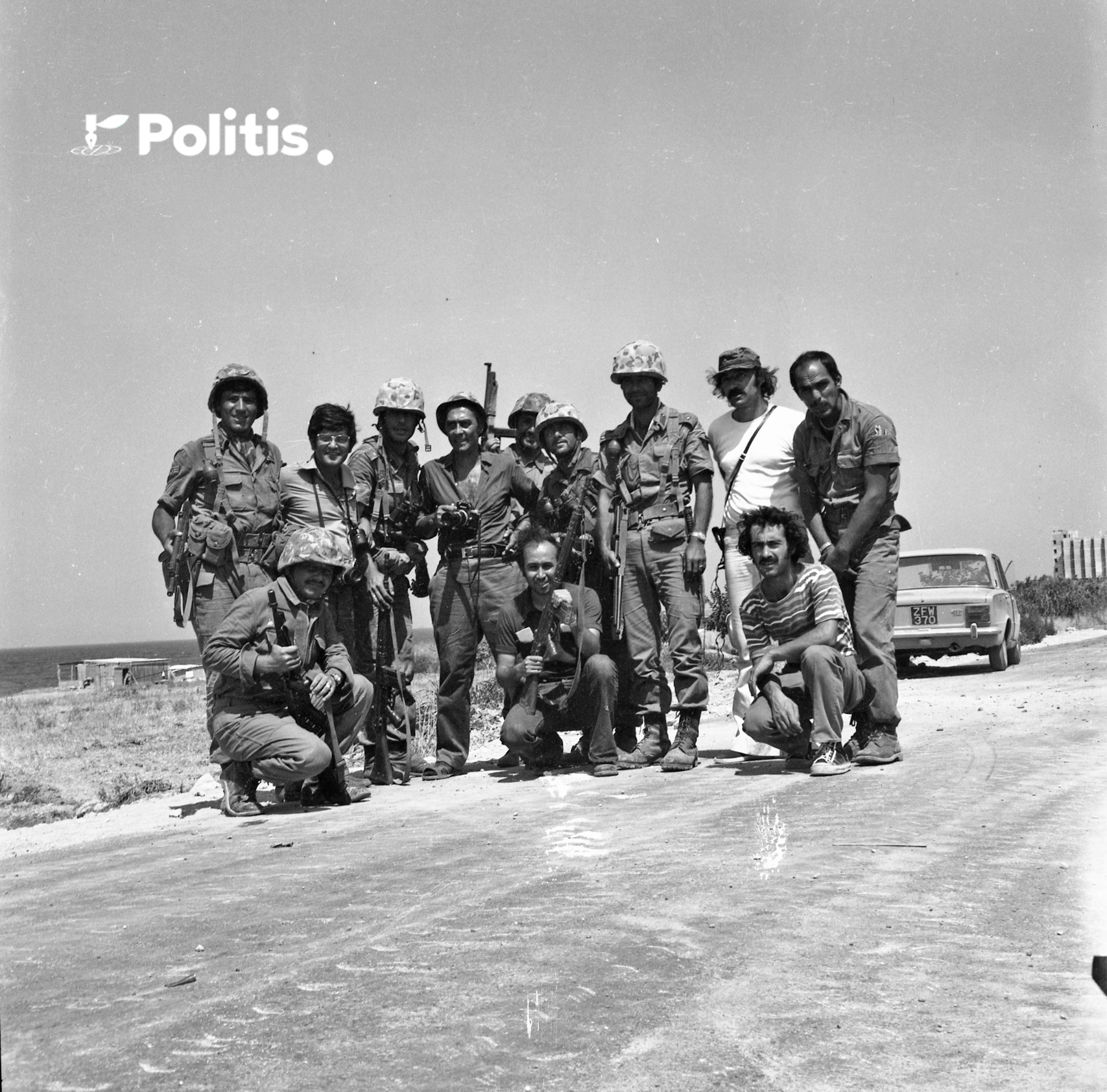
After the interview, Esen shared a number of black-and-white photos from his personal archive, including photos of the TRT crew in different parts of Cyprus – standing on tanks, next to signposts, embedded with the Turkish army, joined by fighters in civilian clothing. The photos appear to be have been taken in Lapithos, Kyrenia, Pentadaktylos, Bellapais, and Mia Milia. None of the other photos contain images of Greek Cypriot captives.
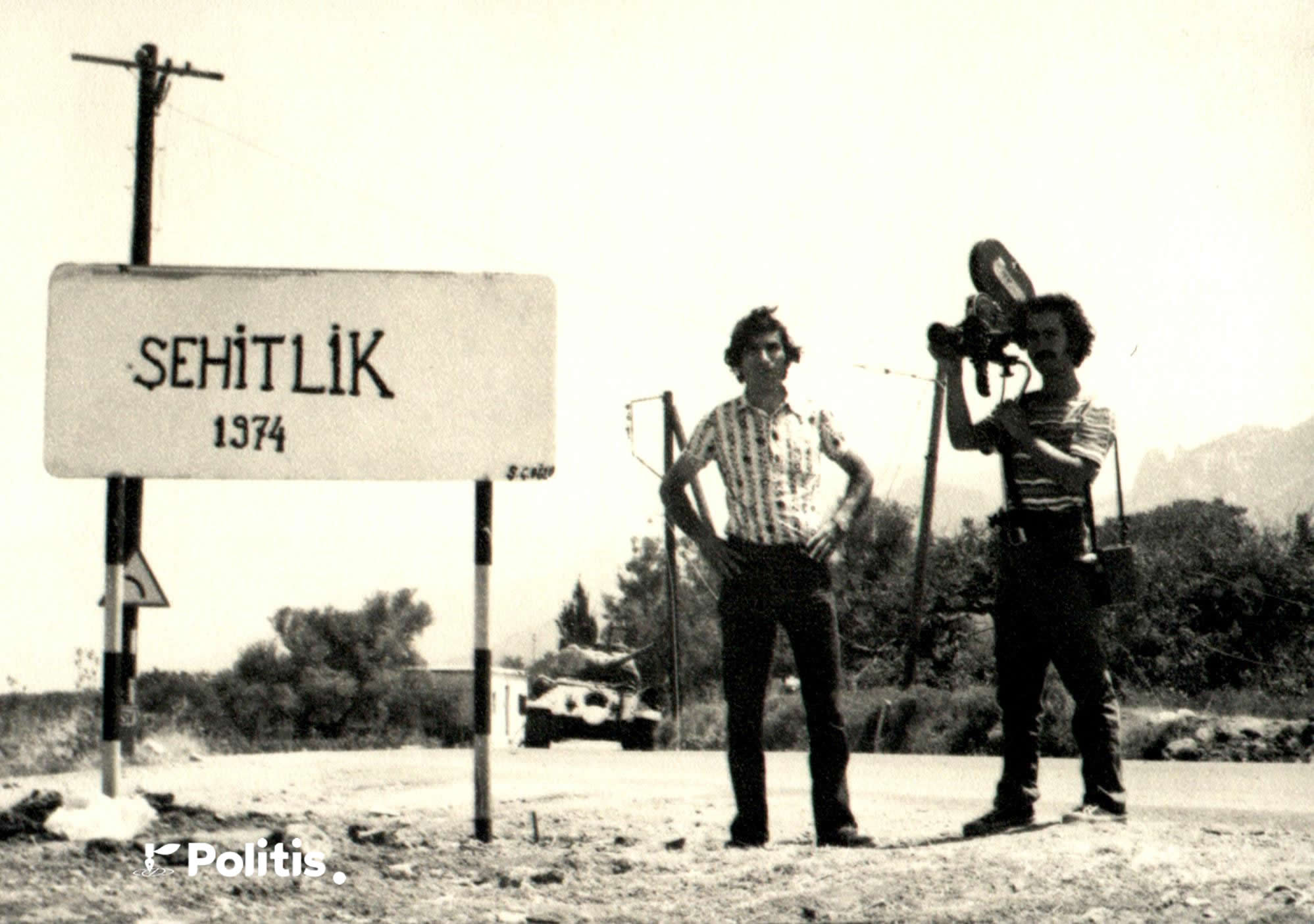
Below is an account of the interview with the two octogenerians who came to Cyprus with a film crew from 10-20 August, landing in Kyrenia and passing through the island’s north, including Lapithos, Karavas, St Hilarion, Bellapais, the Mesaoria plain and Nicosia.
The interview
The majority of the interview is conducted through an interpreter – seasoned journalist Yusuf Kanlı. He introduces both men saying they are “very much aware of the sensitivity of the missing persons” issue and are willing, within their capacity, to do whatever they can “to help contribute to this humanitarian issue”.
Before getting started, Selim Esen wants to make something clear in his broken English: “May I remind you something in the first issue. We don't like war. It is horrible. And what has been done in Cyprus during the war, we hate. That should be written down.”
He adds in Turkish that they are just journalists.
Ceyhan Baytur, who only speaks in Turkish, starts by noting that pre-1974, the Turkish Cypriots were living in very difficult, traumatic conditions in enclaves, where “they were almost imprisoned in areas cut off from the sea”. After the 15 July coup, all this “contributed to Turkey intervening in Cyprus after consulting with Britian.”
The interview is about missing persons, but when asked at the end to clarify the point about the UK’s involvement, Kanlı corroborates Baytur’s comment, saying consultations with the British took place before the first phase of the invasion. “The Turkish Prime Minister went two times to London and the undersecretary went once. They consulted, discussed in length.” Consultations also took place in London before the second phase, he adds.
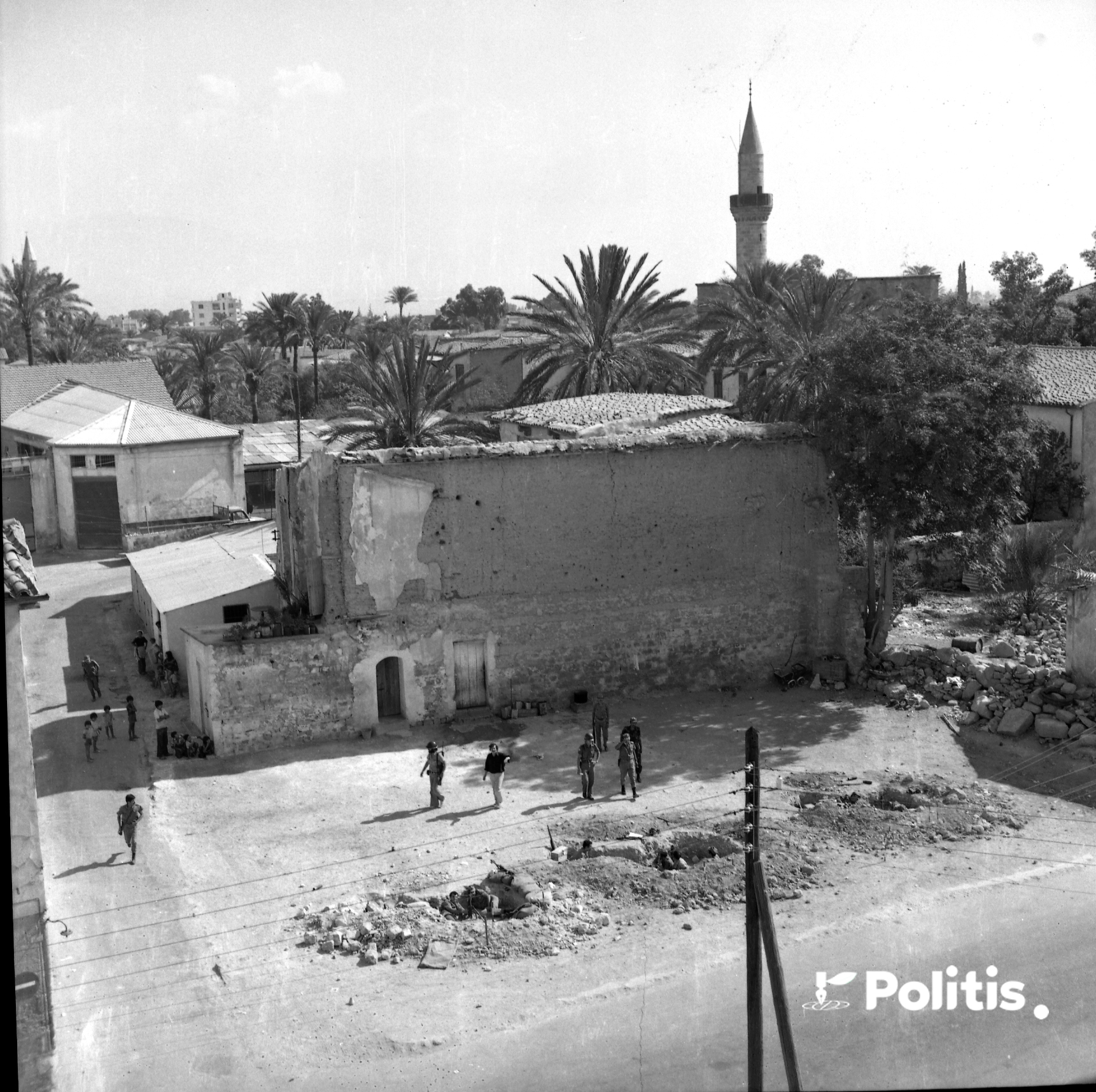
Esen goes on to talk about the first few days on the island. Despite the ceasefire, there were clashes in Lapithos and Karavas when they arrived. A British journalist stepped on a mine and died there. Other than that, “there wasn’t much activity.”
Asked whether they saw Greek Cypriots as they passed through areas prior to 14 August, Baytur recounts that they came across around 200 detainees in civilian clothing in Bellapais. The Turkish army detained them as they were considered to be soldiers who had changed into civilian clothing. When Esen interviewed them, they said they were farmers, but the suntan on their faces stopped below their foreheads where the helmet would sit, notes Baytur.
“Neither the soldiers while we were there, nor other civilian or military Turkish Cypriot people treated them badly. They were gathered and they were taken to the prison camp,” he says.
Asked where exactly, the veteran journalist says he doesn’t know what ultimately happened to them, noting they were probably taken somewhere for a later exchange with other captives.
Baytur adds: “We didn't see any torture or any ill treatment there… We offered them cigarettes. We saw our soldiers sharing their food with the prisoners.”
On 14 August, when the first Turkish troops started to land at 5.30am, the TRT team was at Gönyeli, embedded with the military.
“We got to Mia Milia near Tymbou Airport. We followed the campaign there and we interviewed some soldiers,” says Esen. They then headed towards Famagusta with the army but decided halfway to turn back to Nicosia to file news reports of the war to Ankara.
Asked to elaborate on what they saw that day, Esen says through the interpreter: “As you saw in the photograph at Mia Milla, we saw two prisoners being taken. Greek Cypriots. We had our photographs with them as well. With their eyes covered. We have no idea about their identity. They didn't talk.”
After being informed that the POW remains missing, while the civilian captive’s identity is unknown, Baytur adds: “The military at the time didn't say anything about the identities of the people.”
Regarding their fate, the two reply they have no idea where the captives were taken.
Probed for details, Esen notes that the crew were embedded with the military when they ended up there. The photo, taken by one of the cameramen, was captured at around 10am-10.30am at Mia Milia, close to Tymbou.
Asked if the captives were seen being put in a car or truck, Esen recalls that another journalist had asked him about a Mercedes but “there was no such thing”. He insists no one was driving civilian cars during the war. As for the Mercedes, there were only British cars in Cyprus at the time, he adds.
The interview pauses as Kanlı shows the picture of the captives with a black Mercedes in the background and a three-pointed star on its hubcap. This unsettles them somewhat. “But it was a military vehicle,” says Esen.
“It could be a car left in the area by the fleeing Greek Cypriots,” offers Baytur.
Given the black Mercedes’ role in transporting detainees for interrogation, they are asked again if they saw the detainees taken away in that car.
After some internal discussion, Kanlı notes: “There is a confusion here because they have no idea. After 50 years, it’s normal.”
For clarity, they are asked again if they saw where the two blindfolded captives were taken.
“No, no,” said Esen.
Probed further, Kanlı replies: “They didn't see, but they assumed they were taken for interrogation or to a prison camp. But when they last saw them, they were alive.”
Asked what compelled him to take a photograph with POWs, Esen replies in English: “Why shouldn't we? We are journalists. It's our job to take photographs.”
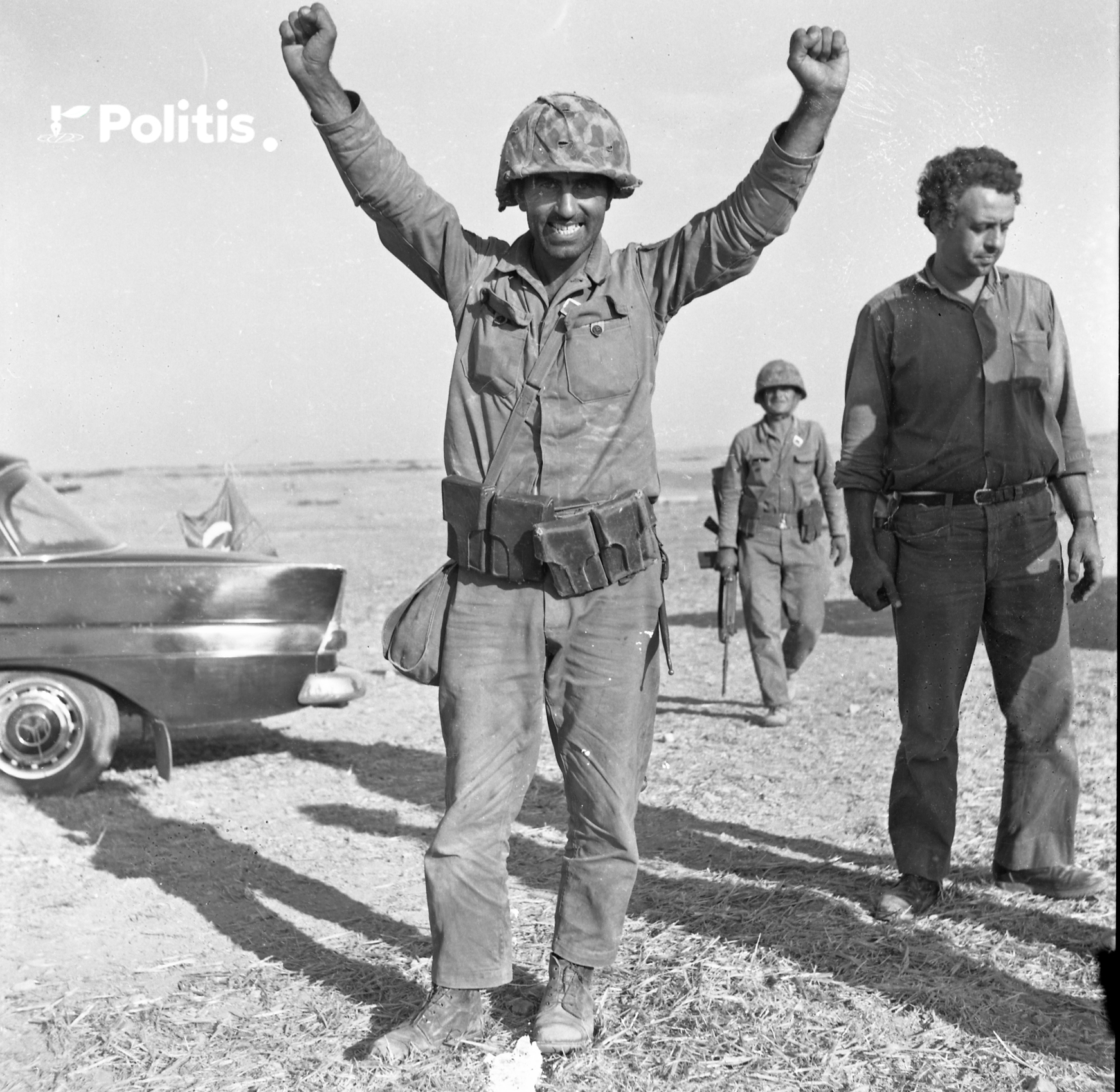
On further examination of the photo archive, Kanlı finds another photo with a Turkish soldier gesturing triumphantly to the camera (he is also in the photo with the two blindfolded captives), while a Turkish Cypriot fighter (mujahit) stands behind him. He notes that the location is the same as the previous photograph in Mia Milia. In the background, one sees the rear end of a black Mercedes.
With the car’s presence no longer in doubt, they are asked again if they remember anything about the Mercedes or the detainees. “No, no. We have no idea,” says Esen.
Do they remember anything that might be useful to those who are investigating the fate of missing persons?
“We are just journalists covering the war. The duty to find the missing persons, of course, should be a duty of the United Nations, and the committee is there, but we are just journalists. Of course we can try to help as much as possible, but this is our capacity,” says Esen.
Baytur adds: “Who was taken prisoner. The human cost of war. These were not issues because we had a hot war atmosphere at the time. We were following the situation. Therefore, we had no idea about it.”
Asked if there were eyewitnesses to crimes committed in that hot war scenario, Baytur replies: “Not only did we not see any offence against humanity, but we saw cases of Turkish soldiers taking out their food and sharing with the prisoners.”
Asked to comment on their experience as a whole, Esen returns to English: “Myself, I hate war. It is horrible. I never say one man kill the other man. This is not humanity. I mean, it's not right.
“What is happening now in Syria, in Iran […] A human is killing another human. That's not fair. That's what I think.”
Baytur adds: “Imperialism is the worst enemy of mankind. Unless it is eliminated, there can be no peace.”
Regarding the video footage captured by the TRT cameramen during those fateful days, Baytur says all footage was sent to a photo film centre whose archive was later transferred in its entirety to the military.
“We have no idea if there is anything left at the TRT archive. It has to be obtained from the military,” he says.
Kanlı notes that the archive was transferred to the Prime Minister’s Press and Publication Department, which has since been replaced by the Presidential Communications Department.
“They should have the archive there,” says Baytur.