


This article was first published in Parathyro, Politis' Cultural page
Beyond the debates about timelines, delays and cost, Cyprus' new Archaeological Museum is a project of remarkable technical and architectural ambition. The discovery of the ancient bed of the Pedieos river during excavations, specially designed display cases with their own internal climate systems, a listed building awaiting a purpose, an amphitheatre left out of the budget, and the engineering ingenuity behind three apparently floating volumes: these are some of the lesser-known dimensions of the largest cultural project, and arguably the largest public works project, currently under construction in the country.
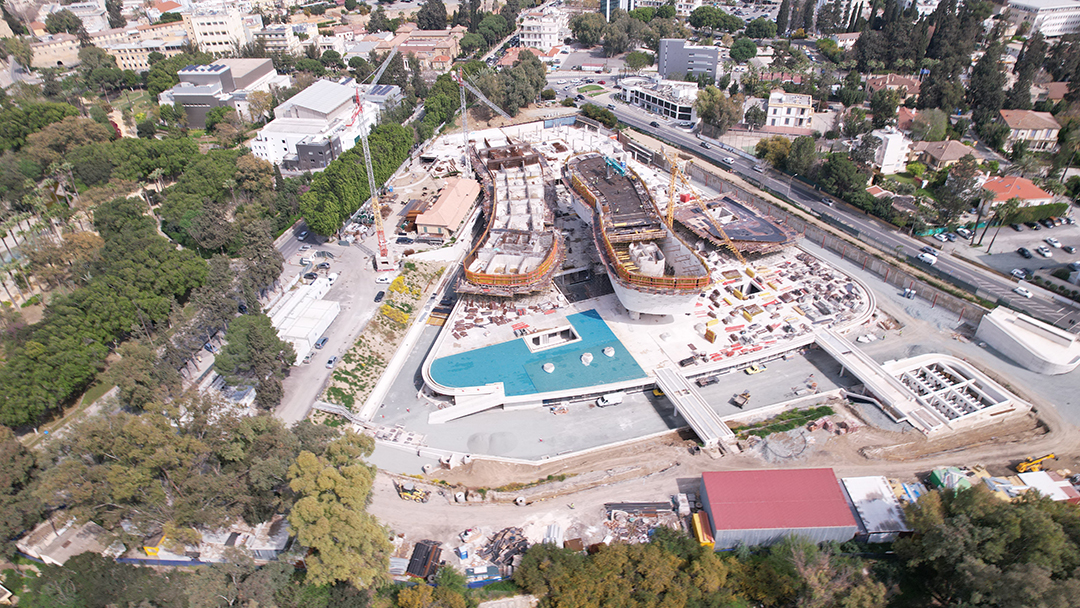
Construction began on 9 January 2023, and the project has largely been discussed in terms of its delays and extensions. For many Nicosians, the site was long associated with the old General Hospital and later with an open car park in the city centre. In recent months, however, the superstructure has begun to emerge visibly from the construction site, giving the impression that the new museum, originally called the Cyprus Museum and now officially named the Archaeological Museum of Cyprus, according to an interview given by Deputy Minister Kassianidou to Politis, may not be far off. The contractors, barring unforeseen circumstances, as they have repeatedly stressed, place completion of the building works in December 2027. The Department of Antiquities, which is responsible for setting up the exhibition and transferring the artefacts, places the museum's opening approximately two years after that, since the process cannot begin before the buildings are handed over and involves around 6,000 objects for display and approximately 250,000 antiquities currently held in storage at the existing Cyprus Museum.
This article focuses on the building itself and the infrastructure that will support its operation, following a site tour on Thursday, 29 May 2026. Andreas Konstantinidis, director of Cyfield and project manager, explained what the museum will offer and what technical, functional and conservation needs it is designed to meet, noting the complexity of a project for which specialised knowledge and equipment had to be sourced from abroad.
Pedieos: An ancient riverbed and a flood plan
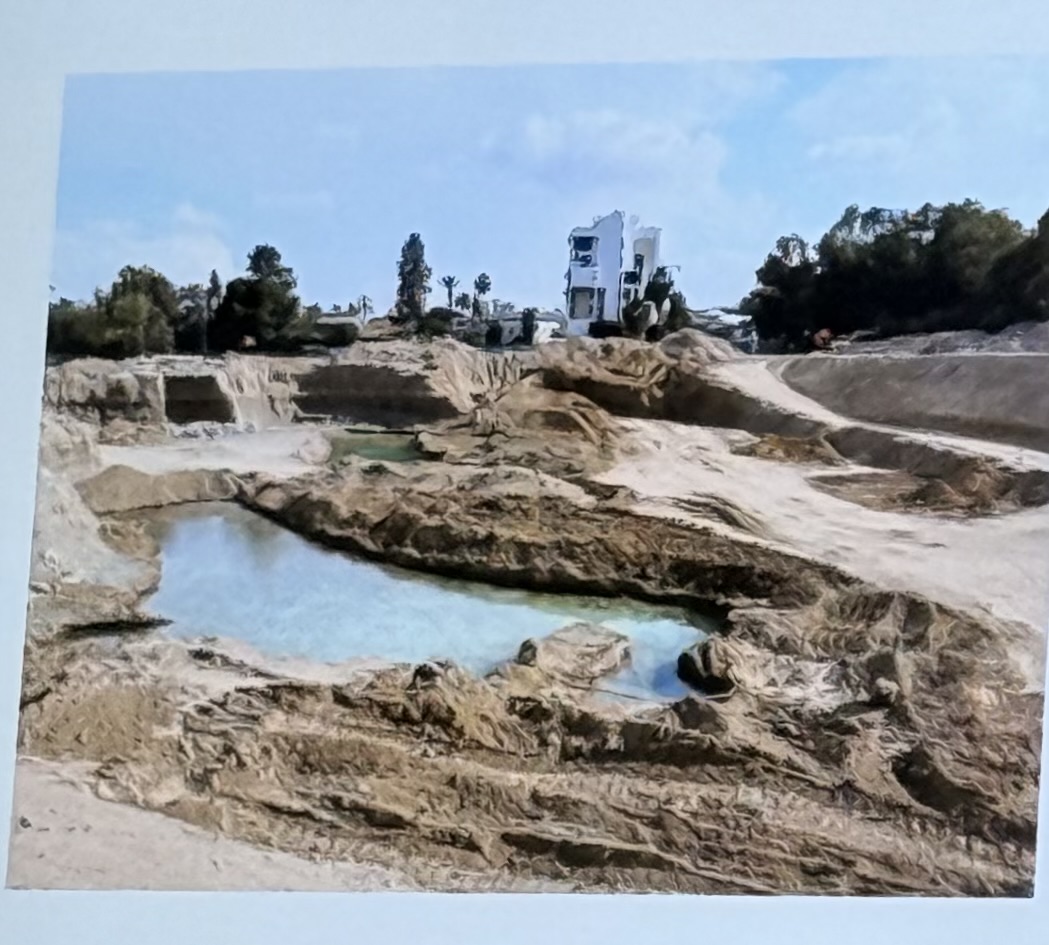
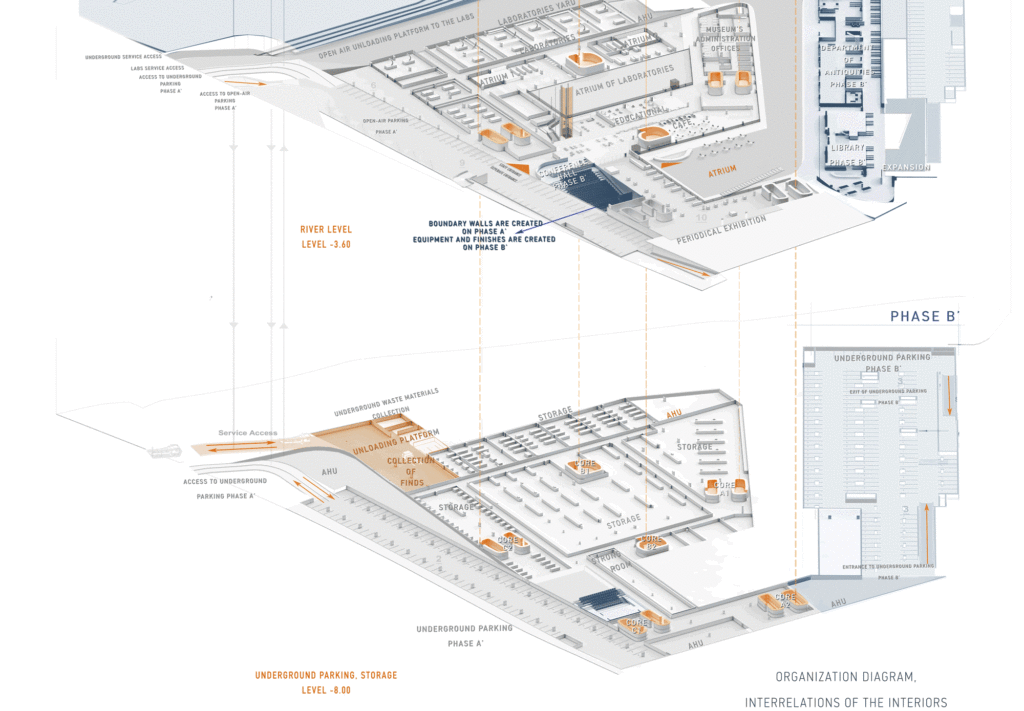
From the very first days of excavation, the project came face to face with an old presence in the area: the Pedieos river. According to Konstantinidis, excavations revealed a significant presence of groundwater, which made it necessary to construct extensive diaphragm walls around the entire perimeter of the site. Excavation and diaphragm wall works proceeded in parallel, and for an extended period continuous water pumping was required to keep the area dry while the museum's two underground levels were being built. During those works, the ancient bed of the Pedieos was uncovered and recorded in a three-dimensional survey.
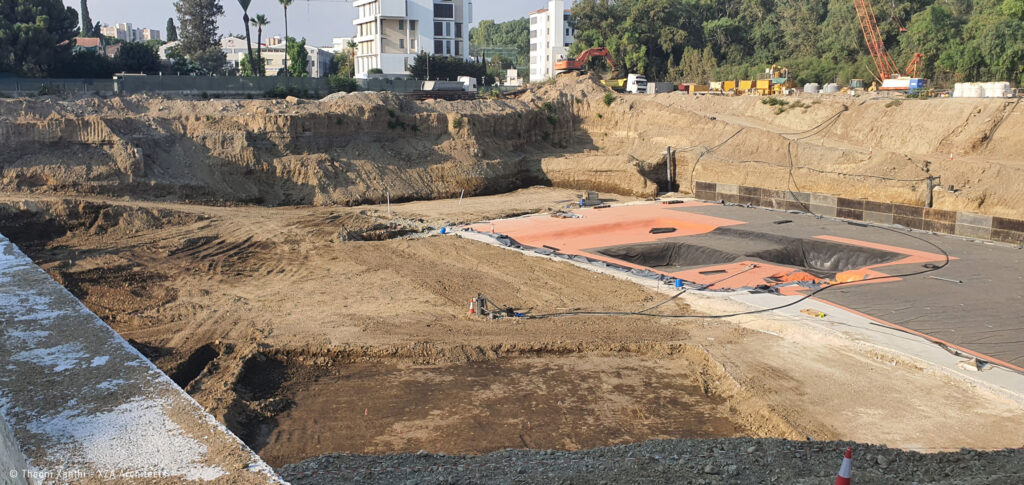
The proximity to the river required particularly extensive flood protection studies. The project now includes four flood barriers at the museum's entrances, designed to protect the two underground levels in the event of flooding by closing and sealing critical openings in the building when water levels rise. Rainwater collected from the public square and the museum's external areas will be directed to a pumping station and returned to the Pedieos, contributing to the replenishment of the river's flow.
These measures were considered essential not only because of the proximity to the river but also because of what the underground levels will house: 5,000 square metres of antiquities storage, conservation laboratories, temporary exhibition spaces and other critical museum functions.
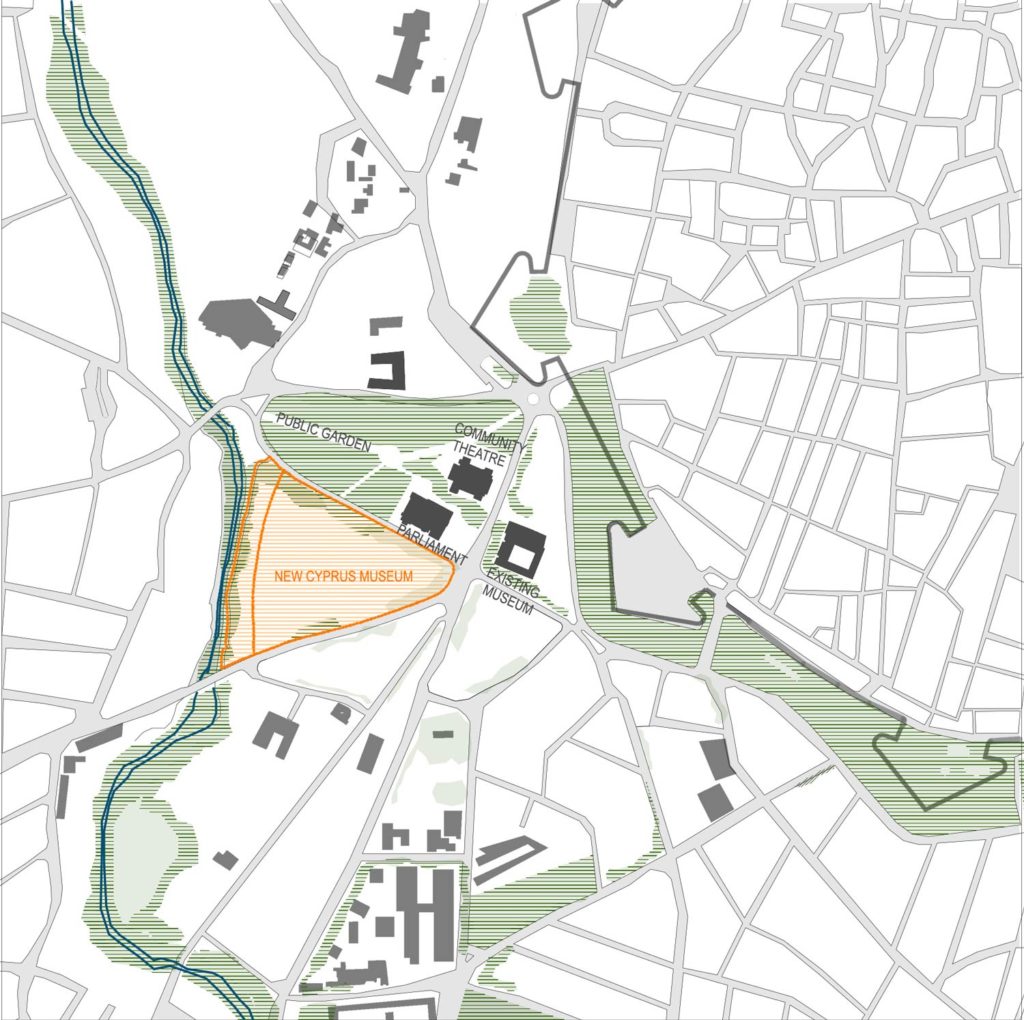
Konstantinidis also referred to ongoing planning for the stretch of the Pedieos adjacent to the museum, aimed at better connecting the complex with the wider urban environment.

Three floating volumes and the complexity behind them
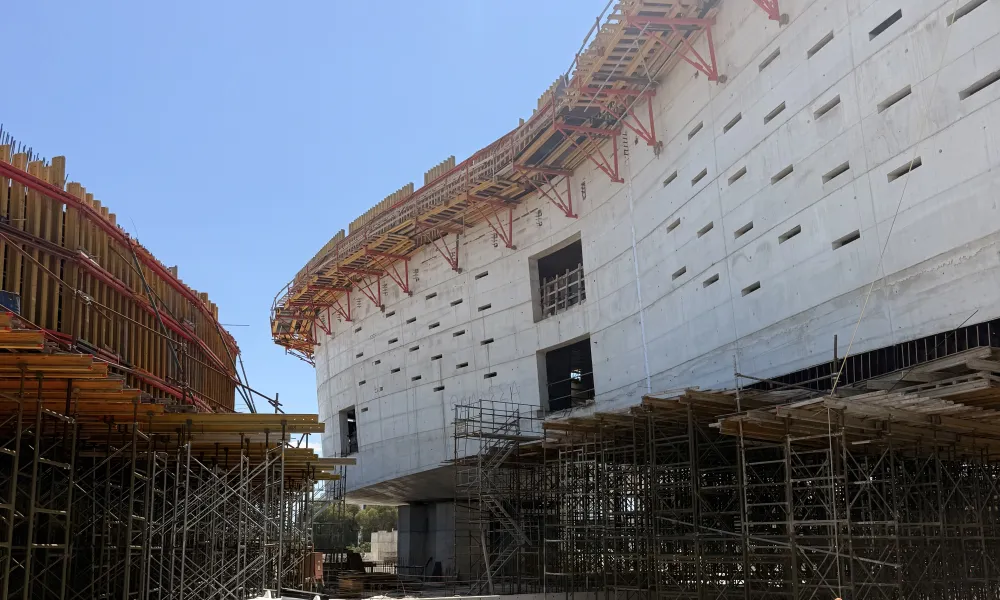
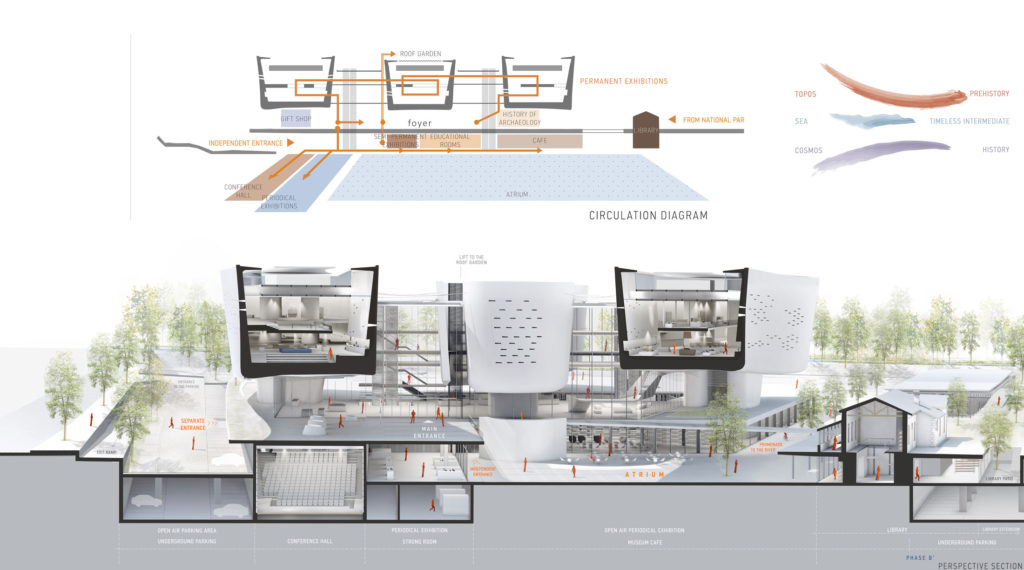
If the Pedieos shaped the underground portion of the project, the three exhibition volumes now rising above the construction site presented the greatest challenge above ground. These are the museum's three main buildings, named Topos (Place), Thalassa (Sea) and Kosmos (World), organised around the new museological narrative. They are elevated above street level, leaving the public square beneath them open.
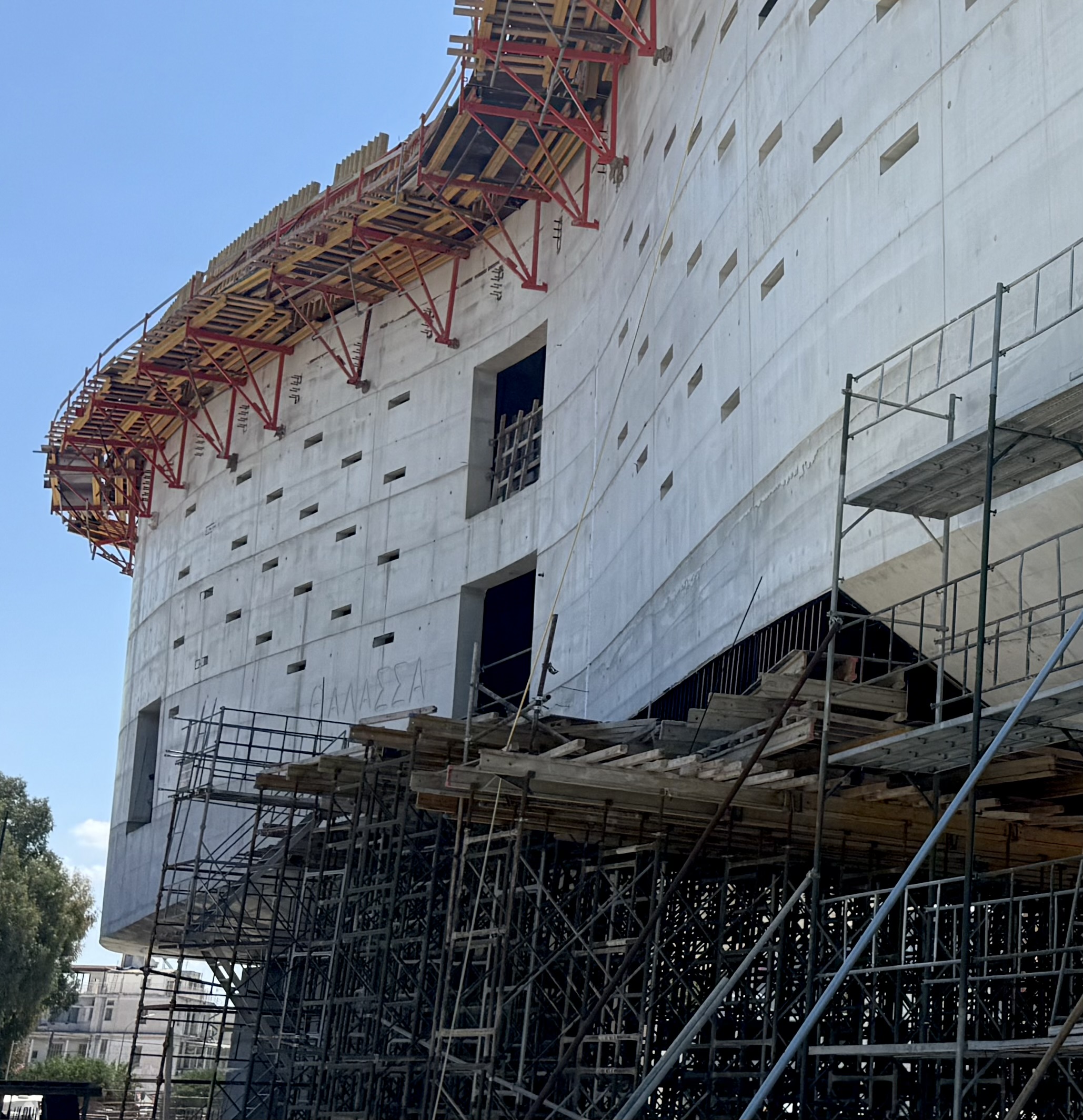
The highly complex architecture required the use of specialised software sourced from abroad, as the building's three-dimensional and irregular geometries could not be resolved with conventional design programmes. Curved surfaces are produced through digital models that are converted into three-dimensional data and fed into high-precision cutting machines to produce the formwork.
The scale of the construction is reflected in the numbers. The project involves approximately 200,000 cubic metres of excavation, 8,000 square metres of diaphragm walls and 85,000 cubic metres of concrete in various grades, including a special white concrete developed specifically for the project. The building's complex geometries will require approximately one million individual pieces of timber, each of different sizes and shapes, since every curve and surface demands its own geometry and its own formwork.
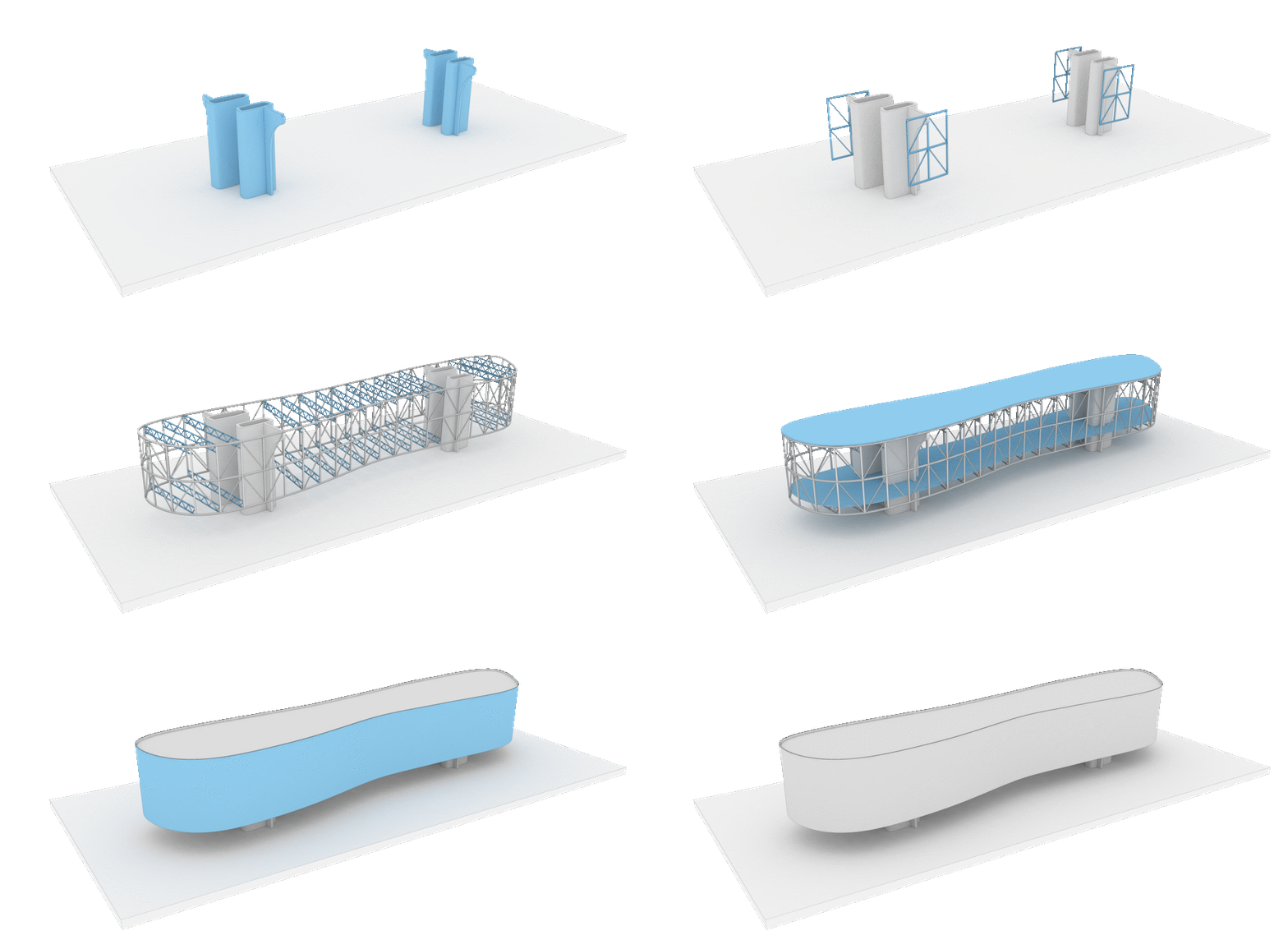
Construction began with the central building, which was considered the most suitable starting point to test in practice the demanding structural and geometric solutions the project required. Konstantinidis described the buildings as following a logic closer to that of a bridge than a conventional structure, with volumes exceeding 100 metres in length supported by a limited number of cores and columns.
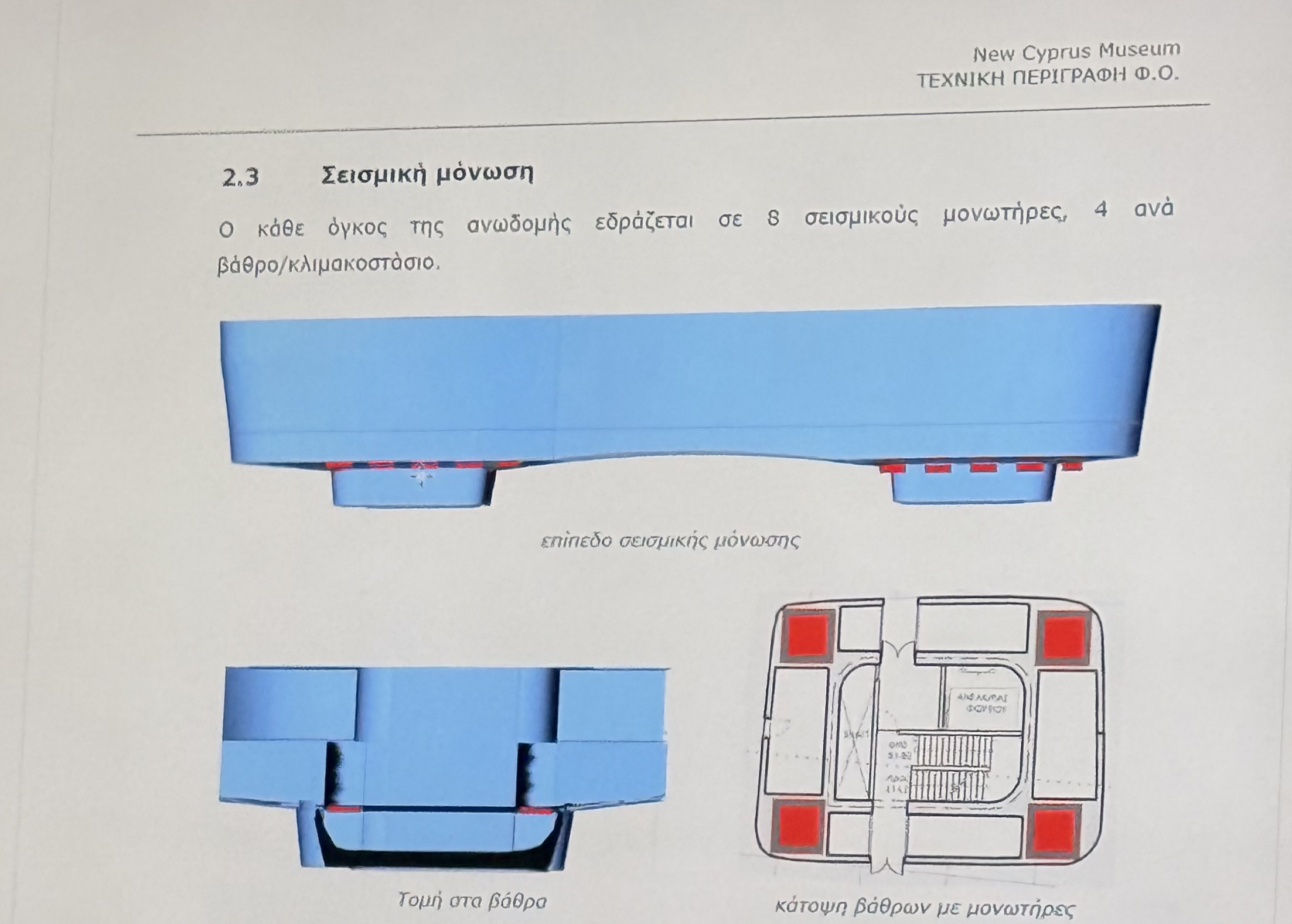
The museum's seismic isolation system consists of 77 seismic isolators, specially designed for the building and capable of allowing displacement of up to 15 centimetres in any direction in the event of an earthquake. Konstantinidis noted a collaboration with a German firm, and described the significant contribution of distinguished civil engineer and professor of earthquake-resistant construction Giorgos Penelis, who participated in the system's design. The project also drew on expertise applied at the Stavros Niarchos Foundation Cultural Centre in Athens. The system functions, in Konstantinidis's words, like a flexible aluminium curtain, allowing the building to move without affecting the integrity of its external shell. Tests were carried out in specialised laboratories in Italy under loads of up to 5,600 tonnes.
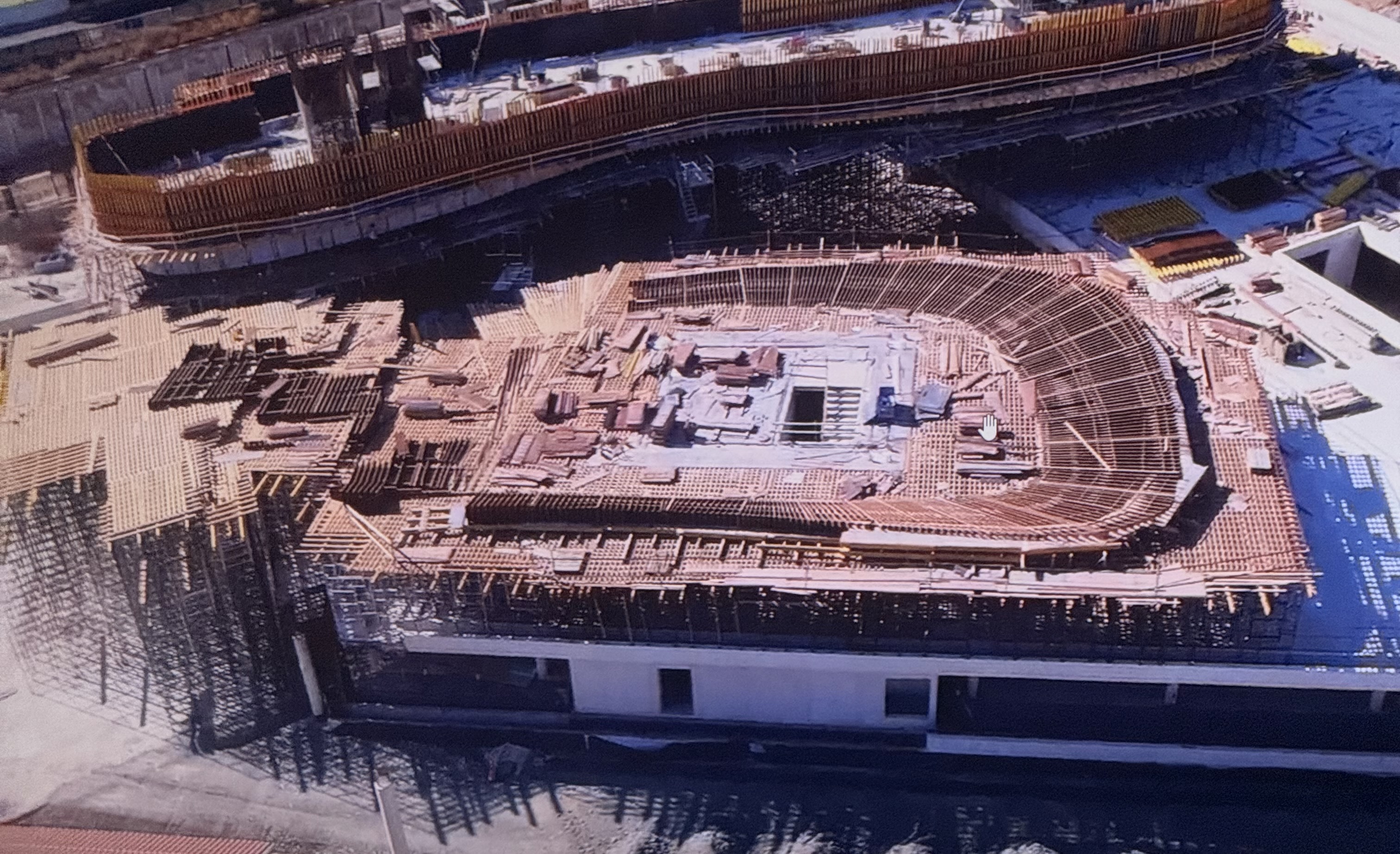
A further distinctive feature is the building's central mezzanine floor, which is not supported by columns but suspended from the ceiling by specialised metal hangers. The museum's floors include approximately 10,000 square metres of handmade cast mosaic, 6,500 square metres of curved wooden flooring shaped through a steaming process to achieve the required curves, and thousands of square metres of specialised mosaic surfaces produced exclusively for the project.
Display cases: The most expensive subcontract
Among the elements Konstantinidis highlighted were the display cases, remarking that "most people think they are simply glass cabinets. They are the most expensive subcontract in the museum." The new Archaeological Museum will have approximately 500 display cases and 1,000 specially constructed plinths for the presentation of around 6,500 antiquities. The cases account for roughly 20% of the museum's total equipment and represent one of the most specialised elements of the entire project. Behind what appears at first glance to be a simple glass structure lies a complete technological system: each case has its own internal microclimate, temperature and humidity control systems, electronic security systems, concealed locking mechanisms and seismic protection specifications designed to safeguard exhibits even in the event of a major earthquake.
An amphitheatre without a budget
In contrast to the specialised provisions and infrastructure built into the project, the museum's amphitheatre was left out of the budget and remains, for now, an empty shell. Although it was included in the original design and its space has been incorporated into the building, its construction and fit-out are not part of the current contract. Efforts by the Department of Antiquities to secure additional funding did not produce the necessary allocation. Konstantinidis noted that completing the amphitheatre at this stage would be considerably easier than attempting to build it later, once the museum is open and housing its collections.
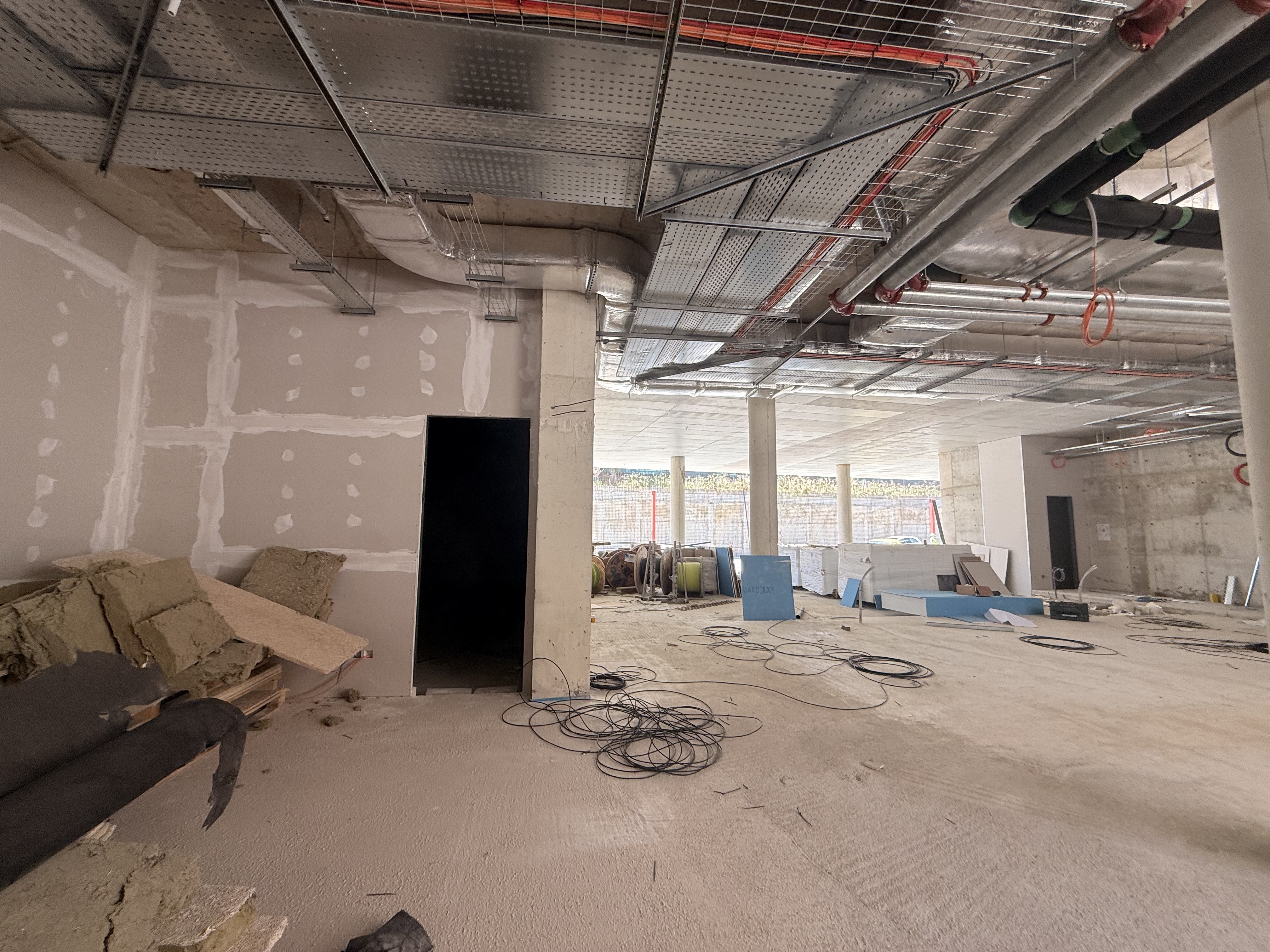
The issue was also raised by the former Parliamentary Committee on Monitoring of Schemes and Control of Public Works during a site visit in mid-March 2026. Re-elected DIKO MP and committee chairman Zacharias Koulias confirmed to Politis that the committee unanimously considered it a mistake to abandon such an important facility for financial reasons. "It is an error for such a significant project to be deprived of such an important tool," he said. The committee wrote to Finance Minister Makis Keravnos requesting the necessary funds, with Koulias describing the amount required as "negligible" compared with the overall cost of the project. He added that he intends to bring the matter back before the new parliament when it convenes, leaving open the possibility of a renewed effort to fund the amphitheatre.
Museum and the city
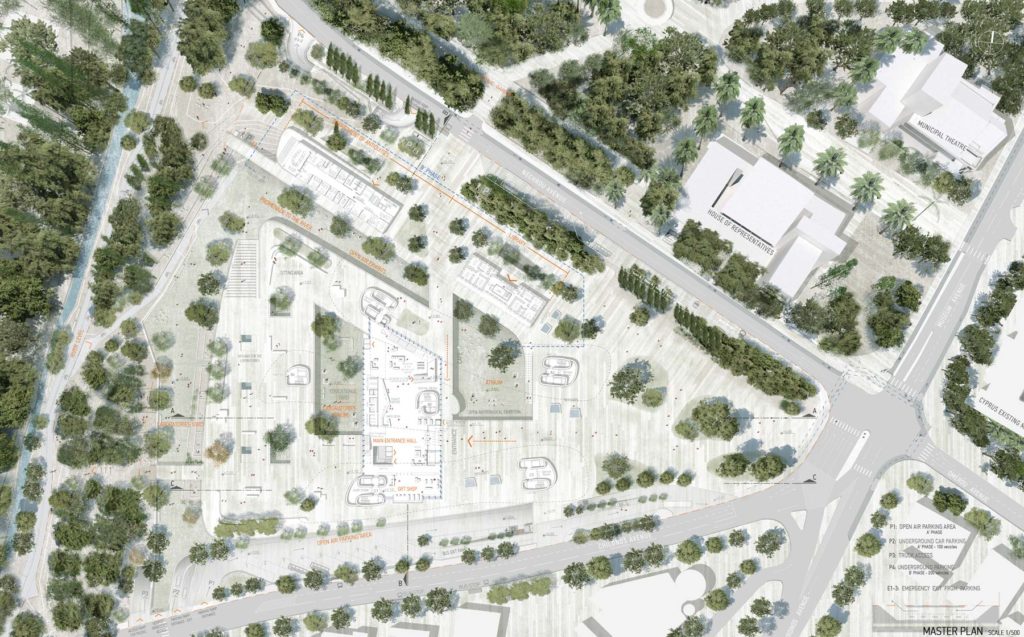
Beyond the exhibition spaces and storage infrastructure, reference was made to ongoing planning for the integration of the museum complex into the wider urban environment, including potential connections to the Municipal Gardens and the Pedieos river. The complex will include approximately 250 parking spaces for the public, accessible from the side facing the parliament building, along with coach parking. It was also stated that no perimeter fencing is planned, though comparisons with other public sites in Nicosia may invite scepticism on that point.
A listed building in search of a purpose
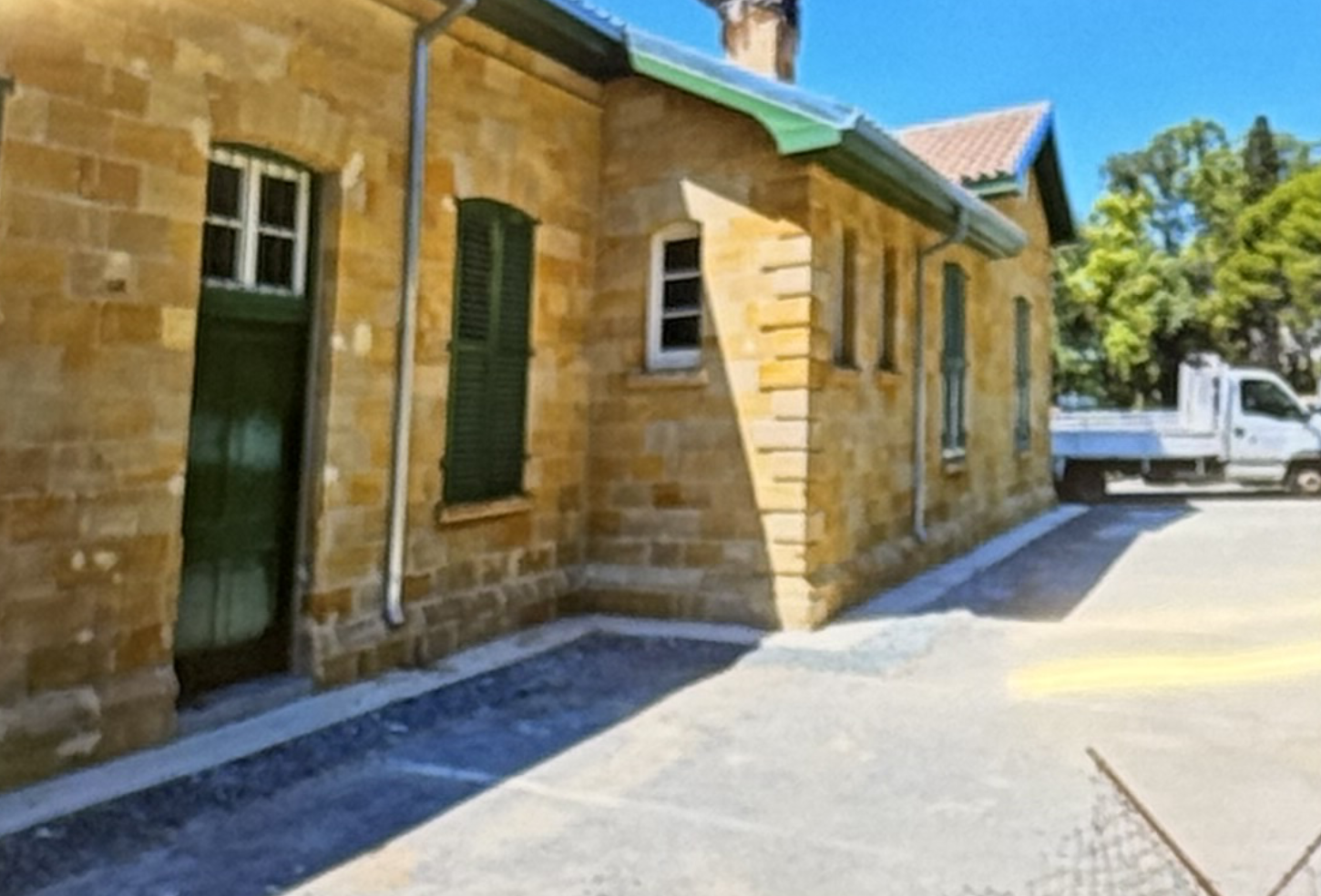
One further open question concerns the listed building of the old Pulmonology Clinic, which was preserved and incorporated into the museum's design. Although restoration works have been completed, its future use has not yet been determined.
The museum complex will include approximately 250 parking spaces for the public, accessible from the side facing the parliament building, along with coach parking. It was also stated that no perimeter fencing is planned, though comparisons with other public sites in Nicosia may invite scepticism on that point.