
UN Secretary-General António Guterres launches in person on Tuesday his latest and likely last effort to bring the sides closer together for that elusive settlement of the Cyprus problem.
The UN chief is due to arrive tonight on the island, greeted by his Personal Envoy María Ángela Holguín and Special Representative Khassim Diagne.
Two intense days
Guterres will start Tuesday morning with a briefing by his senior advisers, including Holguín, Diagne and Under-Secretaries-General for Political and Peacebuilding Affairs, and Peace Operations respectively – Rosemary DiCarlo and Jean-Pierre Lacroix.
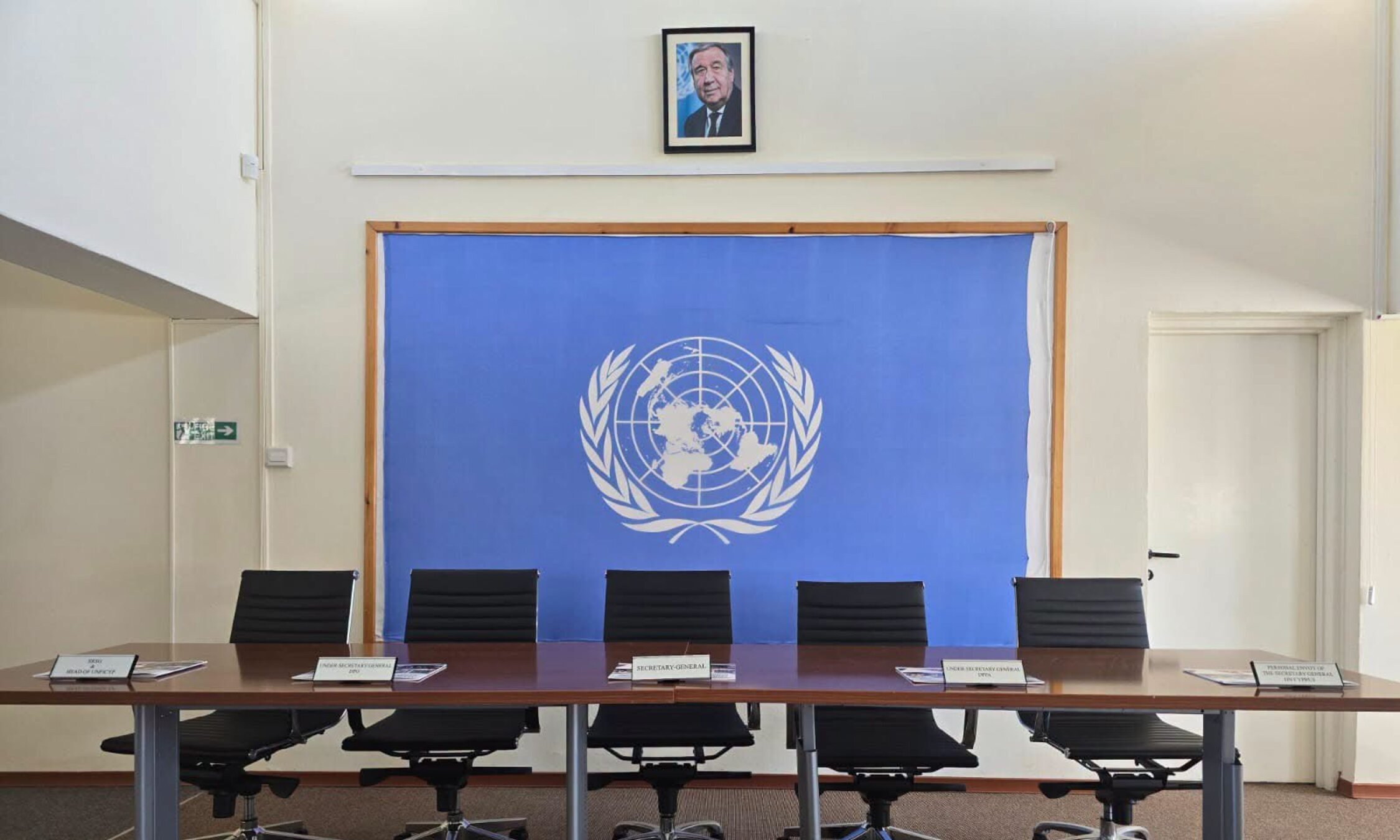
Next, he meets with President Nikos Christodoulides followed by Turkish Cypriot leader Tufan Erhürman. As the heat subsides – the weather forecast predicts 40 degrees Celsius, the political temperature as yet unknown – Guterres will visit the Committee on Missing Persons in the afternoon, followed by a meeting with the two negotiators and co-chairs of the bicommunal technical committees, and then with civil society representatives.
At 7pm, Guterres will host a private dinner for the two leaders and their negotiators at the UN-controlled old Nicosia airport.
According to sources, the aim of the dinner is to build rapport between the UN chief and the two leaders before their trilateral on Wednesday morning, as well as sound out the sides on how far they are willing and able to go to secure progress.
By 11.30am Wednesday, Guterres will face the press. He may announce an enlarged meeting with the guarantor powers in late August or September. Or, he may reiterate his commitment to supporting the effort while encouraging Cypriots to do all they can to end this perennial wound in international affairs.
Should Guterres’ presence provide that missing spark, and the main protagonists agree to a 5+1, the next goal will be to push the sides over the ‘starting line’ to launch formal talks.
The prevailing atmosphere
Guterres’ presence brings a brief focus to a conflict that is more than half a century old. The UN’s presence on the island now clocks 62 years and counting. But the reality is the UN chief does not have a magic wand, and whether the sides move forward or not ultimately depends on them.
Holguín met separately with both leaders on Monday, briefing them on her recent “good meetings” in Brussels and Ankara.
She told reporters that the UNSG is coming to facilitate and “encourage the people and the leaders to look forward for a negotiation”.
Holguín noted that he arrives to the island after “pushing, supporting Cyprus for almost 10 years”.
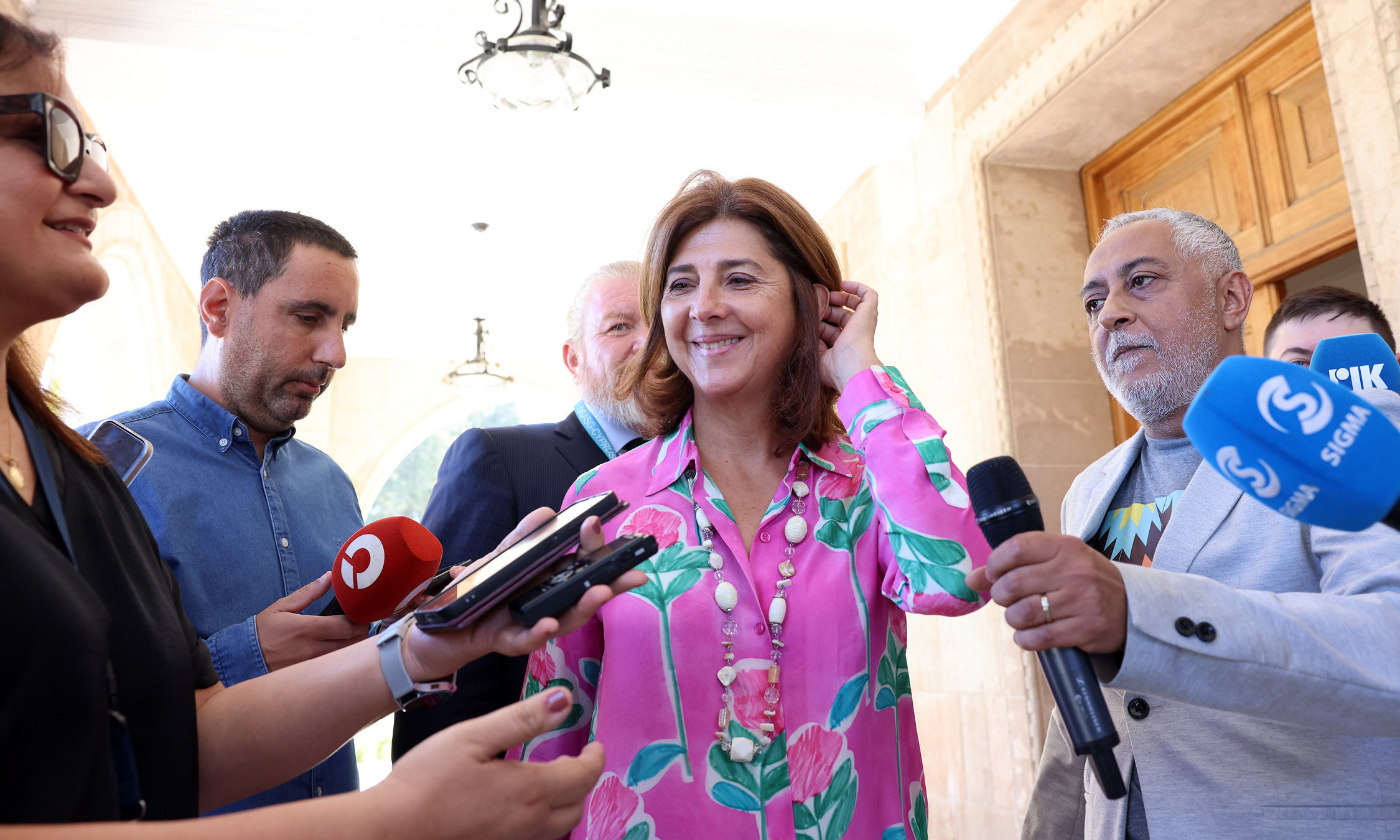
Meanwhile, her meeting last Friday with Turkish Foreign Minister Hakan Fidan in Ankara, at least publicly, did not give cause for celebration, with reports suggesting Fidan reiterated Turkey’s long-standing position on the coexistence of two states side by side, and recognition of Turkish Cypriots’ inherent rights to sovereign equality and equal international status.
On Sunday afternoon, the Turkish FM spoke on the phone with Guterres to discuss regional developments in light of the UNSG’s ongoing visits to Syria and Cyprus.
While the call underscored Ankara’s continued engagement with the UN chief’s diplomatic efforts, sources indicated that it did not alter the relatively subdued enthusiasm on prospects for a Cyprus breakthrough.
It remains to be seen whether the effort to create a parallel EU-Turkey track that helps kickstart and guide progress in peace talks works out, falls flat or gets stuck in sequencing and complex decision-making procedures.
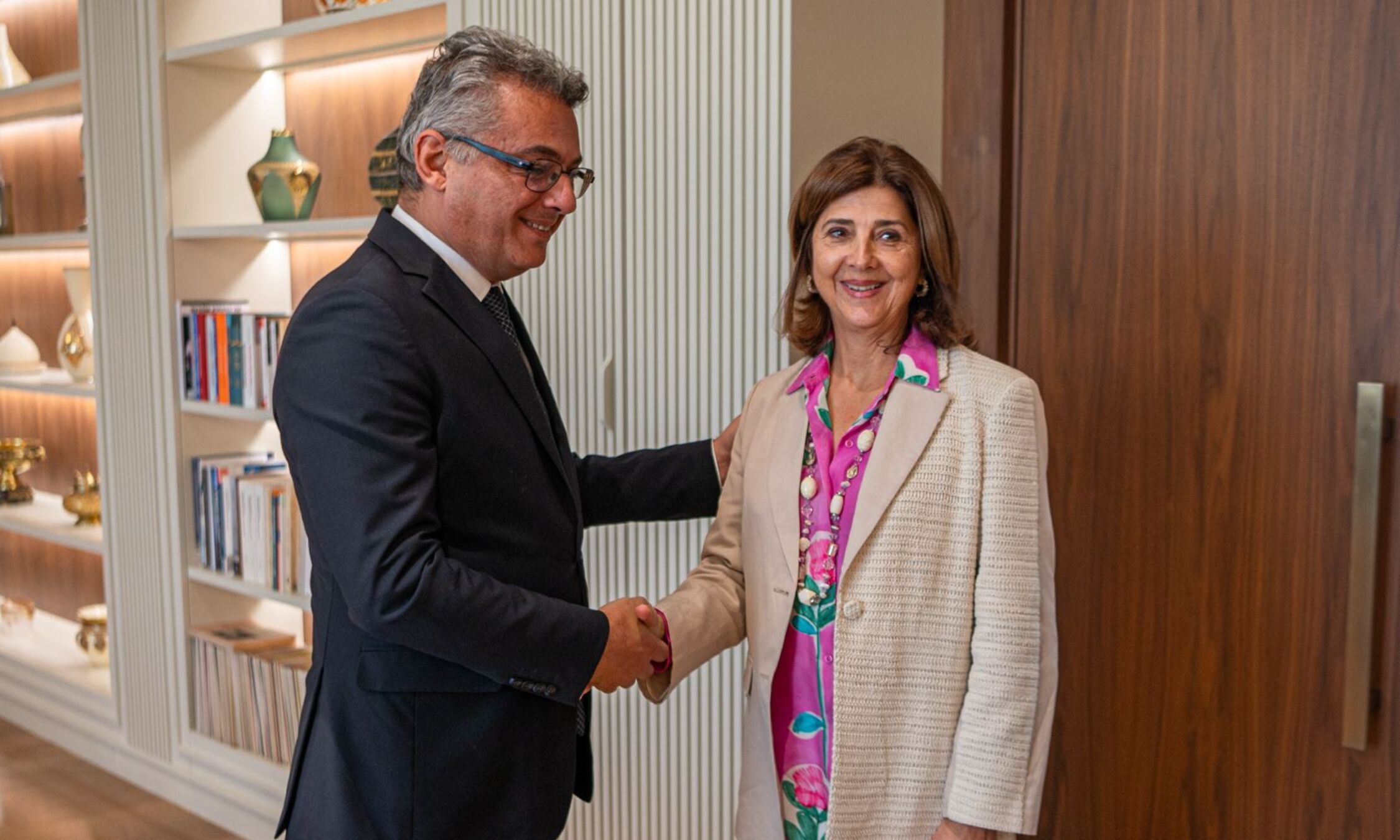
For his part, Erhürman has tried to keep expectations grounded, noting that the visit is neither a final farewell for Guterres nor a deus ex machina that solves the problem on the spot. At the same time, he insisted on pushing ahead with confidence-building measures (CBMs) and reaching agreement on the methodology of future negotiations before agreeing to formal talks.
A Greek Cypriot source close to the negotiations said Ankara’s stance on the peace effort is not clear yet. On possible progress on CBMs, the source said the focus is on substance at the moment. As for a potential breakthrough on methodology, they said: “We will see.”
As things stand, the Greek Cypriot side says it is ready to launch talks today on a bicommunal, bizonal federation with political equality, starting from where they were interrupted at Crans-Montana. Government Spokesperson Konstantinos Letymbiotis said on Monday that any discussion of ‘new ideas’ that fall outside UN resolutions on Cyprus will be seen negatively. On one of the most complex issues in international diplomacy, there can be no constructive ambiguities, he added.
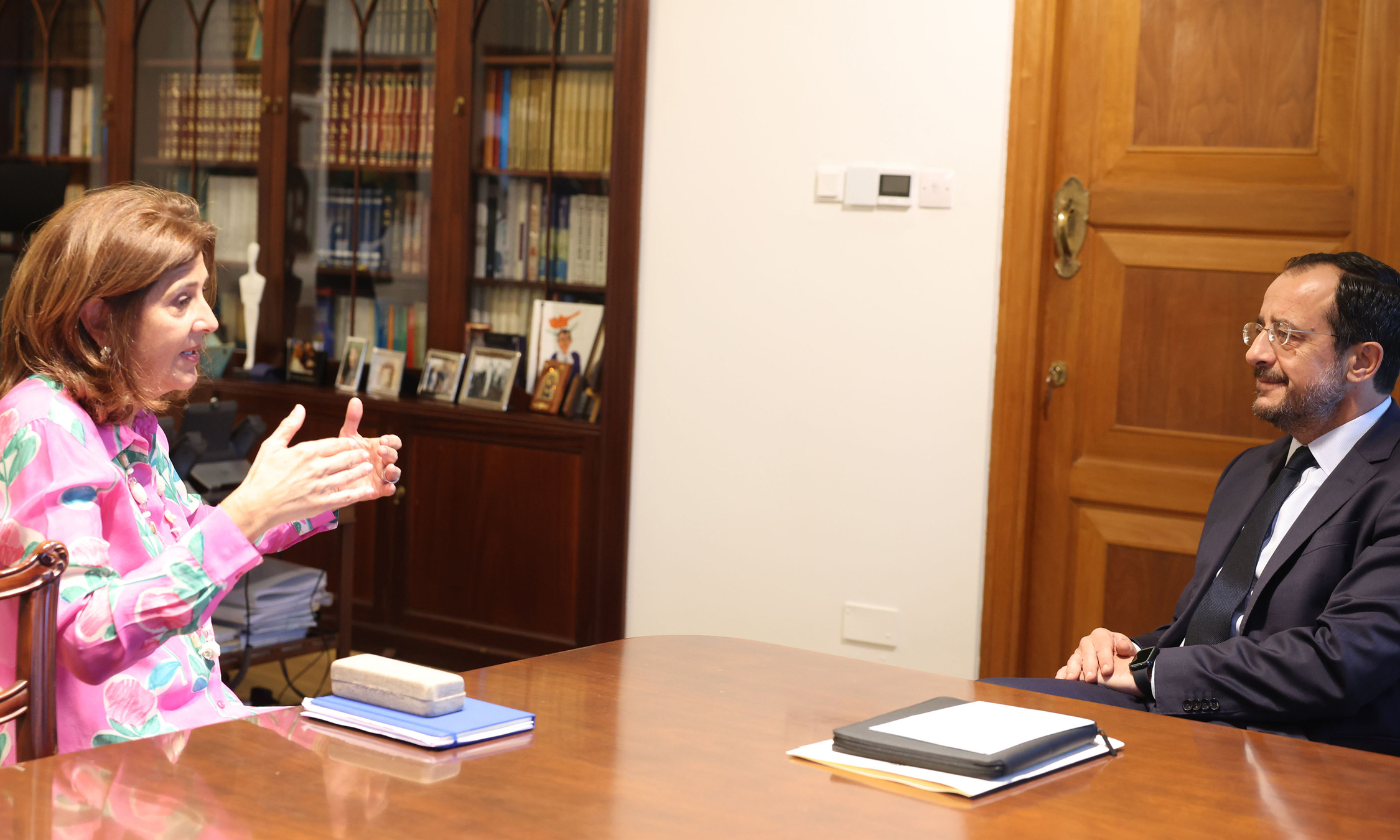
Letymbiotis also referred to long-standing red lines that have been conveyed from the start, including the preservation of the three singles (sovereignty, citizenship and international personality), and four EU freedoms (freedom of movement of capital, goods, services and people).
A decade of effort
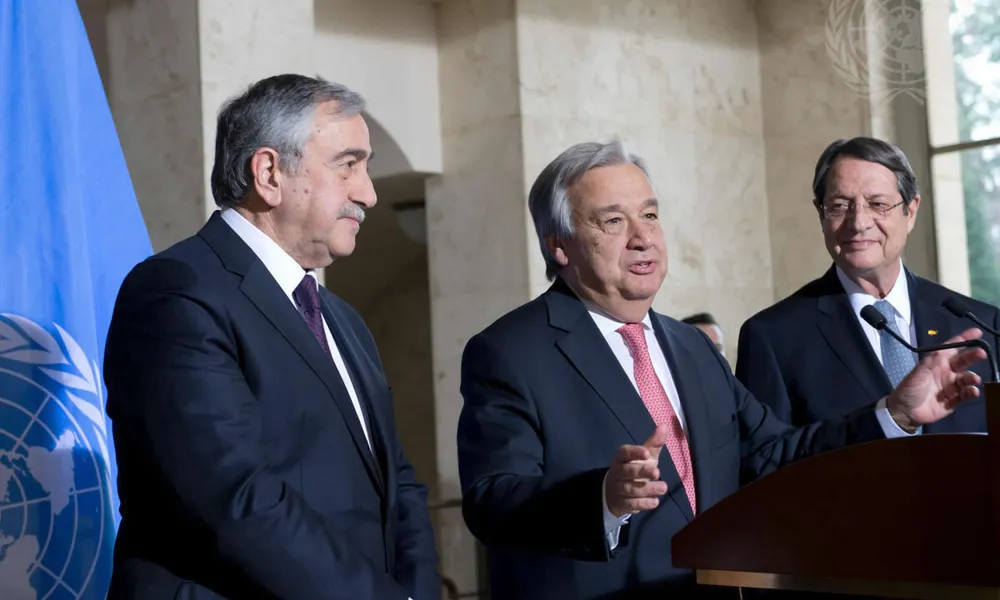
Guterres took office at the start of January 2017 and immediately dived headfirst into Cyprus peace talks in Geneva, starting on 9 January. By 12 January, the Conference on Cyprus, including the three guarantor powers and the EU as observer, began.
“We are facing so many situations of disasters. We badly need a symbol of hope. I strongly believe Cyprus can be the symbol of hope…,” said Guterres.
Rather than continuing to the weekend as planned, the conference ended acrimoniously the same day it began. It was a bad-tempered affair, leading one person present to tell Politis they were very surprised the UN chief wanted to continue with the Cyprus issue after that first experience.
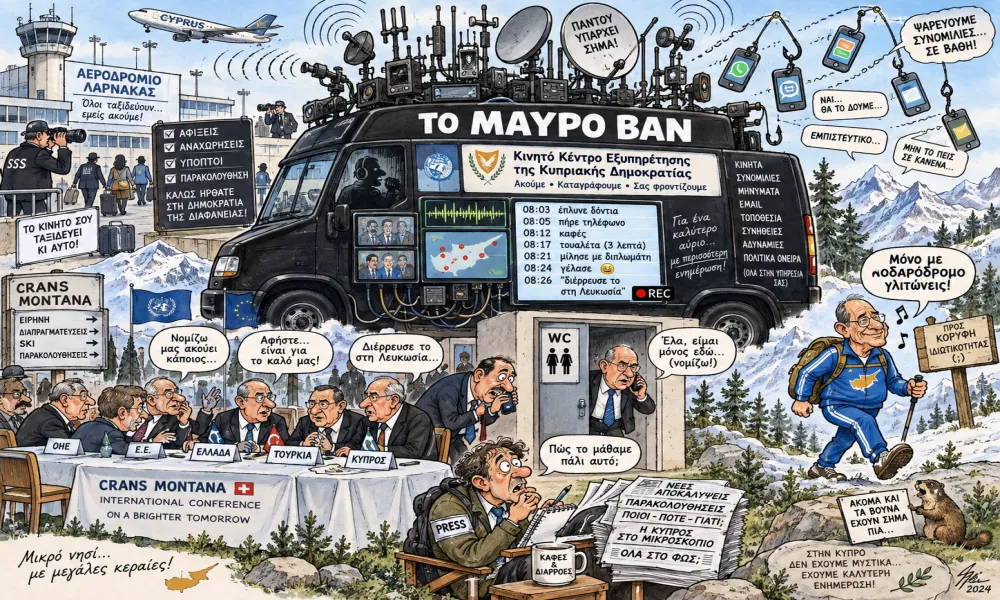
But continue he did and in June 2017, the protagonists went to Crans-Montana.
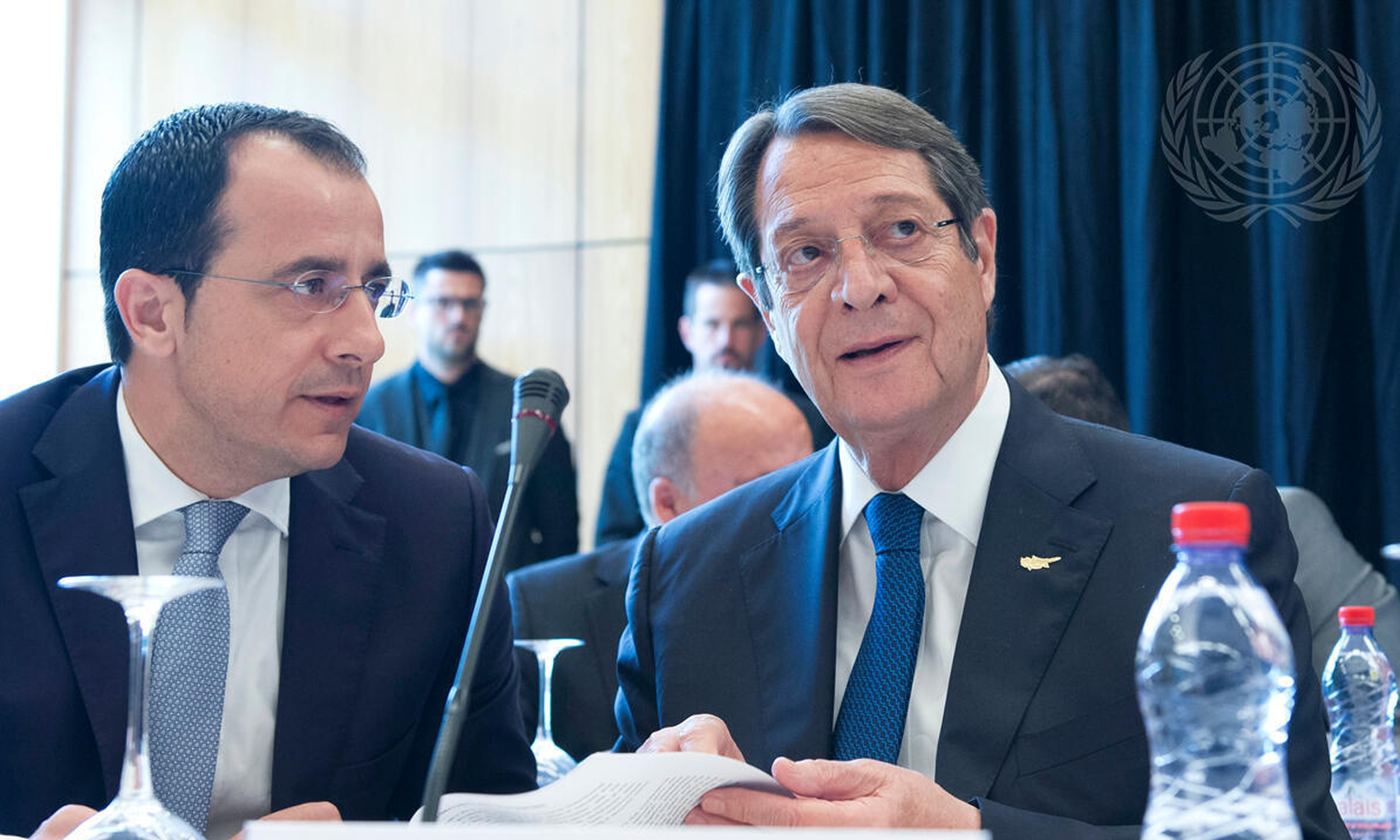
After that failure, the UNSG came under some criticism for leaving the protagonists halfway during the conference to attend a summit but ultimately, he was not the cause of its collapse.
Guterres met again with the two Cypriot leaders in Berlin in November 2019. Then, in April 2021, he convened the first ‘5+1’ in Geneva. Guterres convened two more enlarged meetings in 2025 – in Geneva (March) and New York (July). On Tuesday, he meets with Christodoulides and Erhürman together for the first time.
A message?
International relations analyst James Ker-Lindsay told Politis he wasn’t quite sure of the purpose of the UNSG’s current visit to the island. He noted that Cyprus has been on the UN’s agenda for 62 years. Ten years ago, it was not a very high priority, but now there are even more pressing issues with global impact such as the war in Ukraine, the war with Iran, as well as the effects of climate change.
“It’s not just heatwaves and flooding. We are going to see more migration and conflicts and this will be on the agenda of the next UNSG,” he said.
So, is Guterres coming with genuine prospects of starting a new initiative that has chances of success or is he coming to say farewell? Or perhaps he wants to give both leaders a personal, frank message before leaving office. Ker-Lindsay suggested he might want to tell them: “The world is changing around you, there are all sorts of security challenges and it is in your best interests to solve this now. I can’t guarantee my successor will be as engaged.”