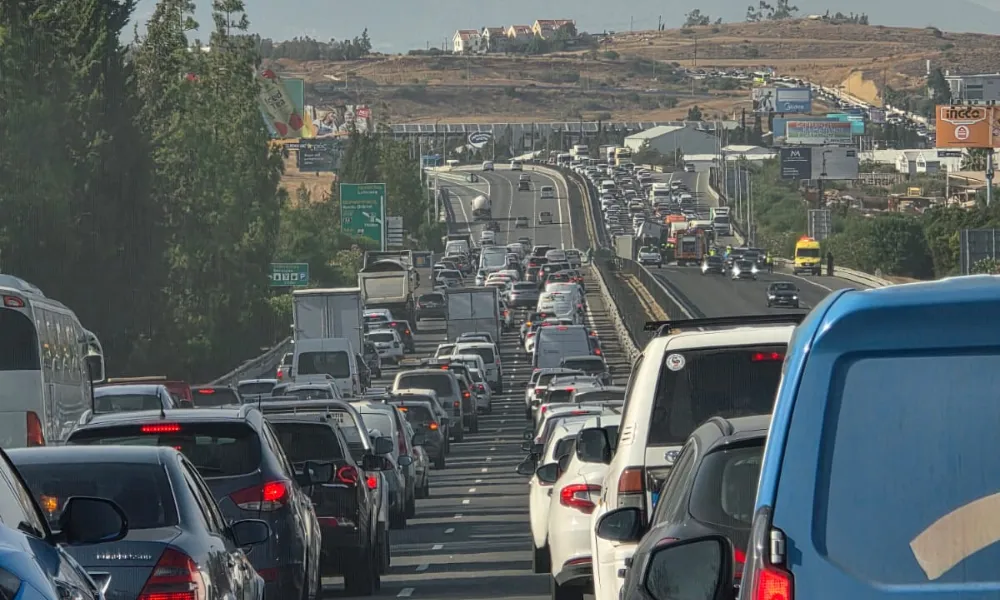

The Ministry of Justice and Public Order has drawn up a new national response plan, codenamed "Nestor," aimed at speeding up the recovery of major roads after serious traffic incidents. The plan was presented on Monday to the state agencies that would be involved in its implementation, following the prolonged closure of the Nicosia–Limassol highway last week.
A response to last week's highway chaos
The plan was drawn up after a truck overturned on the Nicosia–Limassol highway last Thursday, spilling its load across all lanes and closing the motorway in both directions for more than seven hours. Thousands of drivers were left stranded, and the incident exposed gaps in how state agencies coordinate their response to complex road emergencies.
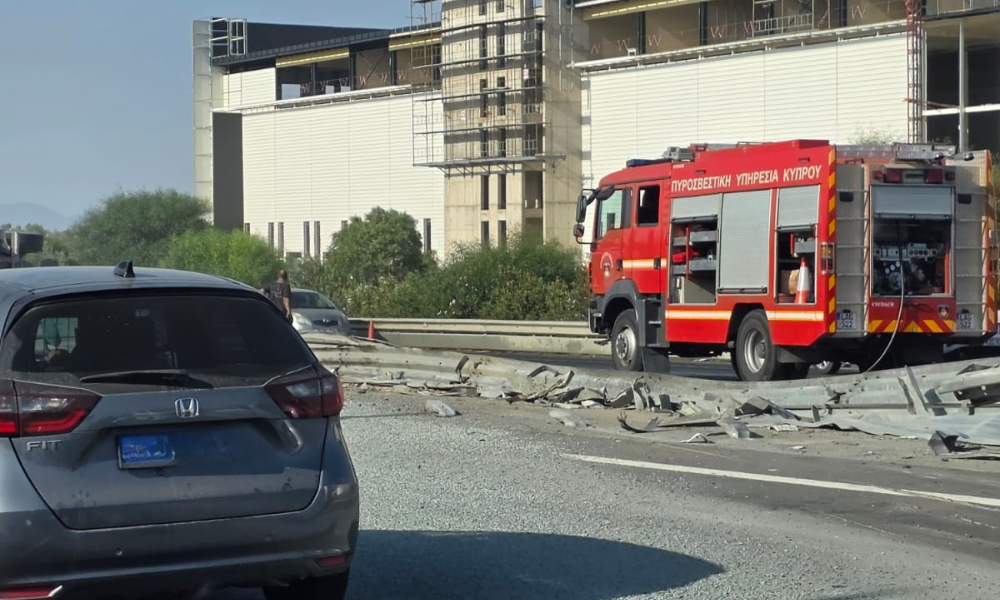
Justice Minister Costas Fytiris said the episode prompted an immediate review of how such incidents are handled. "This event, to put it simply, shook us. That is why we moved straight to drawing up this plan, so that it does not happen again on a highway," he said.
He noted the accident was unusual because it affected all lanes rather than a single direction of traffic. "It may have been unprecedented, but it proved to us that we must be prepared even for such incidents," he added.
Police to lead a single operational framework
Under the plan, Police will take on overall operational coordination, without changing the individual responsibilities of other agencies. Instead, all services will operate within a shared framework so that response actions unfold in parallel rather than in sequence.
The plan involves Police, the Fire Service, the Ambulance Service, Civil Defence, the Department of Public Works, the Department of Road Transport, district administrations, and private contractors where necessary.
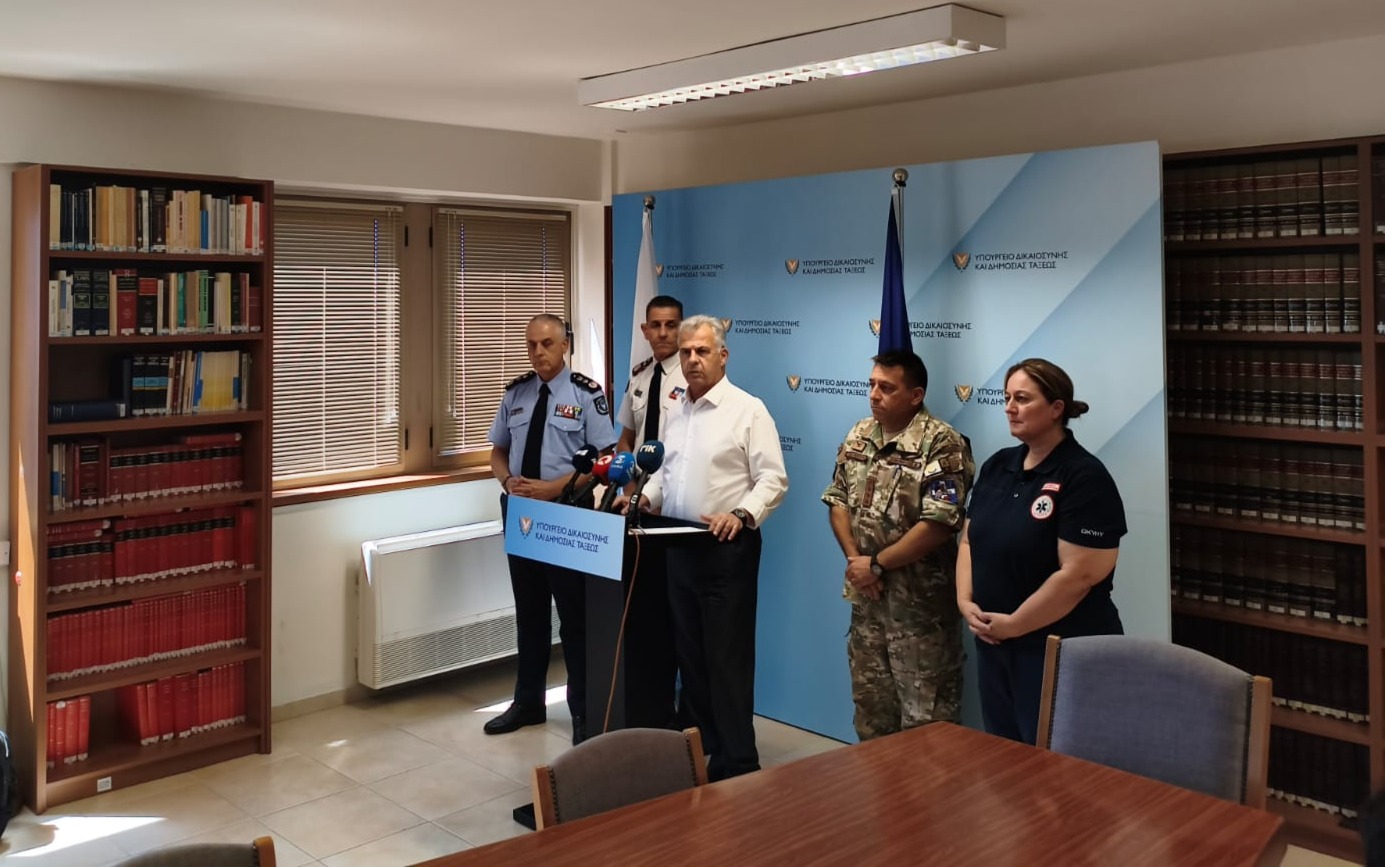
Police will decide on road closures and diversions, the Fire Service will handle technical operations where required, Public Works will clear and repair the road surface, and Civil Defence will activate the CY Alert system to inform the public.
Fytiris said that until now, each agency responded according to its own remit, without a shared operational mechanism coordinating actions in real time. "Police responded to the recent incident, but had no way to move the truck or clear the road. One agency is responsible for investigating the accident, another for clearing it, another for sending out alerts. What we have done is bring them all into a single plan so they operate in a coordinated way," he said.
Standing contracts for heavy equipment
A central element of the plan is cooperation with the private sector. The ministry will pursue pre-arranged contracts with specialised companies in each district, so that heavy equipment such as large cranes is immediately available when trucks, tankers or other heavy vehicles need to be moved.
"If a large crane is needed to move a truck or another heavy vehicle, there will already be a contract with a specific company in each district, able to respond immediately, at a pre-agreed hourly cost," Fytiris said.
He added that most of the plan relies on tools the state already has, such as CY Alert and existing public information mechanisms, with the main additional cost tied to securing specialised equipment and private sector services where needed.
Measurable response times for the first time
For the first time, the operational plan will set specific, measurable response times for every agency involved, allowing their performance to be assessed. "There will be measurable targets. Without measurable targets, there can be no accountability," Fytiris said.
Asked whether responsibility for the delays in last Thursday's incident had been established, the minister said no single agency was at fault, "because there was no plan" in place at the time. He said the new framework was designed to change that going forward, with all agencies operating under a single plan and coordinating "in the shortest possible time."
Wider scope than highway incidents
Fytiris said the plan is not limited to motorway accidents but will apply to any serious incident requiring coordination between multiple agencies, such as fires or area evacuations. It will be implemented in every district through dedicated teams, he said, "to ensure a rapid response."
On public information, the minister said the aim is to prevent unnecessary disruption for drivers by ensuring that anyone approaching an incident site is alerted in time to choose an alternative route.
Next steps
The "Nestor" plan will be sent to all involved agencies in the coming days for feedback and suggestions before being finalised and formally implemented. The ministry expects it to become the primary tool for managing serious incidents that currently cause hours-long traffic disruption.