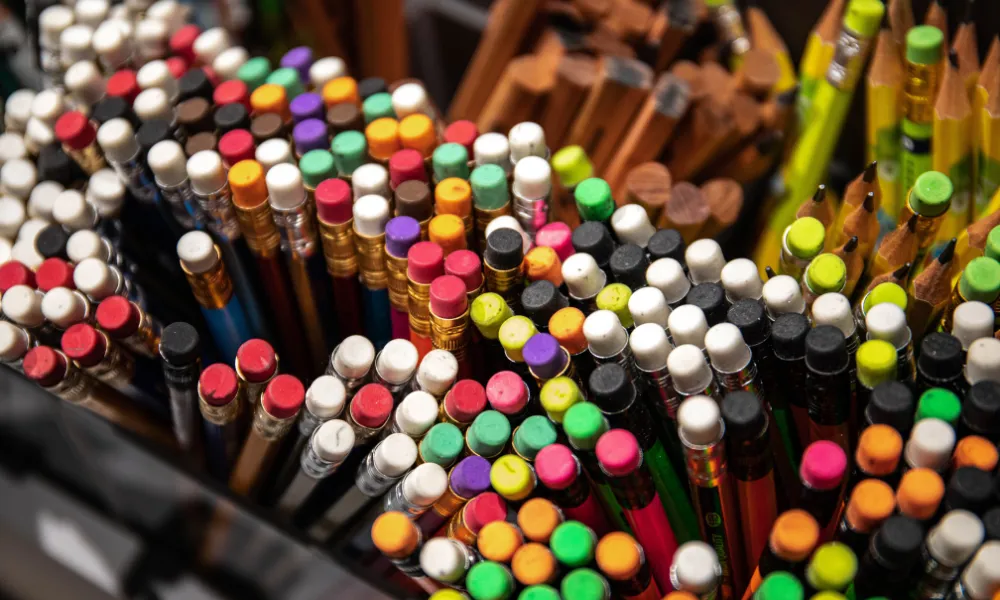

For most of the 2000s, Sweden was the country other education ministries pointed to when they talked about the classroom of the future. Laptops and tablets steadily replaced textbooks, and entire municipalities adopted a one-device-per-pupil model. Two decades on, Sweden is now pulling in the opposite direction, putting paper, printed books and handwriting practice back at the centre of the classroom.
A costly change of course
This is not a symbolic gesture. The Swedish government has committed 685 million kronor to buying new printed textbooks, with a further 500 million kronor a year earmarked for the coming years so that every pupil has access to physical learning material. The Swedish Ministry of Education has also made clear that children up to the age of six should use digital devices minimally, if at all, during the school day.
Reading scores under scrutiny
The shift follows a decline in reading scores. In the international PIRLS assessment, which measures reading ability among Grade 4 pupils every five years, Sweden's score dropped from 555 points in 2016 to 544 in 2021. The result still sits above the international average of 500, but the fall was significant enough to trigger a public debate over a decade of education policy.
Teachers report a related pattern in the classroom: more pupils struggling to read long texts without breaks, with concentration dropping noticeably when learning happens exclusively through a screen, whether a laptop, tablet or interactive whiteboard. The trend became more pronounced after the pandemic, when millions of teaching hours worldwide moved temporarily online.
A 2023 UNESCO global report on technology in education found that only around 10% of education research reliably assesses the actual impact of digital tools on learning. The organisation argued that technology should support teaching rather than become an end in itself, and urged governments to base policy on evidence rather than what the market offers.
What neuroscience says about handwriting
Researchers at the Karolinska Institutet say handwriting activates brain regions linked to vision, motor coordination, language and memory simultaneously. Typing, by contrast, involves far more repetitive and limited movements, narrowing the range of sensory input involved in learning, particularly for younger children.
International reading studies point in a similar direction. Comparisons involving thousands of pupils and students consistently show better comprehension of text read in print than on a digital screen, a pattern researchers attribute to the spatial reference points that paper provides, which make it easier for the brain to organise and recall information.
Not a retreat from technology altogether
Sweden is not abandoning digital tools. It remains one of the most digitised economies in the European Union, with more than 95% of households having internet access. Computers still play a central role in research, collaboration between pupils and building digital skills. What has changed is the framing: technology is now treated as a complement to teaching rather than a substitute for books.
The policy shift comes as screen time continues to grow in children's daily lives more broadly. OECD data shows teenagers in developed countries spend more than three hours a day on digital devices outside school, not counting time needed for schoolwork. Educators worry that constant switching between images, notifications and apps makes it harder to develop the sustained concentration that complex texts require.
Not everyone agrees screens are to blame
The return to books has not gone unchallenged. Several researchers caution that falling learning outcomes cannot be attributed to screens alone. Sweden's picture is more complicated: the lingering effects of the pandemic, social inequality, shifts in the pupil population and changing education policies all play a role. Their argument is not that technology should be abandoned, but that it should be used with clearer pedagogical purpose.
Sweden's shift carries particular weight because it comes from a country that invested more heavily in digital education than almost any other. When one of the field's pioneers takes a step back, other governments notice, and several are already watching the results of Sweden's new approach closely. The real test will be whether a rebalancing between book and screen proves more effective than digital learning on its own.