
Cyprus' energy policy requires a change of direction. At a time of high fuel and electricity costs, subsidising renewable energy generation systems alone is no longer enough. The country must invest in reducing consumption, starting with residential housing.
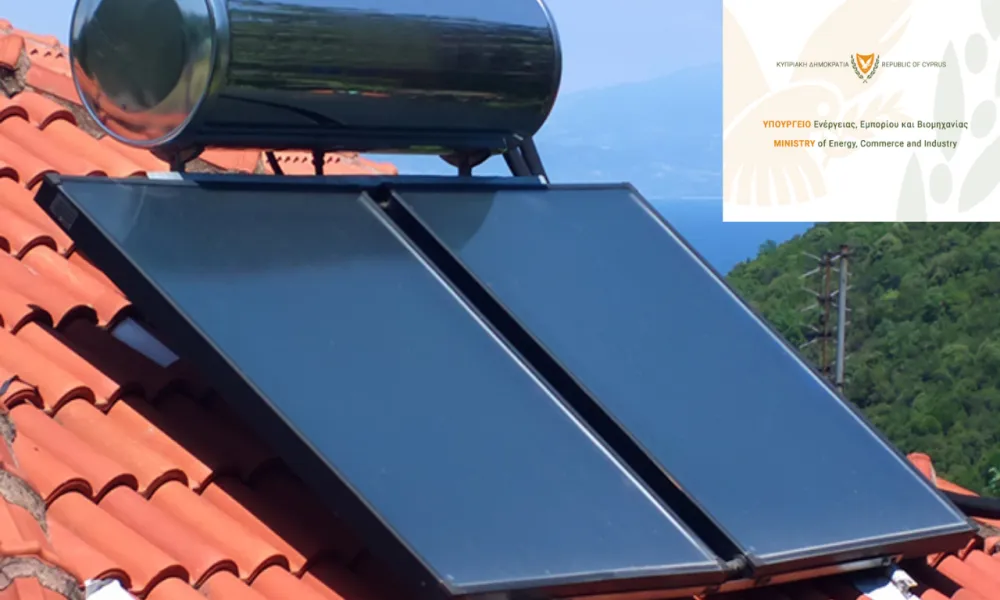
Solar photovoltaic systems help lower electricity bills, but they do not address energy waste. Nor are they accessible to everyone.
By June 2026, approximately 100,000 photovoltaic systems had been installed in homes and small businesses, representing roughly one-fifth of all homes in Cyprus.
Why Cyprus focused on solar power
It is understandable why Cyprus placed so much emphasis on photovoltaic development over the past decade.
First, the cost of solar technology fell significantly. Until 2014-2015, the expense of the technology itself was a major obstacle to wider adoption.
Other European countries had turned earlier to cheaper renewable energy sources because they benefited from wind and hydroelectric resources. Cyprus, by contrast, mainly had solar energy available, while the technology remained prohibitively expensive.
Second, European funding through the Structural Funds, the Recovery Plan and REPowerEU created financing opportunities for the green transition.
Cyprus took advantage of those opportunities, introducing grant schemes that boosted solar electricity generation.
Conditions have changed
Today, however, the circumstances are different.
Photovoltaic systems have become more affordable and installations have multiplied.
At the same time, curtailments of solar production caused by limitations in the electricity system and insufficient storage capacity demonstrate that increasing generation alone is not enough.
Further investment is needed in:
- The electricity grid.
- Energy storage systems.
- Measures that reduce unnecessary energy consumption.
A housing stock in need of upgrading
Cyprus' revised National Building Renovation Plan 2026-2031 illustrates the scale of the challenge.
Approximately 85% of buildings were constructed before minimum energy-efficiency requirements were introduced.
Residential properties account for 21% of final energy consumption.
To achieve national targets, Cyprus must complete 3,365 deep residential renovations every year until 2030.
The plan adopts the principle of “energy efficiency first”.
Measures such as:
- Thermal insulation.
- Improved windows and doors.
- Shading systems.
- More efficient heating and cooling systems.
should either precede or accompany photovoltaic installations.
New scheme targets 1,400 homes
This approach is reflected in the fourth call for applications under the “Save and Upgrade Homes” scheme, launched yesterday.
The programme has a budget of €20 million and aims to support 1,400 homes.
Between 2021 and 2027, a total of €120 million will be spent through the scheme, benefiting more than 5,000 households.
According to the editorial, this instrument should not be discontinued after the current co-financed funding framework expires in 2027.
Support for vulnerable households
Encouragingly, similar thinking is reflected in the Ministry of Energy's plans for vulnerable households.
The ministry is seeking €100 million in financing from the Social Climate Fund.
A new support scheme, expected to be announced soon, will require at least one energy-efficiency intervention before subsidies can be granted for photovoltaic systems and battery storage.
Beyond vulnerable consumers
Supporting vulnerable households remains essential.
However, comparable incentives should also be made available to other households.
According to the commentary, one of the key objectives of the next funding period should be to upgrade a greater number of homes, reduce overall energy consumption and lower electricity bills for citizens.