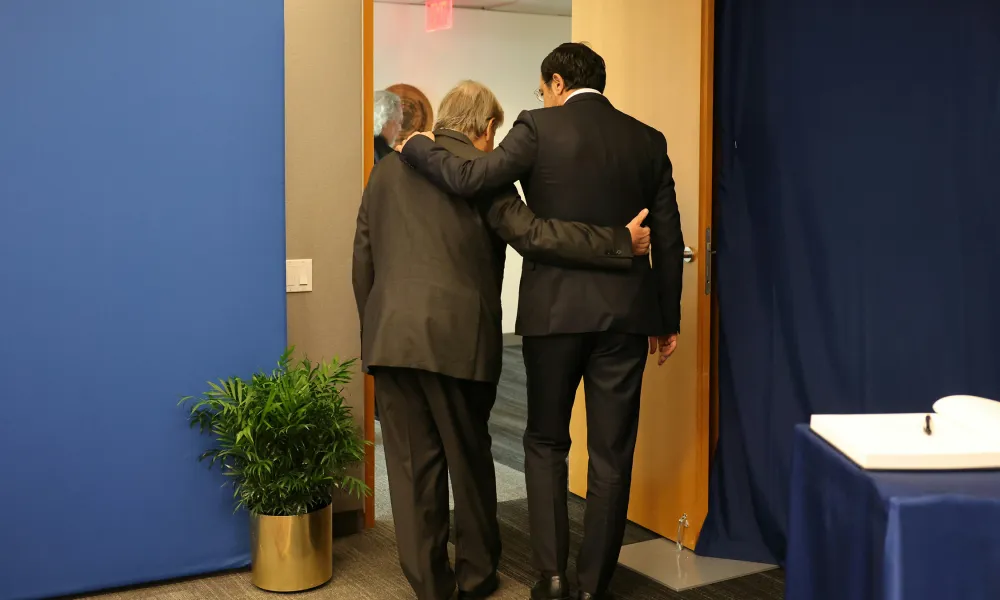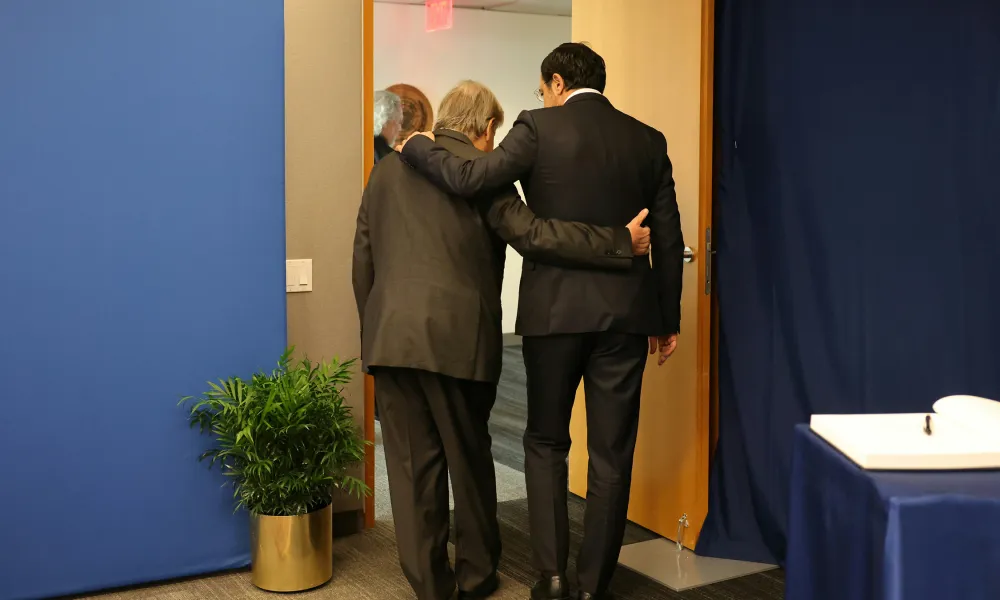

The decision by Cyprus Forum organisers to back down in the face of pressure from ELAM, followed by the withdrawal of Mehmet Harmancı and Charalambos Prountzos, paints a bleak picture of efforts by extremist elements to obstruct communication between the two communities.
When a platform dedicated to bicommunal dialogue gives in to the demands and rhetoric of extreme nationalists instead of defending its own principles, it effectively legitimises an agenda of intolerance.
When everything Turkish Cypriot becomes ‘illegal’
Extreme nationalists have both the tendency and the political cover to portray virtually anything associated with the Turkish Cypriot community as illegal.
Some have gone as far as effectively treating provisions of the Republic of Cyprus Constitution itself as illegitimate.
In the name of an absolutist form of patriotism, every institutional reality in the north is systematically demonised, while conveniently ignoring that the 1960 Constitution explicitly provided for separate municipalities in Nicosia.
That institutional arrangement was respected from the beginning and remained alive even after 1974.
The uninterrupted cooperation between the mayors of the two sides, beginning with Lellos Demetriades and Mustafa Akıncı and continuing today with Charalambos Prountzos and Mehmet Harmancı, has been instrumental in addressing vital problems affecting the divided city.
More than an organisational mistake
What happened at the Cyprus Forum cannot simply be dismissed as an organisational mistake, as Forum representatives have suggested.
It reflects a deliberate attempt by the far right to undermine bridges of communication, an approach that ends up moving in parallel with advocates of the “two-state” position in the north.
Nobody should expect anything different from ELAM, which has become a privileged interlocutor of the current President.
Its agenda is built around exclusion, undermining common dialogue and hostility towards Turkish Cypriots who dare to engage on an equal footing.
The responsibility of democratic parties
The real problem, however, lies with the parties belonging to the so-called democratic spectrum.
They have a responsibility to respond decisively rather than simply watch from the sidelines.
Instead of resisting intolerance, they too often choose either to follow it or tolerate it, allowing far-right nationalism to become normalised for short-term political gain.
Unfortunately, most political parties are becoming increasingly trapped by narrow political calculations and fears.
In doing so, they silently allow the far right to define the boundaries of contact between Greek Cypriots and Turkish Cypriots.
And if political forces continue allowing nationalism and intolerance to determine who can speak to whom, then some of those who repeatedly declare their commitment to a Cyprus settlement may ultimately have to answer a much more uncomfortable question: how many of them genuinely want one?