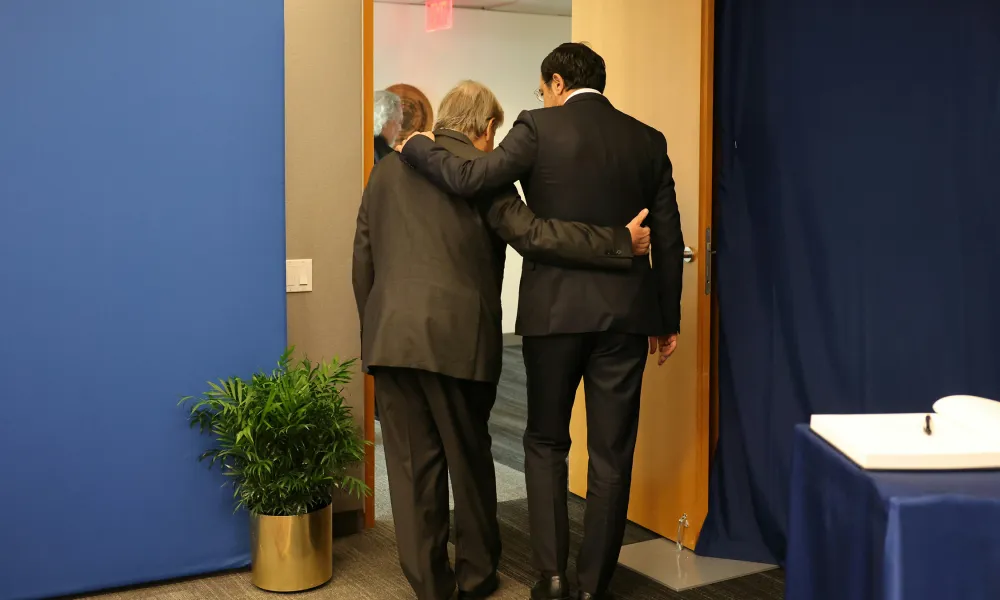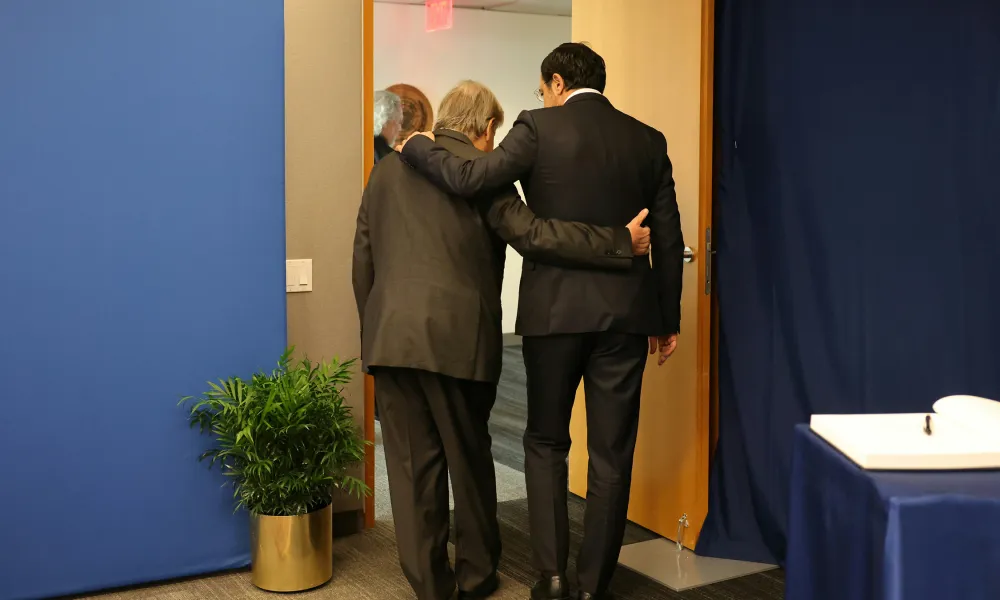

The Greek Cypriot leadership sought a summit without committing itself to meaningful progress in any area, even though UN Secretary-General António Guterres had made clear that the conditions for such a meeting had not yet been created.
There is little point in mincing words. The Greek Cypriot political leadership does not currently want a comprehensive settlement of the Cyprus problem. It is not prepared to accept the political equality, power-sharing, effective participation in decision-making and distinct democratic will of the Turkish Cypriot people that any viable settlement would require. What it does want is to preserve the appearance of diplomatic activity so that responsibility for the continuing deadlock can be shifted onto the Turkish Cypriot side.
The controversy involving Nicosia Turkish Municipality Mayor Mehmet Harmancı at the Cyprus Forum and the diplomatic manoeuvring witnessed in New York are not unrelated incidents. They are manifestations of the same mindset. The Greek Cypriot side wants contact with Turkish Cypriot representatives but hesitates to recognise them as equal and legitimate interlocutors. It wants the photograph but not the political courage that must accompany it.
The most significant development, however, is the exclusive account Erhürman provided to ANKA Review about his contacts in New York. His statements clarify why neither a trilateral (2+1 meeting involving the two Cypriot leaders and Guterres) nor a broader 5+1 gathering with the guarantor powers took place. They also expose the misleading impression that the Greek Cypriot side subsequently attempted to create.
Guterres also demanded progress
According to Erhürman, neither a 2+1 meeting nor a 5+1 gathering appeared on his New York programme before he left the island. That point is crucial. There was no previously agreed meeting for the Turkish Cypriot side to reject. Nor was Erhürman opposed to either format. He made clear that he remained open to both, provided that the necessary preparations were completed and sufficient progress was first achieved in Nicosia.
This was not a condition invented by the Turkish Cypriot side. Guterres had also identified three areas in which meaningful movement would be necessary before another high-level meeting could be convened: confidence-building measures, the methodology of a renewed negotiating process and the substantive issues at the heart of the Cyprus problem.
The secretary-general did not want to bring the leaders together merely to produce another photograph. An unprepared meeting risked repeating earlier failures, further eroding confidence between the sides and confronting the United Nations with yet another diplomatic disappointment.
Erhürman was not alone in recognizing that the groundwork for a 2+1 or 5+1 meeting was incomplete.
UN Secretary-General Guterres shared the exact same assessment, having already tied any future gathering to substantive progress in Nicosia. By the time the parties arrived in New York, Guterres himself explicitly announced that the two sides on Cyprus had failed to reach that threshold.
Turkish Cypriot side ready on six of seven issues
The details provided by Erhürman also demonstrate which side was blocking progress. Guterres had placed seven confidence-building measures on the agenda: opening new crossing points, removing landmines, establishing a joint disaster-response mechanism, cooperating against irregular migration, facilitating contacts in sport, resolving EU citizenship problems affecting children of mixed marriages and activating the proposed civil society mechanism.
Erhürman said the Turkish Cypriot side was ready to reach agreement on six of the seven subjects. The remaining disagreement concerned the new crossing points, including their locations and whether the different route proposals should be treated as a single package.
That record undermines claims that the Turkish Cypriot side was responsible for obstructing the process. There is an obvious difference between a party ready to agree on six out of seven measures and another unwilling to commit itself to meaningful progress on any of them.
Instead of bringing the seven existing subjects to a conclusion, the Greek Cypriot side presented a new 19-point package. This looked less like an effort to reach agreement and more like an attempt to expand the agenda and disperse responsibility. Introducing new subjects when agreement is already within reach on existing ones is a familiar method of obscuring rather than overcoming a deadlock.
According to Erhürman, Turkish Cypriot negotiator Mehmet Dânâ and his Greek Cypriot counterpart, Menelaos Menelau, met in New York with UN Under-Secretary-General Rosemary DiCarlo and Personal Envoy María Ángela Holguín. The talks produced no progress on key issues—an assessment Holguín reportedly shared.
That was the actual situation on the ground. There was no result on confidence-building measures, no shared understanding of negotiating methodology and no political groundwork for movement on substance. None of the conditions identified by Guterres for another high-level meeting had been fulfilled.
What was Christodoulides seeking from a summit?
Despite this absence of progress, Greek Cypriot leader Nikos Christodoulides asked Guterres to convene a 2+1 meeting. When Holguín conveyed the request to Erhürman, the Turkish Cypriot leader asked a simple and entirely reasonable question: Had the Greek Cypriot side committed itself to meaningful progress in any area?
The answer was no.
Erhürman then asked Holguín for her own assessment. Her impression was not positive either. In other words, it was not only the Turkish Cypriot side that saw no basis for a productive meeting. The UN envoy could not identify one either.
What, then, would a 2+1 meeting have achieved? The leaders would probably have gathered at UN headquarters, shaken hands before the cameras, listened to Guterres urge them to act constructively and departed without a tangible result. Christodoulides would then have been able to present himself to the international community as the willing and constructive leader who had requested and achieved a meeting.
As Erhürman explained, the objective was to create the impression that a meeting had a valid purpose and sufficient groundwork, but that the Turkish Cypriot side had rejected it. He refused to walk into that trap.
His statement that “we will not meet merely for the sake of meeting” does not amount to a rejection of negotiations. On the contrary, it means taking negotiations seriously. Erhürman is calling for a prepared meeting with a defined agenda and a reasonable prospect of producing results. After decades of failed summits and broken expectations, that is hardly an unreasonable demand.
The Harmancı affair reveals the same mindset
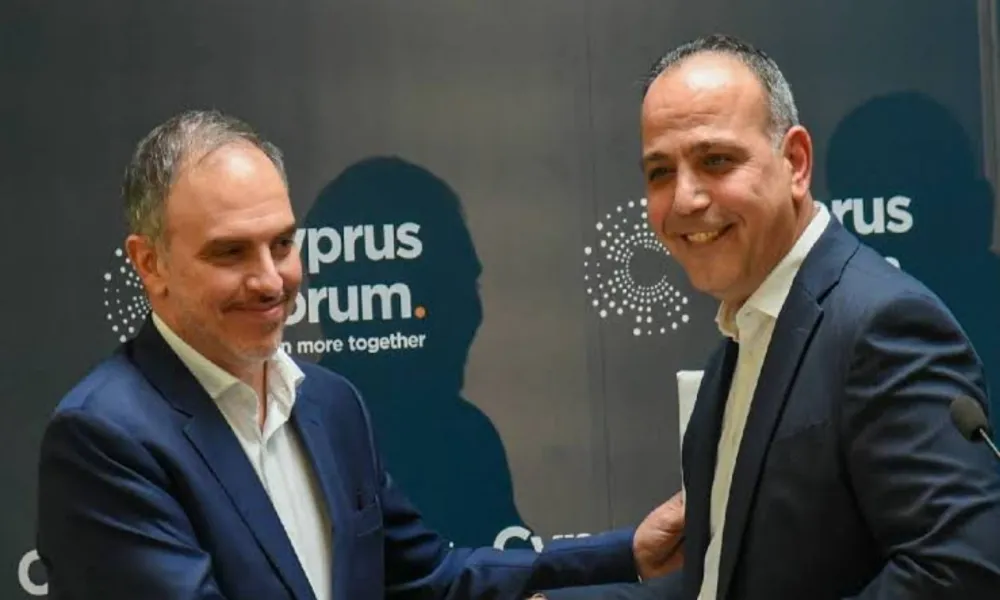
The Harmancı controversy matters because it helps explain the political mentality behind the diplomatic impasse. Following objections from the far-right ELAM, the Cyprus Forum removed Harmancı’s designation as “Mayor of the Nicosia Turkish Municipality” from its programme and replaced it with an unofficial description referring to him as the leader of Nicosia’s Turkish Cypriot community.
More troubling was the subsequent disclosure that pressure had not come from ELAM alone. Officials of the Christodoulides administration had also reportedly asked the organisers to change Harmancı’s title. The demands of the far right and the reflexes of the Greek Cypriot state had converged.
Harmancı rightly withdrew from the forum. Greek Cypriot Nicosia Mayor Charalambos Prountzos then withdrew in solidarity, offering a valuable demonstration that not all Greek Cypriots subscribe to ELAM’s exclusionary politics. The problem is not the absence of Greek Cypriots committed to peace. The problem is that the political system is increasingly accommodating ELAM’s demands instead of confronting them.
If the Greek Cypriot establishment cannot tolerate the democratic and constitutional title of an elected Turkish Cypriot mayor, how can it be expected to embrace Turkish Cypriot political equality in a future partnership? How can those who treat the title “mayor” as a threat accept rotating leadership, effective participation and the requirement for at least one Turkish Cypriot affirmative vote in joint decision-making?
The world has other crises to address
The international community is, of course, preoccupied with crises far larger than Cyprus. The UN General Assembly convened against a backdrop of wars, great-power competition, energy insecurity, artificial intelligence, economic turbulence and the weakening of the international order. In such an environment, the Cyprus problem inevitably struggles to command sustained diplomatic attention.
That reality does not reduce the responsibility of the two sides. It increases it. Guterres is approaching the end of his tenure, and the time and political capital the UN can devote to Cyprus are diminishing. No one knows how much priority the next secretary-general will give to the problem, whether Holguín’s pragmatic diplomacy will continue or when another serious initiative might become possible.
This is precisely why the parties need substantive progress rather than another ceremonial summit. Confidence-building measures should first be concluded. A common understanding of negotiating methodology must then be developed. Finally, the parties must determine how their differences on the substance of a settlement can be bridged.
A photograph can support a genuine process. It cannot substitute for one.
The problem is not the absence of a table
The Greek Cypriot leadership must decide what it actually wants. Does it seek a negotiated settlement, or does it merely want to preserve the appearance of engagement while maintaining the status quo?
A side genuinely committed to a solution does not attempt to erase the democratic titles of the other community’s elected representatives. It does not treat children’s sporting events, cultural festivals or international contacts as threats. It does not confront a party ready to agree on six of seven confidence-building measures with additional conditions and an entirely new package. Nor does it demand a summit in New York without committing itself to progress in a single area.
Erasing Harmancı’s title at the Cyprus Forum and attempting to portray Erhürman as the leader who rejected dialogue in New York are products of the same political approach. It seeks contact without equality, negotiations without power-sharing and the language of settlement without accepting the political price of a settlement.
The real obstacle to resolving the Cyprus problem is not the failure to convene a 2+1 or 5+1 meeting. As Guterres himself made clear, the parties had not yet reached the point at which such a meeting could serve a meaningful purpose.
The real obstacle is the continuing refusal of the Greek Cypriot leadership to demonstrate the political will required to accept the Turkish Cypriot side as an equal partner.