
Every year, around this time, the same conversation returns. Just before the start of the academic year, attention turns once again to soaring rents. Reports compare rental costs across districts, particularly around university campuses, while students and student organisations warn that even attending a public university can place an enormous strain on family finances.
It is an important discussion. The question is why it stops there.
The rental crisis does not affect only students. It affects workers earning €900 a month, or even those earning €1,100 to €1,300, who struggle to find a decent flat when rents of €700 and €800 have become almost normal. It affects couples bringing home €3,000 a month but needing €1,000, €1,200 or even €1,400 simply to pay rent.
When 40% or 50% of a household's income disappears before electricity, water, food, fuel and other essential bills are paid, something is clearly wrong.
In some cases, the situation has become absurd.
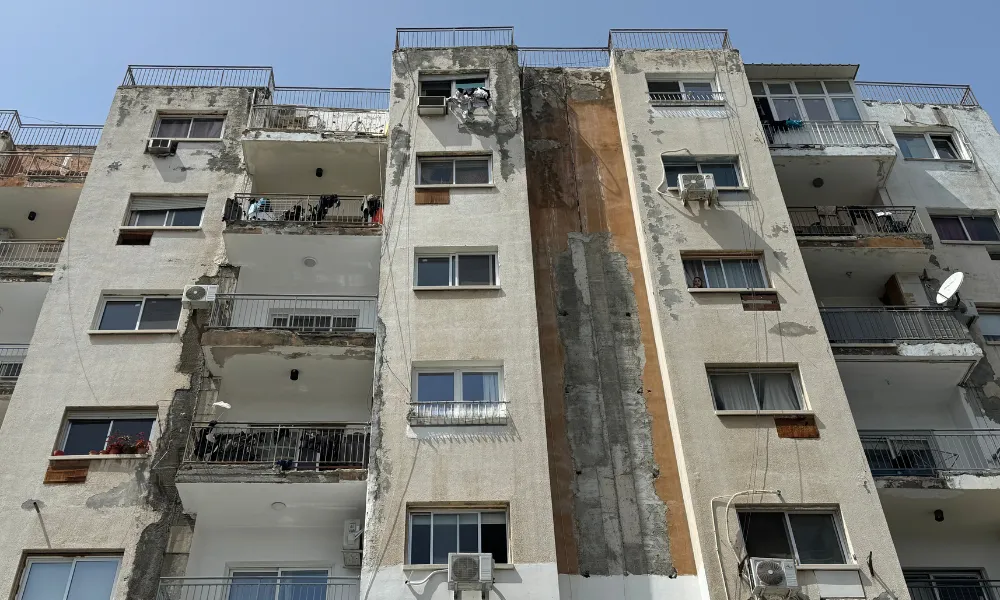
Properties neglected for years and flats in need of major maintenance are entering the market at rents of €800, €1,000 or €1,200. Some listings do not even disclose the asking price until prospective tenants visit, only to discover that what is being offered is barely habitable and costs the equivalent of a monthly salary.
The justification is always the same.
"That's the market."
"There is demand."
"Someone will pay."
But there has to be a limit.
That is the discussion Cyprus needs to start having seriously: what constitutes a reasonable rent.
This does not necessarily mean imposing a blanket rent cap. Rather, it means creating a system based on objective criteria, such as:
- Size of the property.
- Age of the building.
- Actual condition.
- Extent and timing of renovations.
- Energy efficiency.
- Available amenities.
- Location.
Location should matter. It cannot, however, be the sole justification for any price an owner decides to charge.
A framework of this type could also encourage investment in property.
Owners who carry out substantial renovations, improve energy performance, add facilities or properly maintain their properties should be rewarded. Those improvements should have value and should be reflected in rental prices.
Nor would such an approach be entirely unfamiliar.
In affordable housing schemes, the state already calculates what it considers to be an affordable rent. It assesses market rents in a given area, applies a reduction and establishes maximum amounts according to the type of property.
In other words, when it chooses to do so, the state already knows how to use data to determine what can reasonably be considered affordable.
If it can do so within its own housing schemes, why not consider broader mechanisms for the wider rental market?
No one is arguing that property owners should not earn a return on their investment. They purchased the property, maintain it and are entitled to make a profit.
But there is a difference between earning a fair return and charging whatever the market will bear simply because someone needs a roof over their head.
Housing is not a luxury.
Nor can everyone afford to buy a home.
Not everyone has €30,000 or €40,000 available for a deposit. Not everyone can secure a mortgage. A large portion of the population rents and deserves to be part of the housing policy conversation.
If Cyprus genuinely wants a housing policy that supports young people, workers and families, it must decide where the free market ends and where the state's responsibility to protect a basic human need begins.