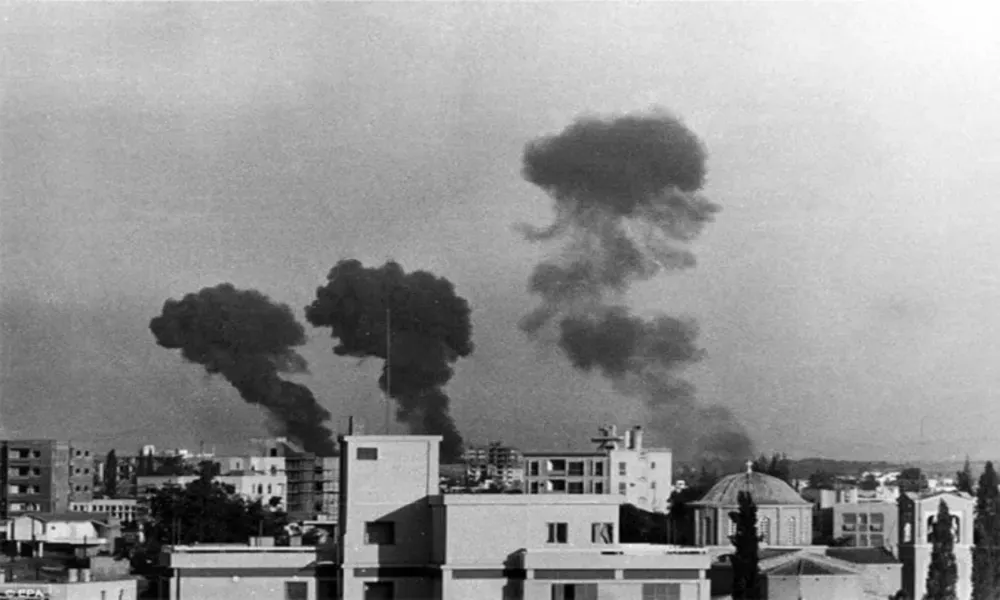

These days are the most difficult and distressing of the year for this country.
On the one hand, they revive memories of the treacherous coup of 15 July 1974, carried out by the Greek military junta and EOKA B, which overthrew democracy in Cyprus, whatever form that democracy may have taken, and led to the deaths of dozens of our compatriots who attempted, heroically but against overwhelming odds, to resist.
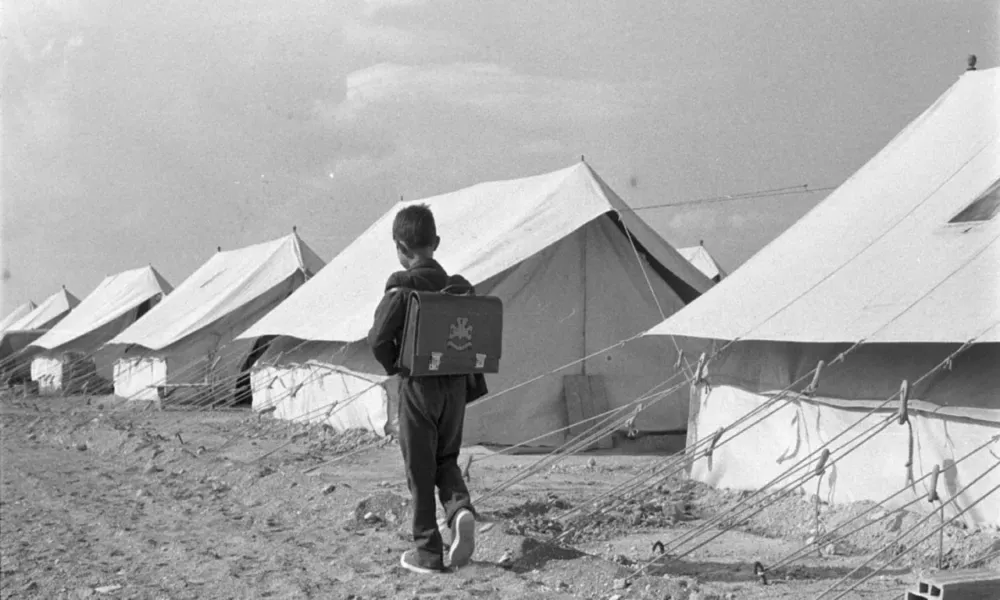
On the other hand, they bring back memories of the completion of that tragedy on 20 July 1974, with the Turkish invasion that brought widespread destruction, hundreds of dead and missing persons, the occupation of half the island, and the displacement of thousands of Cypriots, both Greek Cypriots and Turkish Cypriots, from their homes and properties.
However, these days should not be confined merely to remembrance, memorial ceremonies, empty tributes to the dead and vague condemnations of those responsible. They should be used as an opportunity for deep reflection and understanding of how and why those tragic events occurred, as well as for serious consideration of how their devastating consequences should have been managed and, above all, how we might finally heal the open and bleeding wound of 1974.
Unfortunately, in practice, 1974 neither taught us lessons nor made us wiser. The coup was effectively erased through an extraordinary and responsibility-avoiding collective amnesia imposed by Archbishop Makarios, whose own responsibilities for the abnormal period preceding the coup were also considerable. As a result, those who planned and carried out the betrayal remained unpunished and their crime became time-barred, without the necessary example being set for future generations.
As for the invasion and occupation, we chose, in what we considered our wisdom, to confront them through the grand illusion of a long-term struggle leading to complete vindication, through an unrealistic reading of the new realities on the ground, and through maximalist and impractical demands. With that approach, we squandered major opportunities to settle the Cyprus problem, gradually lost many of our strongest arguments, alienated the Turkish Cypriot community and pushed it into Turkey's embrace, and exhausted the patience of the international community.
Many years have now passed since 1974.
A full 52 years.
The generations that lived through the period before 1974 have almost disappeared with the passage of time. Only a small number of Cypriots still carry personal memories and experiences of that dark era, and they too are gradually passing away.
In only a few years' time, the catastrophic events of 1974 will become a "dead" chapter of history, one that will be taught in schools through narratives filtered and adjusted to whatever interpretation prevails at the time.
And as the years pass, the memory of those events will continue to fade, becoming more distant and making every effort to liberate and reunify our homeland increasingly difficult.
At the same time, the prospect of permanent partition will, regrettably, move ever closer and become ever more deeply entrenched.