
New data from UN Women reveals the extent of women’s exclusion from public life in Afghanistan, five years after the Taliban returned to power. The findings cover freedom of movement, education, employment, mental health and legal protection.
Restrictions on movement
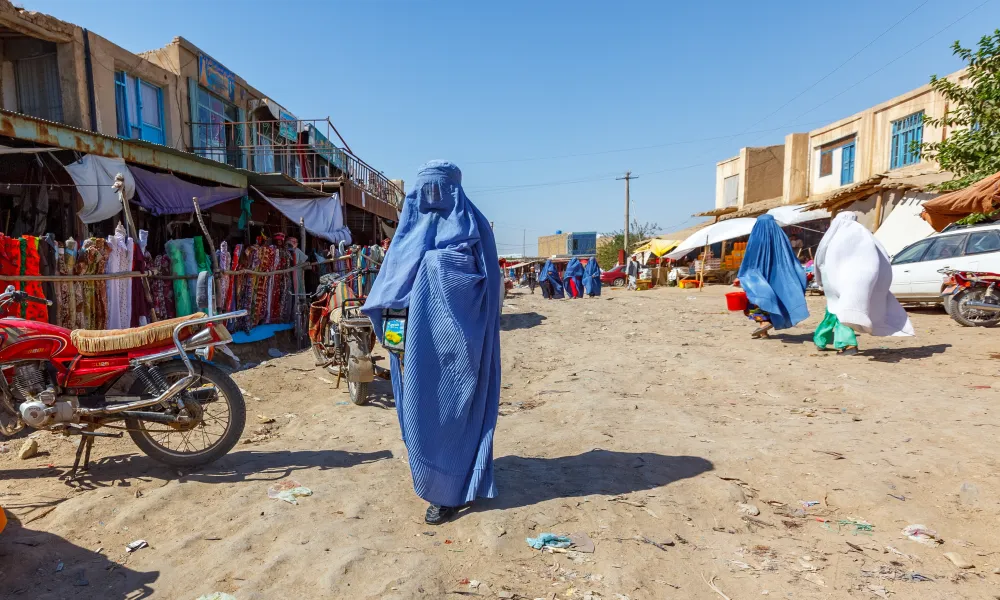
More than half of the women surveyed said they leave their homes no more than once or twice a month. Almost three-quarters also said they do not feel safe going outside unless accompanied by a male relative, known as a mahram.
As the Taliban prepare to mark the fifth anniversary of their return to power, Afghanistan remains the only country in the world where girls are barred from secondary education and women from universities.
UN Women said Afghanistan had “systematically erased the rights of half its population”, describing the country as a global outlier.
Saif-ul-Islam Khyber, spokesperson for the Ministry for the Propagation of Virtue and the Prevention of Vice, rejected the findings in comments to Reuters.
He said claims that women do not feel safe leaving their homes were inaccurate and insisted that women have access to all their rights. He also claimed that Afghans were experiencing security for the first time in almost 50 years and that women’s rights were moving in a “positive direction”.
Girls excluded from education
UNESCO said on Tuesday that the Taliban have prevented an estimated 2.4 million Afghan girls from attending secondary school since returning to power in 2021.
UN Women also reported that the Taliban authorities have issued more than 100 decrees targeting women and girls, institutionalising discrimination and deepening what it described as the world’s most serious women’s rights crisis.
The Taliban maintain that women’s rights are respected in accordance with their interpretation of Islamic law and Afghan culture.
Mental health deteriorates
The restrictions have also contributed to a worsening mental health crisis.
Seven in 10 women surveyed described their mental health as “poor” or “very poor”. They cited isolation, the loss of opportunities and limited access to support networks among the main reasons.
UN Women warned that recent decrees have further weakened women’s legal protections. Measures introduced this year ended legal equality between men and women, expanded male authority within marriage and made it more difficult for women to seek a divorce.
Women shut out of employment
Women also remain largely excluded from Afghanistan’s economy.
Only 7% of women are employed, compared with 84% of men, according to the UN Women report.
The findings were based on a door-to-door survey of 2,190 people conducted between February and March 2025, as well as telephone surveys involving 2,811 respondents between April and May this year.
Source: APE-MPE