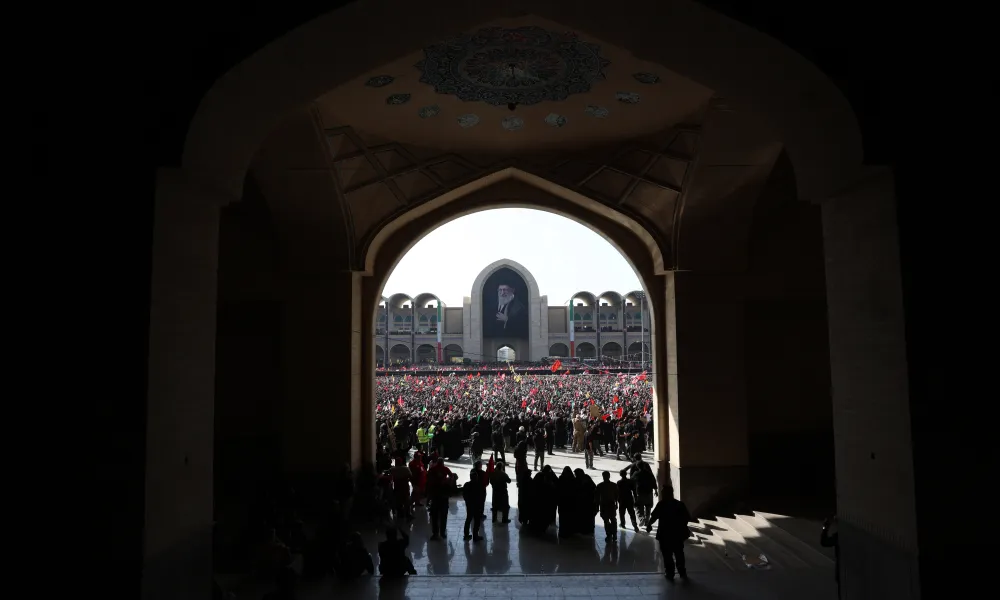

Thousands of mourners gathered at Tehran’s Grand Mosalla on Saturday as Iran opened six days of funeral ceremonies for its late supreme leader, Ayatollah Ali Khamenei.
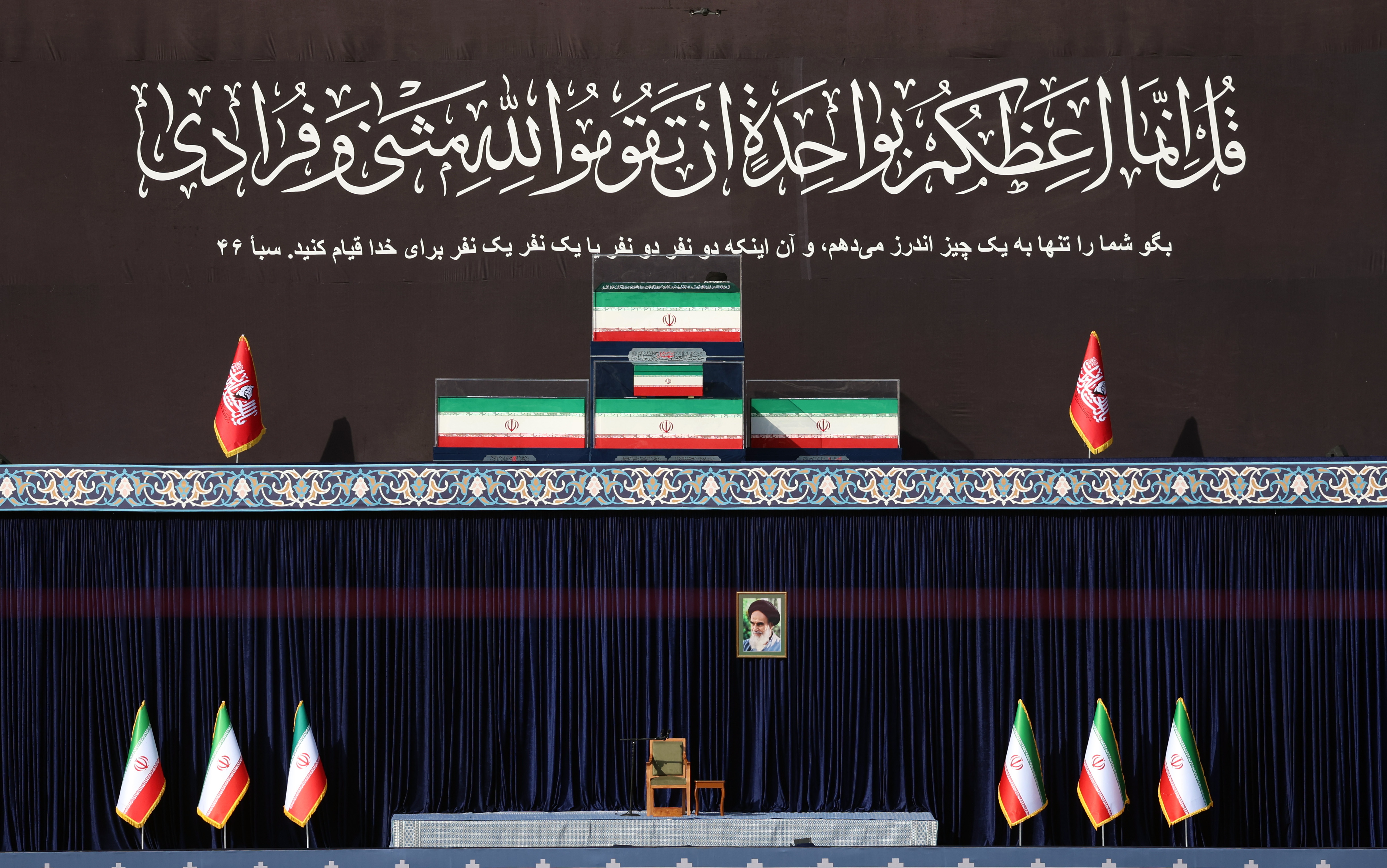
Khamenei’s coffin was placed inside a glass case, topped with the black turban traditionally worn by Shia clerics who claim descent from the Prophet Muhammad. The vast religious complex was covered with his portraits, black mourning banners and red flags symbolising martyrdom and revenge.
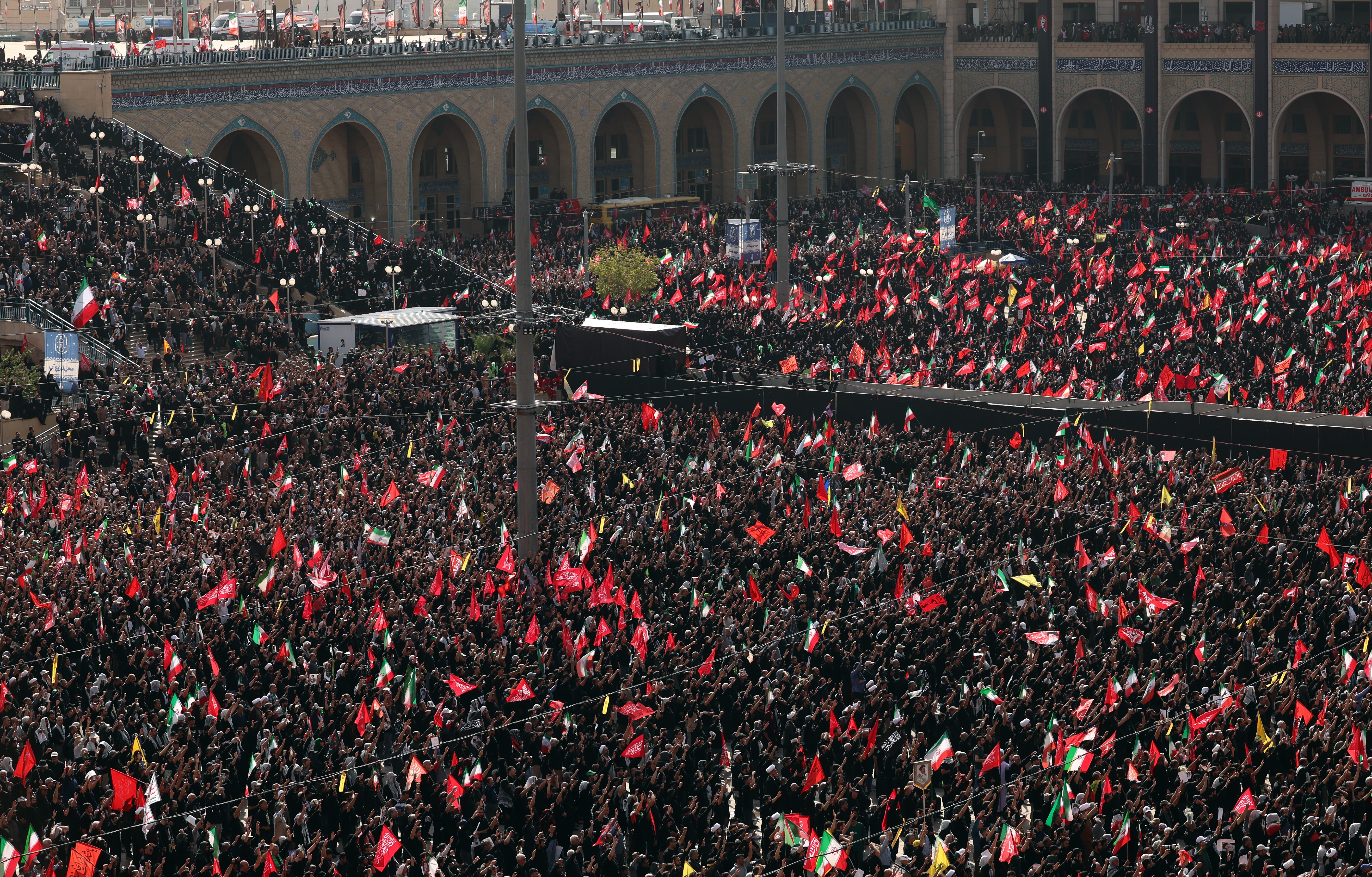
Many of those attending were dressed in black and carried flags bearing the word “martyr”. Some mourners chanted “revenge”, as well as “Death to America” and “Death to Israel”, slogans frequently heard at official gatherings in Iran.
Chants of "Death to America" at the Tehran Mosalla during the farewell ceremony for the martyred leader Ayatollah Khamenei. pic.twitter.com/VmwtI6oXG9
— IRIB (Islamic Republic of Iran Broadcasting) (@iribnews_irib) July 4, 2026
Khamenei was killed aged 86 in a strike on his residence on 28 February, during the opening wave of US-Israeli attacks against Iran. He had led the Islamic Republic for nearly 37 years, making him its longest-serving leader since the 1979 revolution.
His funeral had initially been planned for March but was postponed because of the war.
Turnout presented as a test of support
Iranian authorities say they expect between 15 million and 20 million people to attend the ceremonies in Tehran, although that estimate cannot be independently verified.
Officials have presented the funeral as a demonstration of national unity and continued support for the Islamic Republic after a war that killed several senior political and military figures.
The turnout will therefore be closely watched. Iran remains under severe economic pressure and has faced repeated waves of domestic unrest, while the war has placed further strain on the country’s political and security establishment.
The ceremonies have been compared with the 1989 funeral of Ayatollah Ruhollah Khomeini, the founder of the Islamic Republic. Iranian authorities say around 10 million people attended that event, during which more than 10 people were killed in a crush.
President Masoud Pezeshkian, parliament speaker Mohammad Bagher Ghalibaf, members of the government and Revolutionary Guards commander Ahmad Vahidi paid their respects on Friday, before the venue opened to the public.
Many mourners had waited outside the Grand Mosalla overnight. Some wept as religious hymns and poems were broadcast, while others volunteered to provide food, water and assistance to visitors arriving from across the country.
More than 400 Iranian Red Crescent tents have been set up in Tehran to accommodate the crowds. Water tankers have also been deployed, with temperatures expected to exceed 35°C.
Mojtaba Khamenei remains absent
It remains unclear whether Khamenei’s son and successor, Mojtaba Khamenei, will appear during the ceremonies.
He was reportedly wounded in the attack that killed his father and has not made a confirmed public appearance since succeeding him in March, communicating instead through official statements.
The coffins of four members of Khamenei’s family killed in the same strike were displayed alongside his own. They included one of his daughters, a son-in-law, a daughter-in-law and a granddaughter reported to have been 14 months old.
Khamenei’s body will remain on public display at the Grand Mosalla until Monday, when a procession is scheduled to take place through Tehran.
The coffin will then be taken to Qom on Tuesday and to the Iraqi Shia holy cities of Najaf and Karbala on Wednesday. Khamenei is due to be buried on Thursday, 9 July, in his birthplace of Mashhad, near the shrine of Imam Reza.
With information from AMNA