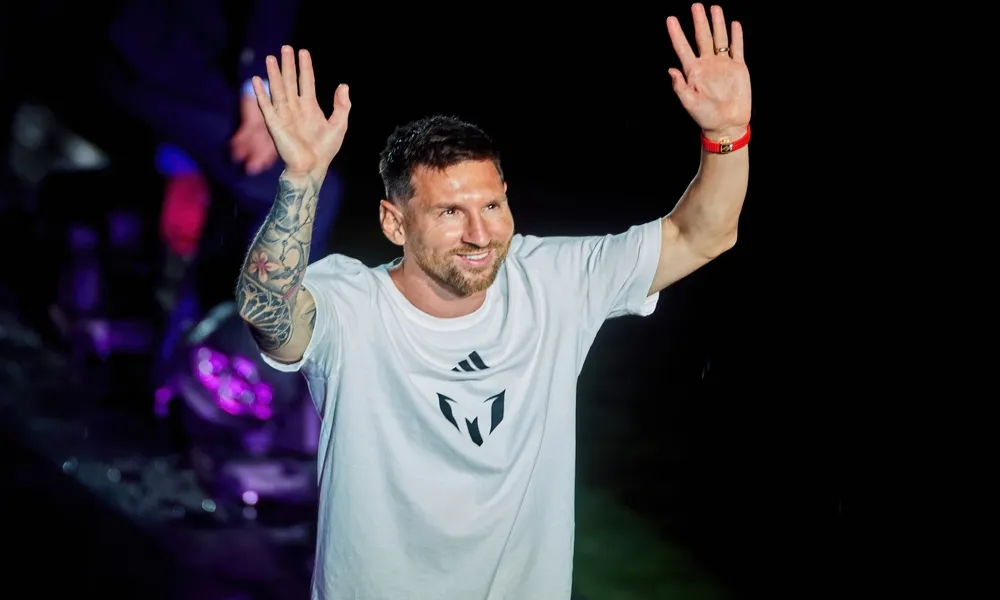

Eldense’s announcement that it has reached an agreement in principle with Lionel Messi over his acquisition of all shares in the Spanish second-tier club has highlighted a trend gathering pace over the past decade. The transaction now awaits formal approval from Spain’s Higher Sports Council (CSD).
Messi expands his football interests
The 39-year-old Argentine superstar, who currently plays for Inter Miami, is taking this latest step after acquiring UE Cornellà, a club competing in Spain’s fifth tier.
The move illustrates how active footballers are using their vast earnings and global influence to build multi-club ownership portfolios. Messi is far from alone, with Cristiano Ronaldo, Luka Modrić, Thibaut Courtois and Kylian Mbappé also among the prominent names linked to the trend.
Vinícius Júnior’s investment in Portugal
One of the most notable examples involves Real Madrid forward Vinícius Júnior.
The Brazilian international became the majority shareholder of Portugal’s FC Alverca after acquiring between 70% and 80% of the club’s share capital. The deal was valued at €8 million at the time.
Ownership raises conflict-of-interest concerns
FIFA and UEFA enforce strict regulations intended to protect sporting integrity and prevent conflicts of interest, including rules governing multi-club ownership.
These regulations prohibit any person or entity from exercising direct control or decisive influence over a club where the possibility of a direct sporting conflict could arise within the same competition.
Active players have not yet faced direct sanctions for investing in lower-tier clubs or teams in foreign leagues. However, the prospect of a player-owned club facing the footballer’s own team in an official match presents a significant regulatory and ethical dilemma.
Control beyond a playing career
Some investments are driven by emotional ties to a particular club. More broadly, ownership offers footballers an alternative to the traditional post-retirement paths of coaching, taking an executive position or becoming a television pundit.
By acquiring a club, they can secure a place at the top of football’s decision-making structure while remaining closely involved in the sport.
The commercial power of a global name
Spanish newspaper AS, citing leading financial and marketing firms, recently noted that the arrival of a globally recognised figure such as Messi or Cristiano Ronaldo can have an immediate multiplier effect on a smaller club.
A famous owner can attract international sponsors, while the club’s digital revenue and global visibility may rise sharply from the moment the agreement is announced.
Promotion can transform a club’s value
There is also a clear financial incentive. Experts cited by Spanish newspaper El Mundo say investing in a lower-division club requires a relatively modest initial outlay compared with the potential increase in its value if the team secures promotion.
Source: AMNA