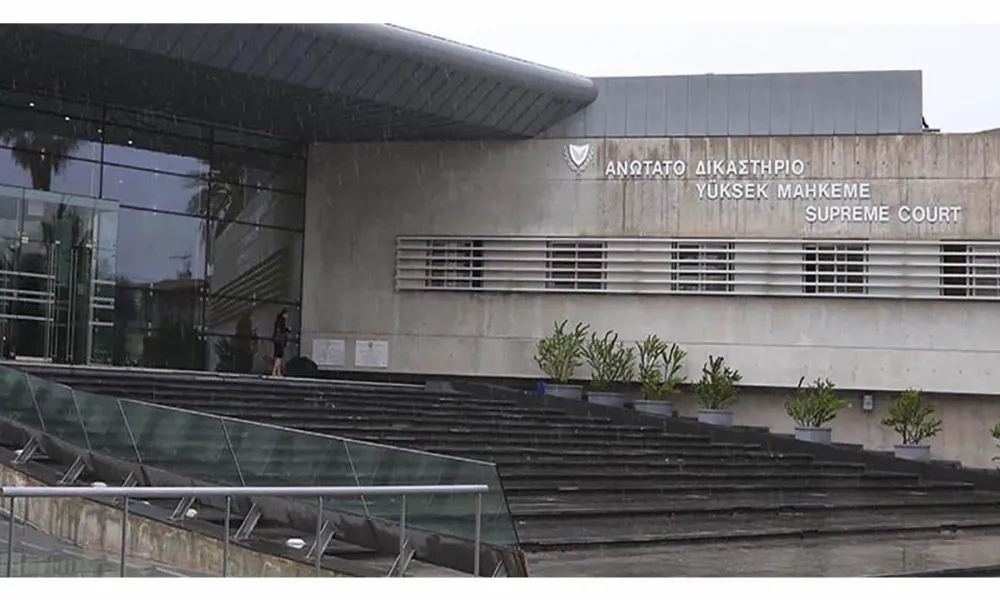

The Cyprus Supreme Court has found that the Republic of Cyprus violated Articles 2 and 3 of the European Convention on Human Rights (ECHR) in relation to the disappearance of two men in August 1974, awarding a total of €100,000 in compensation to their relatives.
The unanimous judgment, dated 4 September 2026, upheld an appeal brought by the relatives and overturned a 2017 decision by the Nicosia District Court, which had dismissed a civil action filed against the Republic in 2009.
The case concerns two unarmed residents of Strongylo, who, according to evidence before the court, were abducted on 15 August 1974. Their whereabouts have remained unknown ever since.
Case required a more targeted investigation
The Supreme Court said the case was materially different from other cases involving people who disappeared during the 1974 invasion.
According to the available evidence, the two men were allegedly abducted by fellow villagers who were also civilians and citizens of the Republic of Cyprus, rather than by members of a military force or the Turkish army.
Against that background, the court found that the authorities had an enhanced obligation to carry out a “targeted, specialised and intensive investigation”, including examining whether criminal responsibility could be established domestically.
The aim, it said, was to ensure the effective administration of justice in a state governed by the rule of law.
The court found that treating the case within the same general framework as other missing persons cases was insufficient.
It said the uniform and non-individualised handling of the case had not been sufficiently adapted to the specific circumstances and had failed to meet the level of diligence required under the Convention.
Investigation required even where alleged perpetrators were civilians
The Supreme Court stressed that the state's positive obligation required a substantive and independent investigation capable of identifying those responsible and, where appropriate, holding them accountable.
That obligation, it said, applies regardless of whether the alleged offences were committed by state officials or third parties.
The court also made clear that the Republic's duty to investigate did not depend on the remains of the missing men first being found or identified.
It considered information concerning individuals who were allegedly involved in the abduction. Evidence before the court indicated that one named individual had crossed into the government-controlled areas in 1984, while another had reportedly been seen there after the invasion.
The court found no evidence that the Cypriot authorities had taken relevant action in connection with those individuals.
RoC 'failed to meet its obligations'
The Supreme Court also considered the role of the Committee on Missing Persons in Cyprus (CMP).
It noted that the committee's mandate is limited to determining whether missing persons are dead or alive and does not extend to establishing responsibility for deaths or investigating their causes.
As a result, the fact that an investigation of sorts was being conducted by the CMP was not sufficient to satisfy the requirements of Article 2 of the Convention.
The court therefore concluded that the Republic had failed to meet its obligation under Article 2 to conduct an effective investigation into the fate of the two missing men.
Article 2 protects the right to life and requires states, among other things, to conduct an effective investigation where circumstances place a person's life at risk or where a person has disappeared in such circumstances.
Court recognises relatives' prolonged anguish
The Supreme Court also found a violation of Article 3 of the ECHR, which prohibits torture and inhuman or degrading treatment.
In reaching that conclusion, it took into account the prolonged uncertainty and psychological suffering experienced by the relatives of the two missing men as a result of the authorities' failure to provide meaningful answers about their fate.
The judgment states that the state's failure to investigate effectively and within a reasonable time deprived the relatives for decades of the possibility of knowing the truth and left them in a continuing state of anguish and psychological distress.
The court further said that the requirements of Article 3 were incompatible with placing the burden of investigating the fate of a missing person on their relatives.
Post-invasion circumstances did not remove state's obligations
The Supreme Court acknowledged the “generalised unrest and administrative difficulties” that existed in the period following the Turkish invasion.
However, it found that those circumstances could not exempt the state from its positive obligations under the Convention.
The court said the authorities were still required to investigate the circumstances of the two men's disappearance in an effective manner, taking account of the specific evidence available in the case.
Six grounds of appeal upheld
The relatives had raised 19 grounds of appeal, challenging, among other matters, the assessment of evidence by the first-instance court, the information provided to them concerning the missing persons' files, the finding that the abduction and disappearance had occurred during hostilities, and the application of case law concerning Articles 2 and 3 of the ECHR.
The Supreme Court upheld six of those grounds.
They primarily concerned the issue of hostilities and the application of the relevant ECHR provisions, as well as the dismissal of the original action and the characterisation of the case as a potentially “dangerous precedent”.
Other grounds, including those relating to the information provided to the relatives about the progress of the case and their recourse to the European Court of Human Rights, were dismissed.
€100,000 compensation awarded
The Supreme Court ruled that the violations it had identified justified an award of compensation for the non-pecuniary harm suffered by the relatives.
It stressed that the compensation was not intended to provide an economic benefit or enrich the appellants, but to acknowledge the violations and, as far as possible, provide redress for the harm caused.
The court ultimately awarded a total of €100,000 in compensation to the relatives of the two missing men, together with the relevant legal costs.
Source: CNA