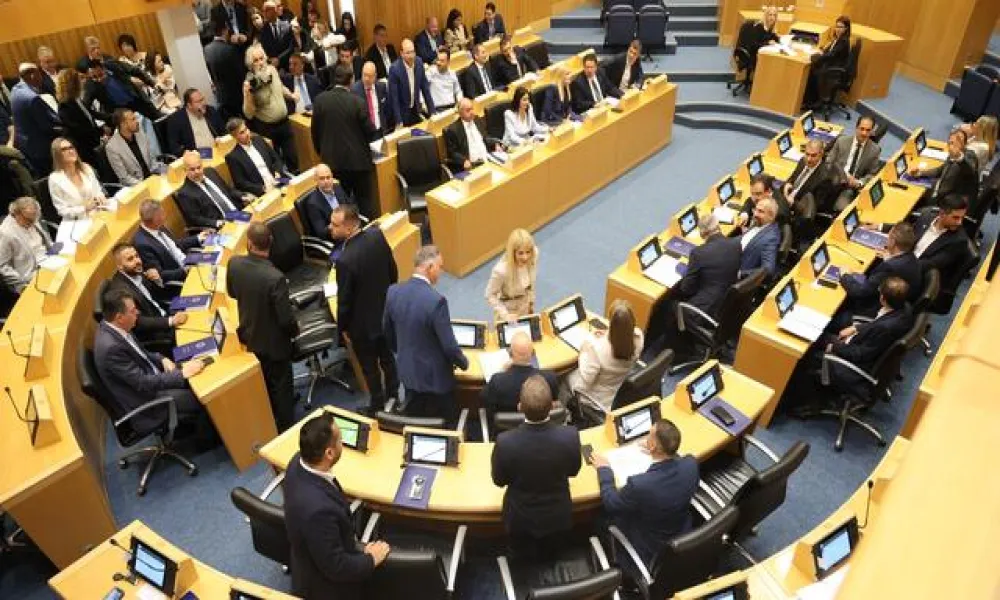



Three private member bills tabled in the House of Representatives as parliament resumed its work seek to expand the powers of the Independent Anti-Corruption Authority, giving it the ability to initiate criminal investigations when its inquiries uncover evidence of possible criminal offences. The need for such a change was brought into sharp focus by the Authority's recent investigation into what became known as the "Mafia State" affair.
The bills have been submitted by DISY MPs Demetris Demetriou and George Pamborides, jointly, and by ALMA MP Michalis Paraskevas. Paraskevas's proposal is expected to come before the parliamentary Legal Affairs Committee at its next session on Wednesday 1 July.
What the bills propose
Under current law, when the Anti-Corruption Authority concludes that a potential violation may constitute a criminal offence, it is limited to preparing a report and submitting it, along with supporting evidence, to the Attorney General of the Republic. All three bills seek to change this by giving the Authority the power to appoint criminal investigators itself, allowing it to pursue cases more directly rather than passing them on and waiting for others to act.
Paraskevas has tabled two complementary bills: one amending the Criminal Procedure Law and one amending the law governing the establishment and operation of the Independent Anti-Corruption Authority. Together, the two amendments are designed to work in tandem: the first grants the Authority the power to authorise criminal investigators, while the second defines the specific institutional framework and the circumstances under which that power may be exercised. In his explanatory note accompanying the bills, Paraskevas states that the experience gained from applying the existing legislation, and in particular the process that followed the Authority's findings in the Mafia State case, exposed material weaknesses in the current legal framework. He is also careful to specify that the proposed change does not remove, limit or otherwise affect the existing powers of the Council of Ministers or the Attorney General. It would instead add the Independent Anti-Corruption Authority as a third, parallel body with the power to authorise criminal investigators, exclusively within the scope of its own mandate.
The DISY proposal
The joint bill by Pamborides and Demetriou takes a similar direction but includes an additional mechanism for ensuring the independence of those appointed. Under their proposal, independent criminal investigators would be appointed from a list drawn up by the Cyprus Bar Association and approved by the Attorney General, with the aim of guaranteeing their independence, credibility and competence. The bill further provides that investigators would operate under the supervision and oversight of the Attorney General, or, where deemed appropriate, under the supervision of an independent prosecutor.