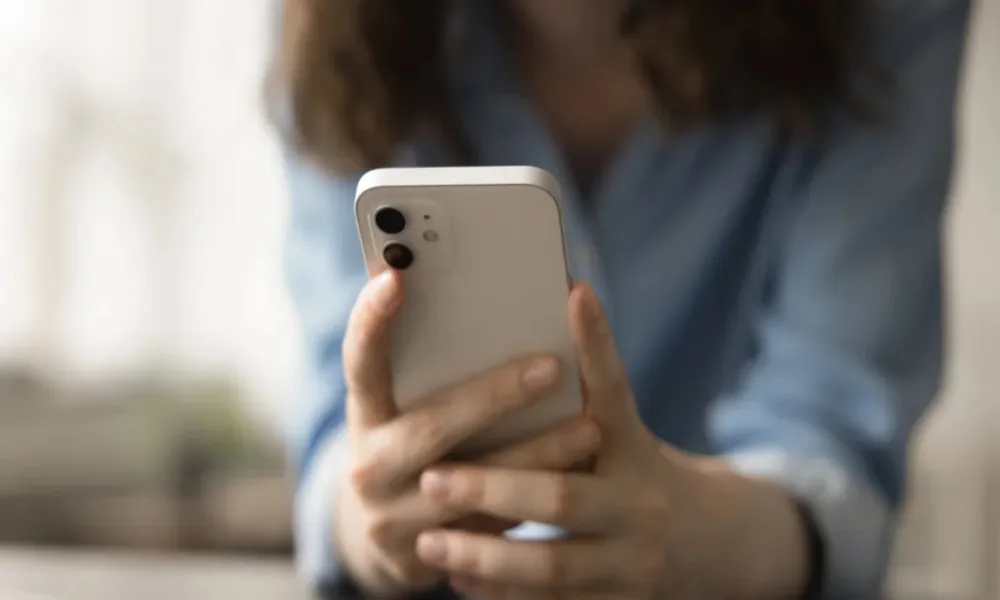

Recent scientific evidence indicates that mobile phones and other digital devices may affect the shape of the neck, harm vision, influence motor skills and reduce muscle strength. Researchers note that some of these physical effects could, over time, contribute to more serious health issues.
Spinal changes: "tech neck"
The posture typically adopted when looking down at a screen, known as "forward head posture," can place up to 27 kilograms of pressure on the neck. Over time, this can damage the intervertebral discs, cause degeneration in joints and muscles, and even reduce lung capacity. The condition has become known as "tech neck" and can permanently alter posture.
Correcting the problem may involve specific exercises, always with a doctor's approval. Simpler adjustments include raising the phone higher and positioning screens at eye level, ideally an arm's length from the face, a recommendation that applies equally to computer monitors. Experts also recommend frequent screen breaks, such as 20 minutes every half hour.
Skin effects and neck wrinkles
A newer question is whether "tech neck" also contributes to wrinkles on the neck. "Theoretically, this makes sense," says Justine Hextall, consultant dermatologist and member of the Royal College of Physicians in the UK. Repeated strain causes wrinkles, so constant forward tilting and neck folding could, in principle, be a contributing factor, she explains. However, she notes there are not yet sufficient, reliable studies confirming this link, and advises against buying specialised "tech neck" skincare products marketed online.
Hextall also points to other skin concerns, particularly for people who wear smartwatches continuously. A dark, damp environment such as the skin beneath a watch strap is conducive to fungal growth, which can cause irritation or eczema. This can damage the skin barrier and increase sensitivity to materials commonly found in tech products, including nickel, rubber, latex and a group of chemicals known as acrylates. She recommends removing smartwatches regularly, washing the skin underneath, and using a protective barrier cream for all-day wear.
Deteriorating eyesight
Myopia rates have risen rapidly in recent decades, a trend often attributed to increased technology use. However, according to Donald Mutti, professor of optometry at Ohio State University in the United States, the connection is not always straightforward. A more than 20-year longitudinal study on children's eye development examined risk factors for the onset and progression of myopia, including whether close-range activities such as phone use were linked to it. "The answer was not particularly," Mutti says.
The same research found that time spent outdoors appears to have a protective effect against myopia. Mutti attributes this to bright outdoor light stimulating the release of dopamine from the retina, which appears to influence eye development. He notes that technology forms part of a broader global shift toward spending more time indoors, and that devices may have an indirect negative effect on eyes through this pattern. He recommends spending more time outdoors, using sunscreen and sunglasses to limit UV exposure, noting the added benefit of improved sleep.
Weaker hands and grip
Grip strength is increasingly recognised as a key indicator of overall health, with one study finding it predicts early death more accurately than blood pressure. Grip strength appears to be declining in many countries, particularly among younger people.
"The generational decline is not just about weaker hands, it may be an early warning sign for the future health of younger generations," says Johannes Beller, professor of medical sociology at the Medical University of Lusatia in Germany. He notes there are good reasons to believe the shift toward sedentary, computer-based work is contributing to declining physical condition, and that this plausibly extends to grip strength.
As a general benchmark, a healthy grip should be able to hold a tennis ball squeezed at maximum pressure for 15 to 30 seconds. Specific wrist-strengthening exercises can help where this proves difficult, though experts note the underlying issue is overall physical condition rather than grip strength alone, meaning general exercise is required.
Hand-eye coordination and motor skills
Technology may also affect motor skills, the abilities connecting brain and body for precise movement. According to Sebastian Suggate, professor of developmental psychology and education at the University of Regensburg in Germany, technology use can improve certain skills, such as clicking and touchscreen gestures, but the evidence points to a negative effect on the broader development of motor skills, particularly fine motor skills.
Research on this effect is more established in children than in adults. Studies show a correlation between increased screen time and poorer motor skills in children, a finding of particular concern given the established link between motor skills and children's and adolescents' cognitive and academic development.
Suggate's guidance does not call for eliminating screens, but for deliberately incorporating more hands-on activities into daily routines, such as meal preparation, crafts or artistic projects, learning a musical instrument, or handwriting. He describes the individual effects as subtle rather than severe, but notes that even moderate effects, compounded across generations, could point to a broader societal decline in cognitive capacity and the ability to engage with reality, given the hands' role as a fundamental point of contact with the physical world.
Source: BBC