
By Ioannis Tirkides
A political order, or political system, represents a broader framework of governance that extends well beyond the usual electoral cycles. Within its architecture there exists a dominant ideological vision of political economy, which determines how state authorities and private actors perceive the balance between public power and private markets. These systems typically last three to four decades and are grounded in a specific technological base and a set of economic theories. Every political order follows a similar life cycle: it emerges from the ashes of a preceding order, becomes consolidated, and eventually dissolves amid institutional atrophy and systemic corruption, until a new framework takes shape. Western democracies, including small, peripheral states such as Cyprus, currently find themselves precisely in this transitional void: the decline of the traditional centre-right and the twilight of the neoliberal order. This is the existential reality of our time. Government rhetoric in Nicosia and in other Western capitals, which presents the "centre-right" orientation as self-evident correctness, betrays a superficial reading of history. Rather than demonstrating ideological consistency, this political narrative conceals the deep exhaustion and decline of today's economic model.
The three orders
Modern statecraft over the past century and a half spans three distinct orders, each representing a synthesis of macroeconomic theory and technological infrastructure. The Classical Liberal Order was built on the techno-economic foundations of the Second Industrial Revolution. It was the era of mass-produced structural steel, transcontinental railway networks and heavy engineering industry, technologies that required enormous concentrations of capital and centralised administrative hierarchies. Economically, this order operated on the theory that supply creates its own demand (Say's Law), which rested on the belief that markets self-correct naturally through price and wage flexibility. Legal and political frameworks were designed to shield corporate combines from state intervention.
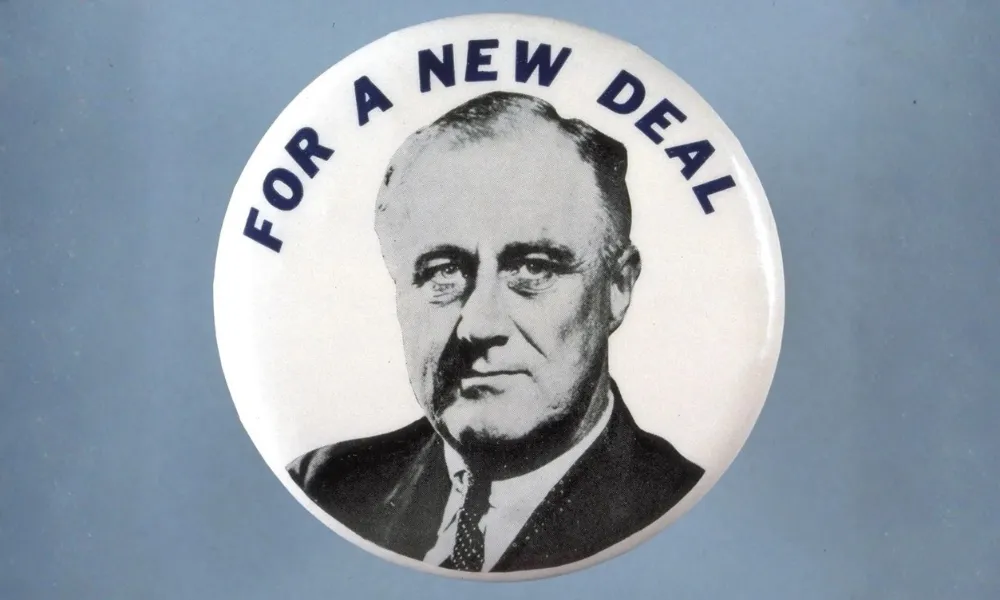
This order collapsed during the Great Depression of the 1930s, giving rise to the New Deal and the post-war Keynesian consensus. This second order rejected the assumption that markets automatically return to full employment, entrusting the state with countercyclical fiscal intervention. The model was adapted to mass assembly and cheap oil, where standardised production lines required high real wages and mass consumer purchasing power to absorb their output. This paradigm created the modern welfare state, strengthened progressive taxation and protected labour unions. Continental Europe developed the "Social Market Economy." This balance was ultimately dissolved by OPEC's oil embargo in 1973, which triggered stagflation and rendered the energy-intensive economy of industrial assembly unviable.
The Neoliberal System that followed overturned Keynesian logic, proclaiming that state intervention was the principal source of economic stagnation. Synthesising Chicago School monetarism, supply-side economics and Hayek's information theory, this third system harnessed microprocessors and the advance of digital technology to fragment global production chains. In Europe, this model was institutionalised through supranational treaties, chief among them the Maastricht Treaty of 1992, which bound member states to strict macroeconomic rules. Traditional state planning was abandoned in favour of compliance with market rules. Yet as digital networks allowed capital to flow from long-term industrial investment toward short-term speculation, this global integration concealed an irreversible internal decay.
Decline, institutional atrophy and systemic corruption
The collapse of a political order is rarely a single catastrophic event. It is a slow process of institutional atrophy. In this transition from production to extraction, the nature of corruption is transformed. Unlike the transactional, extrajudicial bribery of past eras, neoliberal decline is legal, systemic and financialised. The definitive moral collapse of this era was the socialisation of losses alongside the privatisation of gains during the 2008 financial crisis. While speculative banking institutions received trillions in public bailouts, working-class populations absorbed the cost through home repossessions and wage stagnation. This constituted a fundamental breach of the social contract and signalled that state power no longer served the public good.
This systemic decline is the geographic reflection of the fragmentation of production. Digital technologies allowed capital to become spatially indifferent, abandoning industrial regions in pursuit of the lowest global cost, while treating domestic economic decline as a natural consequence of the market. As state capacity was disorganised through the outsourcing of administrative functions and deregulation, public institutions lost the technical expertise required to exercise long-term strategy. This transition, from a state that builds to a state that merely manages the consequences of its own self-inflicted incapacity, marks the end of the neoliberal order.
The power vacuum of the post-2008 era
Since the collapse of the neoliberal order in 2008, global governance has entered an interregnum of empty power: an unstable transitional condition in which the old order has lost its authority, but a new framework has not yet been consolidated. Out of this vacuum a bipartisan economic realignment has taken shape in the United States, where free-trade orthodoxy was dismantled over successive presidential terms. The targeted trade barriers introduced during Trump's first term established an initial level of trade protectionism. Subsequently, the Biden administration institutionalised interventionism through flagship industrial legislation. Trump's second term escalated this shift into a broader protectionist framework, imposing horizontal and sectoral tariffs.
This realignment reflects an attempt to reorganise state power, aimed at reducing risk in supply chains and repatriating critical industrial activities. However, this transition carries serious risks for democracy. Without an established governing consensus, national policy swings sharply from one electoral cycle to the next, fuelling voter alienation.
Financialisation
The Republic of Cyprus constitutes a characteristic case of how "centre-right" governance can degenerate into institutional incapacity. Following the 2013 Eurogroup bail-in, for which the government of the time bears significant responsibility, the governing narrative of "sound economic management" masked a systematic stripping of public wealth. A central example was the collapse and sale of the Cooperative Central Bank in 2018. The state transferred €10.3 billion in performing assets and €9.7 billion in deposits to Hellenic Bank in exchange for a mere €74.2 million in cash. At the same time, taxpayers were burdened with a €1.55 billion guarantee under the Asset Protection Scheme, while more than €7 billion in non-performing loans were transferred to a residual state management entity, KEDIPES.
The commodification of national sovereignty became the defining feature of this period through the Cyprus Investment Programme. This "Golden Passports" scheme generated more than €10 billion for luxury property developers, granting citizenship to more than 7,000 foreign investors. The programme collapsed in October 2020 amid scandals.
This extractive paradigm extended directly into the energy sector. Decisions by the Cyprus Energy Regulatory Authority (CERA) restricted licensing for the state-owned Electricity Authority of Cyprus (EAC) to develop cheap photovoltaic energy, in favour of private producers. Private producers generated solar energy at low cost but fed it into the grid at the inflated price of the so-called "avoided cost" of electricity generation from heavy fuel oil. In addition, consumers absorbed more than €1.2 billion in EU emissions allowance penalties on their electricity bills between 2018 and 2025, while private producers reaped outsized profit margins.
The wreck of the Liquefied Natural Gas import terminal at Vasilikos stands as the ultimate symbol of state incapacity. The project was awarded in 2019 to the Chinese consortium CPP-Metron, but fell into a state of chronic administrative mismanagement. In July 2024, the consortium unilaterally terminated the contract, leaving the floating storage and regasification unit (FSRU) Prometheas stranded in Asia and the jetty unfinished. With the remaining works being re-tendered and arbitration proceedings pending in London, this failure leaves Cyprus locked into heavy fuel oil, facing potential capacity shortfalls on the grid by 2029 due to the retirement of ageing steam power stations.
The cost of energy imports, combined with the repatriation of profits from foreign-owned assets, sustains a persistent current account deficit. Operating within the eurozone, the state offsets this structural deficit by selling off domestic assets into foreign capital networks. This balance-of-payments model has turned national territory and state sovereignty into financial assets used to cover the trade deficit.
Strategic outlook
The historical trajectory from classical liberalism, to New Deal Keynesianism and the neoliberal order, demonstrates that market structures cannot survive when severed from state capacity and democratic legitimacy. Economic paradigms that treat national sovereignty as a commodity for sale, or as an obstacle to be bypassed, ultimately collapse under the weight of their own systemic contradictions.
The way out of today's vacuum lies in a return to a capable, transparent state formation that places economic resilience, regional reconstruction and substantive accountability at the foundations of a stable society. The centre-right paradigm of our era cannot meet this challenge.
*Economist and president of the Cyprus Economic Society. This article is also available on the author's Substack: https://ioannistirkides.substack.com/publish/posts/published