
Cyprus’ “Pay As You Throw” (PAYT) waste reform is unlikely to be fully implemented in 2027, as currently envisaged by the government, according to municipalities that will be responsible for putting the system into practice.
Local authorities say there is still no agreed framework for the reform, while the necessary equipment, infrastructure, legislation and funding have yet to be secured.
Longer rollout proposed
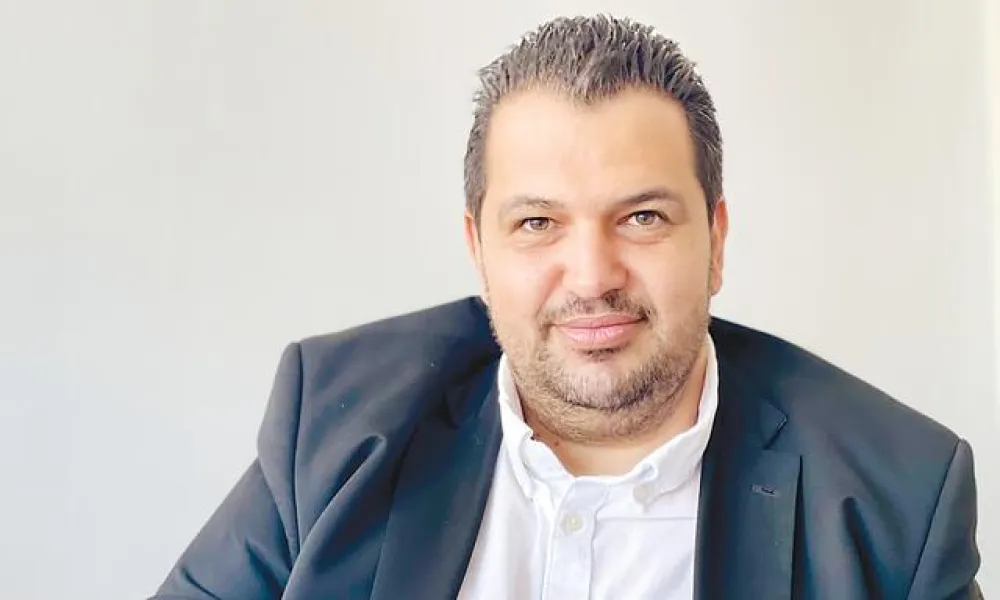
Pantelis Georgiou, mayor of Kourion and a member of a three-person Union of Municipalities committee negotiating the issue with the government, has proposed what he considers a more realistic timetable.
Under the municipalities’ proposed schedule, an agreement on the framework for managing municipal waste would be reached by the end of 2026.
Compulsory recycling would then be introduced nationwide by mid-2027, alongside preparations for separate organic waste collection, including procurement, funding and public awareness campaigns.
Separate collection of organic waste from households, followed by full implementation of PAYT, would begin in late 2028 or early 2029.
Asked whether household organic waste could be collected earlier, Georgiou was unequivocal: “Neither 2027 nor 2028.”
His assessment is based largely on the time needed to prepare and award tenders, purchase equipment and deliver it to municipalities.
The position comes after government plans were reported to envisage nationwide PAYT implementation from early 2027, initially without separate collection of organic waste from households.
Under that plan, separate management of organic waste from large producers would begin during 2027, with households following at a later stage.
Georgiou argues that calling this PAYT is misleading if households are not yet separating organic waste.
Municipalities seek €80 million
Funding is one of the biggest obstacles.
Municipalities estimate that around €80 million is needed for equipment and other requirements associated with implementing PAYT. At present, however, €25 million has been secured, leaving a funding gap of approximately €55 million.
The €25 million, according to the Environment Directorate, has been earmarked from structural funds for local authorities to invest in bins, equipment and waste collection vehicles.
A further €32 million was expected to be raised over the coming years through a landfill tax. The measure, however, recently failed to pass through parliament following opposition from local authorities.
The municipalities have criticised the government’s approach, arguing that it risks transferring the cost of long-standing failures in waste management to councils and residents.
Georgiou says the funding shortfall cannot simply be passed on to municipalities.
If additional state funding is not secured, he argues, the reform should be introduced gradually and in a coordinated manner to prevent councils from facing financial difficulties.
He has called for funding to be linked to the next programming period and for the basic equipment required for the system to be fully funded by the state.
Waste vehicles could take two years
Even if the funding issue were resolved immediately, municipalities face a significant practical challenge: equipment procurement.
Separate collection of organic waste requires specialised waste collection vehicles. According to Georgiou, municipalities have already contacted suppliers and been told that delivery could take at least 18 months after a tender is awarded.
The tendering process itself could take a further six to seven months, provided there are no appeals.
That means municipalities could need at least two years, under the best-case scenario, before they are able to collect organic waste from households.
The situation could become even more difficult if municipalities across Cyprus place orders for specialist vehicles at the same time.
Each vehicle is estimated to cost between €350,000 and €400,000.
'Compulsory recycling first'
Municipalities are therefore proposing a different order of implementation.
Rather than attempting to establish the entire system simultaneously, Georgiou believes compulsory recycling should come first.
Under such a system, inspectors would carry out spot checks on household waste bins. Where recyclable materials were found in mixed waste, fines or other enforcement measures could be imposed.
If political decisions are taken and outstanding issues resolved within the next three to four months, Georgiou believes the necessary equipment could begin to arrive by mid-2027, with compulsory recycling covering a large proportion of households nationwide by the end of the year.
“There is currently a rudimentary recycling system, so let us start from here,” he said.
During 2027 and 2028, municipalities would then prepare the equipment and infrastructure needed for organic waste collection, allowing separate household collection to begin towards the end of 2028 or early 2029.
The phased approach would also give waste-processing facilities time to prepare and allow residents to adapt to compulsory recycling before being required to separate organic waste as well.
Large organic waste producers remain unresolved
Another major issue concerns hotels, factories, restaurants, hospitals and other large producers of organic waste.
Government plans have yet to determine whether municipalities will collect their organic waste or whether producers will arrange collection directly through private contractors.
Georgiou strongly opposes transferring responsibility directly to businesses, arguing that the private market does not currently have the necessary equipment.
A study commissioned by the municipality is examining different scenarios and, according to Georgiou, highlights the scale of the practical difficulties.
If large producers were required to contract directly with private companies, a large number of specialised containers or presses would be needed to store organic waste temporarily.
Georgiou argues that neither the private sector nor municipalities currently have the equipment required to support such a system across Cyprus.
The issue also remains unresolved legislatively, with municipalities and the government continuing to disagree over how large producers should be handled.
The final decision will affect both the cost of waste management for households and the legislative changes required.
‘The state is not ready’
Georgiou’s criticism goes beyond delays, challenging the overall way in which the reform is being designed and transferred to local government for implementation.
“They tried to carry out a reform and suddenly loaded an obligation onto municipalities without providing the money. The state is not ready,” he said.
Among the outstanding issues are infrastructure for receiving and processing organic waste, the capacity of the recycling system once recycling becomes compulsory, equipment, funding and completion of the necessary legislation.
Without final decisions, he argues, municipalities cannot even properly plan public information campaigns.
Georgiou believes the government and municipalities could agree on a strategy after several meetings, but says the state must first be prepared to listen to the local authorities that will ultimately be responsible for implementation.
Dispute over the future of waste management
Behind the disagreement over PAYT lies a broader dispute over who should control waste management and who should benefit from its potential economic returns.
Georgiou said 13 mayors travelled to China last year, where they visited three circular waste management facilities that ultimately generate energy from waste.
According to him, the municipalities explored a proposal to construct similar facilities in Cyprus at a cost of around €110 million each, with two plants considered necessary. The proposal was rejected by the Environment Directorate, he said.
At the same time, the state is planning to spend around €160 million on the transitional upgrading of the Pentakomo and Kosi waste treatment facilities.
Georgiou argues that municipalities should have greater control over waste management and the opportunity to benefit financially from energy recovery.
If councils were able to generate energy from waste, he said, the resulting revenue or electricity could be returned to local communities and help reduce other municipal costs.
He cited street lighting as one possible use for electricity generated through waste recovery.
For municipalities, the central issue is therefore not simply when PAYT will begin, but who will control the waste system, how it will be financed and whether the reform can ultimately reduce costs for residents.
Without an agreed strategy between central government and local authorities, Georgiou argues, plans for PAYT implementation will remain difficult to deliver.