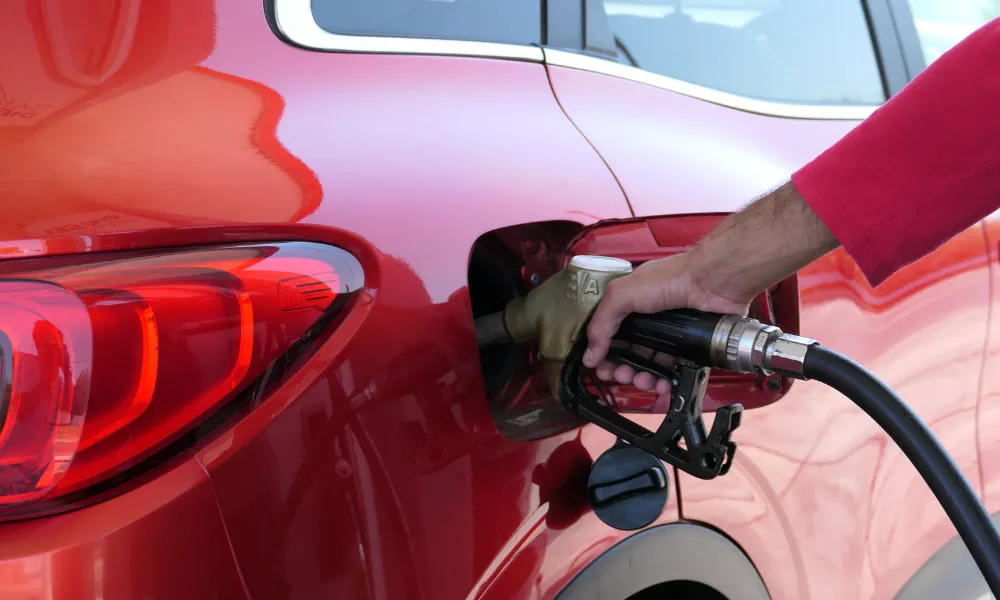

Retail fuel price increases in Cyprus were lower than the average recorded across the EU's 27 member states for both 95-octane unleaded petrol and diesel, according to the Consumer Protection Service (CPS), which cites European Commission EU Oil Bulletin data. The comparison covers prices recorded in the bulletin of 23 February 2026 against the average retail prices recorded in the bulletins of 3, 10 and 17 August 2026.
Petrol and diesel figures
The CPS said the retail price of 95-octane unleaded petrol in Cyprus rose by 27 cents per litre, against 29 cents per litre across the EU-27, meaning the increase in Cyprus was 2 cents per litre lower than the EU-27 average. It added that this change was in line with Greece, where the increase stood at 26 cents per litre, and Poland, at 27 cents per litre, and was lower than the rises recorded in Belgium and Italy, at 34 cents per litre, and in Lithuania, at 32 cents per litre.
For diesel, the CPS said the retail price rise in Cyprus came to 36 cents per litre, against 44 cents per litre across the EU-27, putting it 8 cents per litre below the EU-27 average. It added that the increase in Cyprus was also lower than those recorded in Belgium (54 cents), Greece (47 cents), Lithuania (41 cents), Luxembourg and Poland (39 cents) and Italy (38 cents).
The CPS said consumer protection and the smooth functioning of the market remain a core priority, adding that it monitors fuel price developments closely and continuously assesses prevailing market conditions.
Factors affecting prices
The Service said it systematically monitors the fuel market, drawing on and analysing a broad range of data, including international reference prices, import costs and their fluctuations, the time lag between purchase, import, storage and market release of products, available stock levels, and prevailing conditions in the domestic market.
It added that it is fully aware of the importance of fuel prices for consumers and of their impact on transport costs and, more broadly, the cost of living, which is why market developments are assessed on an ongoing basis, with the available data examined to identify early any patterns that could affect the market's smooth operation.
On the factors shaping fuel prices, the CPS said retail prices for petroleum products are the result of a combination of factors and do not depend solely on movements in any single international reference price. It said the factors taken into account include the purchase cost of the products, existing stock levels, insurance, transport and storage costs, distribution costs, taxation, competitive conditions and the broader state of the market, as well as international reference prices for petroleum products.
It added that particularly during periods of intense geopolitical developments and significant shifts in international oil markets, fluctuations in the cost of petroleum products, as well as in insurance and freight costs, can have a substantial effect on the final price at the pump. The time lag between purchase, import, transport, storage and the release of a cargo onto the market is also a significant factor in assessing retail price developments.
The CPS said, as a result, evaluating fuel price trends requires taking all relevant factors into account together, and cannot rely solely on comparing the current price of crude oil, or a single international reference price, with the current price at the pump.
Source: CNA