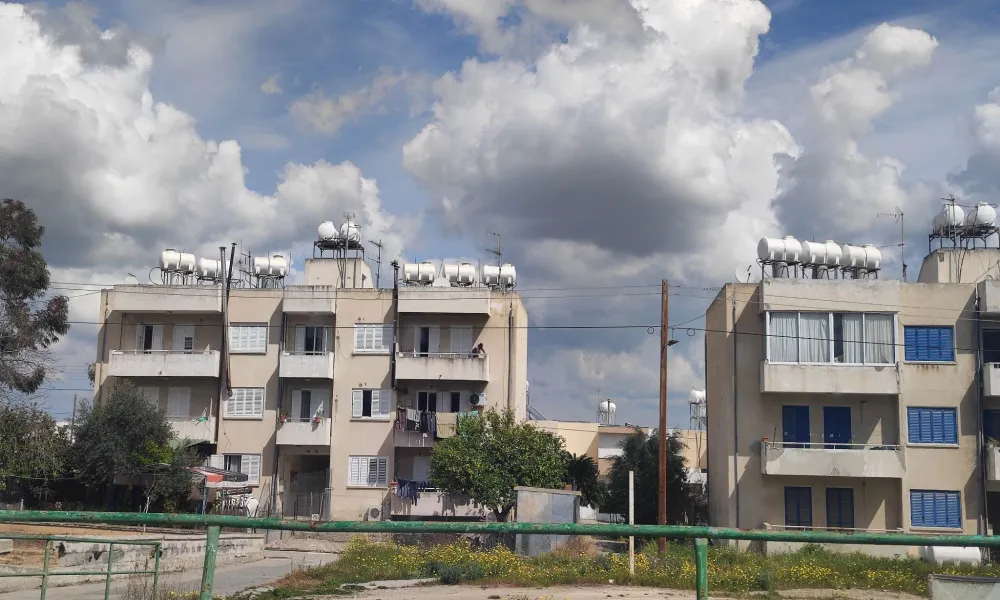

The legislation, due to be discussed by the House Interior Committee, would transfer responsibility for the registration and supervision of management committees to the District Local Government Organisations (EOAs), establish new registers and strengthen enforcement measures against owners who fail to pay common expenses.
What changes under the proposed law?
According to the Department of Lands and Surveys, the bill replaces the existing framework with standalone legislation governing shared ownership developments.
The proposal would:
- Create a Registration and Supervision Service for Management Committees within the EOAs.
- Apply not only to registered shared ownership developments but also to buildings consisting of five or more units that hold planning and subdivision permits and certificates of approval but have not yet obtained separate titles.
- Establish a Register of Shared Ownership Developments and Management Committees.
- Grant legal status to management committees once registered.
- Introduce mandatory insurance for shared developments.
- Strengthen collection mechanisms for common expenses.
- Introduce a common expenses clearance certificate for property transfers and lease registrations.
How many developments will be affected?
The Department of Lands and Surveys said the proposed legislation will cover:
Registered shared ownership developments
- Buildings or horizontally divided developments consisting of five or more units.
- Estimated number: 14,208 developments.
Developments not yet registered
- Buildings with planning permits, subdivision permits and certificates of approval that have not completed registration procedures but consist of five or more units.
- Estimated number: 6,711 developments.
The department said the legislation would regulate the operation and management of the vast majority of shared ownership developments in Cyprus.
How will fees and common expenses be set?
The proposal draws a distinction between:
EOA fees
- Charges relating to registration and supervision of management committees.
- These will be determined by each EOA and are intended to be cost-recovery based.
Common expenses
- Set by management committees based on the floor area of each unit.
- In mixed-use developments, additional factors may be considered, including the use of the property, the burden it places on shared facilities and any nuisance caused.
How will unpaid common expenses be collected?
The Department of Lands and Surveys says the proposed legislation significantly strengthens recovery mechanisms.
Measures include:
- Court action by management committees through legal proceedings or mediation.
- Registration of a legal charge against a debtor's property following a court judgment.
- In cases where a management committee files a lawsuit, a defendant's defence will only be accepted by the court registrar if accompanied by proof that the disputed amount has been deposited with the court or proof that it has been paid to the management committee.
- A mandatory common expenses clearance certificate for property transfers, disposals and lease registrations.
- Loss of voting rights and eligibility to serve on a management committee for owners with unpaid debts.
- Restrictions on the use of certain communal facilities, provided access to the owner's unit is not affected.
- Financial penalties for owners who refuse or neglect to pay.
- Criminal penalties where common expenses remain unpaid more than 60 days after notification.
According to the department, the measures are intended to address one of the most significant problems currently affecting the operation of shared ownership developments.
Will there be a fast-track court procedure?
The Department of Lands and Surveys acknowledged that lengthy court proceedings remain a long-standing obstacle to recovering common expense debts.
It said the bill seeks to strengthen debt recovery through:
- Court claims
- Mediation
- Registration of legal charges
- Mandatory clearance certificates
- Restrictions on certain rights of debtors
However, the department noted that introducing a faster judicial process is a matter of legislative and judicial policy and could be examined further during parliamentary discussion of the bill.
Why must committee members be owners?
According to the Department of Lands and Surveys, the philosophy behind the provision is that people making decisions regarding the management and financial obligations of a development should have a direct ownership interest in the property concerned.
What happens if EOAs cannot implement the law?
The bill has been designed on the basis that the EOAs will be the competent authority responsible for registration, supervision and operation of the new service.
According to the department:
- All EOAs, except the Famagusta EOA, accepted the transfer of responsibilities in principle during consultations, subject to specific conditions.
- The bill does not provide for an alternative authority if an EOA is unable to assume the role.
Parliamentary scrutiny
The proposed legislation is being examined following questions submitted to the Department of Lands and Surveys by House Interior Committee members:
- Nicoletta Constantinou (Disy)
- Giorgos Lysandrides (Disy)
- Efrem Christou (Akel)
- Michalis Paraskevas (Alma)
The lawmakers sought clarification on the scope of the bill, fees, debt-recovery mechanisms, oversight arrangements and the practical implications for property owners and management committees.