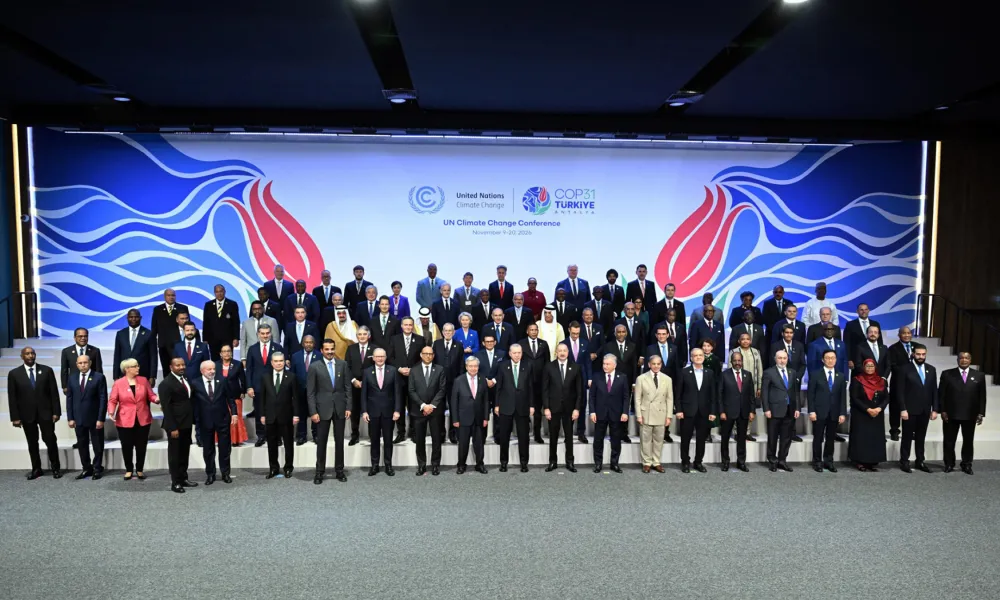

The participation of President Nikos Christodoulides at the COP31 Leaders' Summit in Antalya inevitably acquired a strong diplomatic dimension. Debate centred on protocol issues, symbolism and references to the Republic of Cyprus, often overshadowing the summit's core purpose.
Diplomatic issues dominate attention
Public discussion focused on Turkish President Recep Tayyip Erdoğan's decision to leave the reception area before the arrival of President Christodoulides, the level of representation by Turkish authorities at the airport and attempts by organisers to refer to the Republic of Cyprus as "Southern Cyprus".
Such issues carry political significance, particularly given Turkey's non-recognition of the Republic of Cyprus and its longstanding position on the Cyprus problem. The government is justified in monitoring and responding to actions it considers detrimental to the Republic's international standing.
The climate challenge remains the central issue
However, there is a risk that discussions about diplomatic protocol, symbolism and political messaging distract from the reason world leaders gathered in Antalya in the first place.
That reason is the climate crisis.
UN Secretary-General António Guterres delivered a stark warning, stating that climate change is advancing faster than humanity's response. He noted that the past four years have been the hottest ever recorded and urged governments to accelerate efforts to move away from fossil fuels.
Guterres called for a faster transition to renewable energy, pointing to developments in solar power and electric mobility as evidence that change is possible, while stressing that current efforts remain insufficient.
Focus on climate justice
A key theme of his intervention was climate justice.
The UN chief called for a new framework of shared responsibility, greater financial support for vulnerable countries and implementation of the principle that polluters should pay.
His message was that the transition to a low-carbon economy cannot depend solely on those with the financial means to bear the costs.
Direct implications for Cyprus
For Cyprus, climate change is not an abstract policy discussion.
The country is already experiencing the effects of water scarcity, extreme temperatures, wildfires and desertification, making climate adaptation and resilience matters of economic, social and environmental security.
A broader challenge
The diplomatic disputes that emerged in Antalya have their place and importance. They should not, however, overshadow the subject that brought leaders together.
The climate crisis does not distinguish between nations, and scientific projections continue to point to growing environmental challenges in the years ahead.