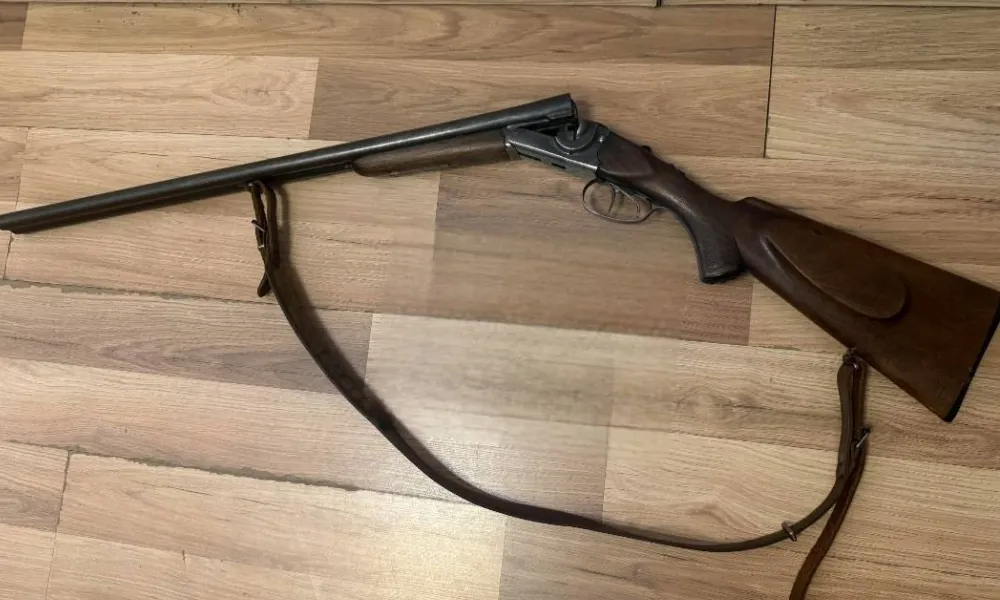

Police and the National Guard have carried out hundreds of firearm licence revocations and large-scale seizures of hunting weapons and military rifles from individuals considered a danger to public safety over the past five years.
According to sources who spoke to Politis, around 800 hunting weapons and 100 military rifles have been confiscated, primarily following reports of domestic violence incidents or convictions for serious criminal offences.
The licence revocations and weapon seizures form part of intensified efforts to prevent access to firearms by individuals regarded as high risk. Authorities say the measures aim both to prevent violent incidents involving abusive partners or criminal offenders and to strengthen public safety more broadly.
Domestic violence the main reason
Official figures show that during the past five years there have been at least 600 firearm licence revocations and weapon confiscations linked to domestic violence cases.
According to the same sources, such incidents have been increasing.
In a further 200 cases, weapons were confiscated from hunters and reservists following convictions for serious criminal offences.
The remaining 100 cases involved the revocation of hunting-gun licences and the confiscation of hunting weapons and military rifles following admissions to mental health services.
As part of its responsibilities, the State Health Services Organisation (Okypy) regularly informs the police and the Defence Ministry of admissions to Athalassa Psychiatric Hospital. Where individuals are deemed potentially dangerous, procedures are initiated to remove firearms from their possession.
Criminal offences leading to disqualification
Convictions for a number of serious offences automatically disqualify a person from holding a firearm licence.
These include:
- Premeditated murder
- Manslaughter
- Rape
- Kidnapping
- Arson
- Treason
- Robbery
- Domestic violence
- Participation in an illegal organisation
- Importation, possession or transport of explosives
- Attempted destruction of property using explosives
- Illegal importation, acquisition, possession or use of firearms
- Drug possession, trafficking or supply offences
- Poaching involving the use of a weapon
Individuals convicted of any of the above offences may apply for a hunting-gun licence only after 10 years have passed from both the date of conviction and the date of release from prison.
Measure aimed at draft evasion
Authorities note that, since 2021, firearm confiscations and hunting licence revocations have also applied to individuals exempted from military service on mental health grounds.
Police are informed of such cases through links between their central information system and military recruitment records.
The removal of hunting weapons and the refusal to issue hunting licences to individuals discharged from National Guard service for mental health reasons are provided for under the Firearms and Non-Firearms Law.
The legislation was amended in 2021 to introduce the restriction as a measure aimed at preventing the abuse of mental health exemptions to avoid compulsory military service.