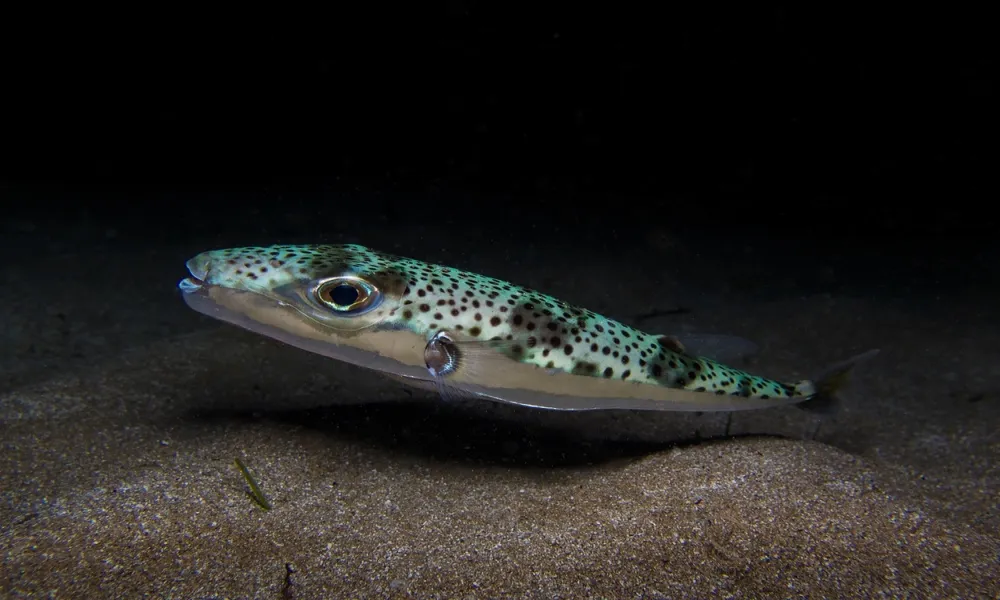
Cyprus is paying professional fishers €4.73 per kilogramme to catch and land toxic pufferfish, as authorities step up efforts to limit the spread of one of the most damaging invasive species in the eastern Mediterranean.
The fish, known scientifically as Lagocephalus sceleratus, entered the Mediterranean through the Suez Canal and has become a growing problem for Cyprus, Greece and other countries in the region. It damages fishing gear, preys on marine species and poses a serious risk to anyone who attempts to eat it.
Speaking to CyBC, Fisheries and Marine Research officer Nicoleta Varnava said the species was first recorded in Cyprus around 2000, with its population increasing significantly after 2006. Since then, it has spread more widely across the island’s waters and the wider eastern Mediterranean.
The main danger to humans comes from consumption. The fish contains a powerful neurotoxin that is not destroyed by cooking, meaning it cannot be made safe in a domestic kitchen. Authorities are urging the public not to eat it and to avoid handling it outside controlled procedures.
The pufferfish is not considered aggressive, but it can injure people if handled, particularly because of its strong jaws. Its wider impact, however, is on fisheries. Fishers report damaged nets and lost catches, while scientists have warned that the species is placing additional pressure on marine ecosystems already affected by warming waters and invasive species.
Cyprus has introduced a management scheme aimed at reducing its population by encouraging targeted catches. According to the Cyprus Mail, more than 100 tonnes of invasive pufferfish have been removed from Cypriot waters, with around €487,000 already paid to participating fishers. The scheme is co-funded by European fisheries funds and the state and is expected to run until 2029.
Greece is now moving in the same direction. Following a meeting with fishing representatives, Greek Agriculture Minister Margaritis Schinas announced a pilot programme for targeted removal of the species, initially in Crete and the South Aegean. The Greek scheme provides a higher payment of €5.33 per kilogramme.
Greek fishers, particularly in areas such as Crete and the Dodecanese, have repeatedly warned that the species is causing severe economic damage. In some cases, fishers say large numbers are being caught daily, while nets and other equipment are being destroyed.
Although there have been research efforts in Europe to explore whether the toxic fish could be processed for other uses, including fishmeal, its sale for consumption remains tightly restricted. For now, the focus in Cyprus and Greece is not eradication, which experts consider unrealistic, but reducing its impact on fishers, marine biodiversity and public safety.