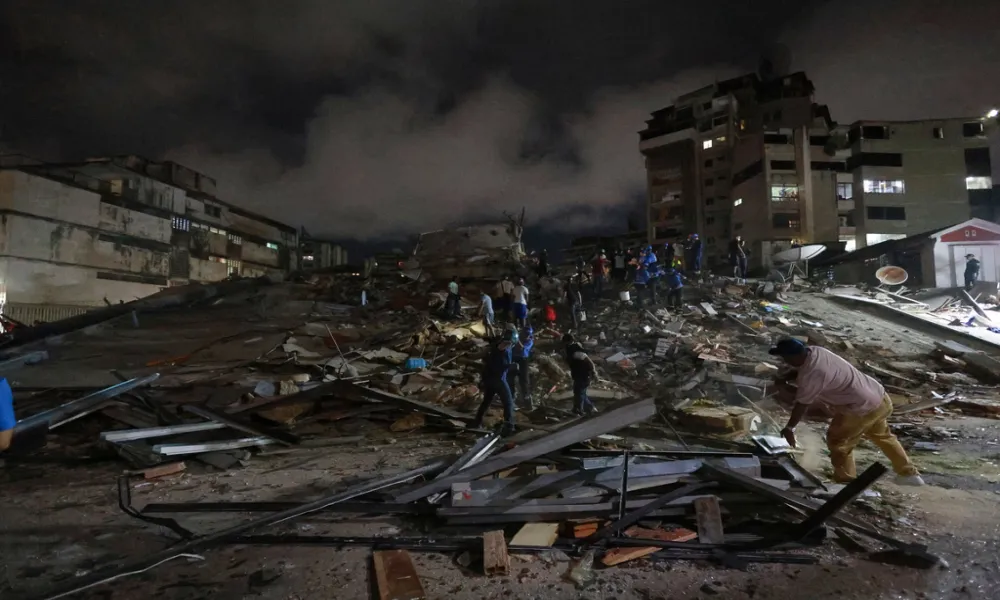
Venezuela is racing to reach survivors after two powerful earthquakes struck the north of the country on Wednesday evening, killing at least 164 people, injuring nearly 1,000 and leaving rescue teams searching through collapsed buildings.
Acting President Delcy Rodríguez said the death toll remained provisional, with emergency crews still working in the hardest-hit areas. Authorities fear the number of victims could rise sharply as daylight reveals the scale of the destruction and as rescuers reach people believed to be trapped under rubble.
The earthquakes struck within less than a minute of each other. According to the US Geological Survey, the first quake, with a magnitude of 7.2, hit west of Morón, on Venezuela’s Caribbean coast, at a depth of about 22 kilometres. It was followed moments later by a stronger 7.5 magnitude tremor, at a shallower depth of around 10 kilometres.
The coastal state of La Guaira, north of Caracas and home to the country’s main airport, appears to have suffered some of the worst damage. Rodríguez described the area as a disaster zone, saying dozens of buildings had collapsed and that rescue teams were carrying out intensive operations to save lives.
Simón Bolívar International Airport, near Caracas, was closed after sustaining serious damage. Parts of the capital and surrounding areas were also left without electricity and mobile phone coverage, while metro services in Caracas were suspended and gas supplies were cut off in damaged buildings as a precaution.
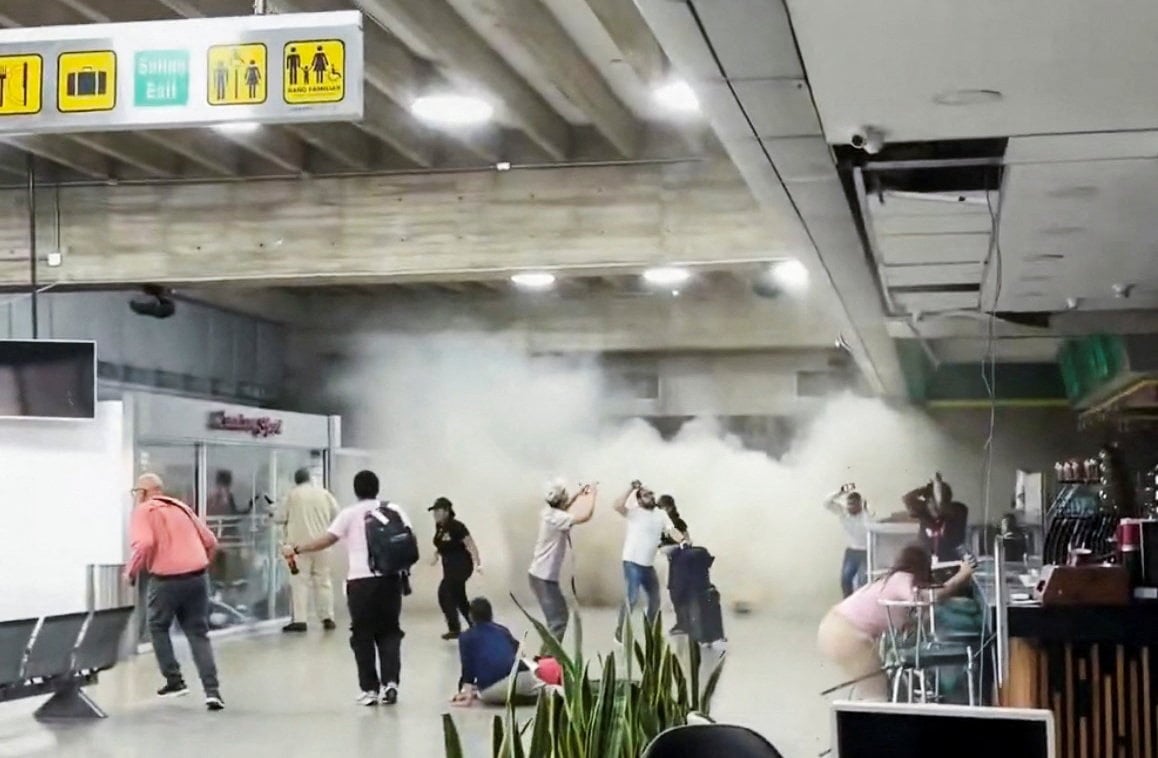
In Caracas, residents rushed into the streets as buildings shook, walls cracked and debris fell from homes, offices and shopping centres. Many spent the night outdoors, afraid to return to buildings that may have been structurally weakened by the quakes and aftershocks.
A separate online tracing platform created to help families locate missing people had registered more than 10,000 people as unaccounted for, according to reports. The figure is not an official casualty toll, but reflects the scale of confusion and concern as families struggle to contact relatives amid damaged communications.
Interior Minister Diosdado Cabello urged residents to stay away from unsafe buildings, warning that further aftershocks could cause additional collapses. Authorities said damaged structures were being inspected and that emergency services had been reinforced in the areas worst affected.
The tremors were felt far beyond Venezuela, including in parts of Colombia, where alarms sounded and some buildings were evacuated as a precaution. Colombian disaster authorities said there was no tsunami threat.
International offers of assistance began arriving within hours. US Secretary of State Marco Rubio said Washington was deploying search and rescue teams, medical resources and humanitarian aid, while several Latin American governments also offered support.
Opposition leader María Corina Machado expressed solidarity with those affected, calling for calm, strength and unity as the country faces one of the most serious natural disasters in its modern history.
Venezuela lies near several fault lines, but earthquakes of this strength are relatively rare. Previous major quakes include the 1967 Caracas earthquake, which killed more than 200 people, and the 1997 quake in the north-east of the country, which left dozens dead.
Source: Reuters, AFP, Associated Press