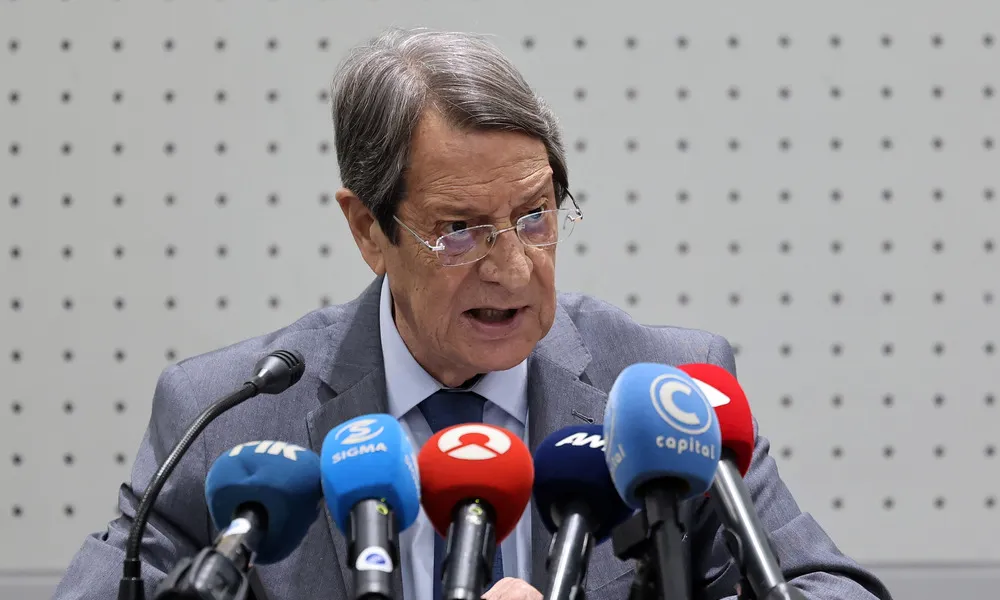
Former Cyprus president Nicos Anastasiades on Tuesday rejected allegations linked to the findings surrounding the book Mafia State, calling for the immediate appointment of an independent criminal investigator and prosecutor to examine the case.
Speaking at a press conference in Nicosia that lasted more than 90 minutes, Anastasiades said a probe led by “a person of strong character and recognised standing” should be completed within a set timeframe.
He accused critics of staging “people’s courts” in violation of the presumption of innocence and said the report had fuelled “toxicity, character assassination and the smearing of names”.
“No one among the self-appointed judges wanted to acknowledge that defamatory claims against me in the book were rejected as false, unfounded or not accepted,” he said.
Anastasiades added that he did not attribute bad faith to officials of the Anti-Corruption Authority but criticised what he described as a lack of resolve to withstand populism and pressure from public opinion and social media.
He also argued that he had not been given an opportunity to respond to several allegations during the investigation.
Ribolovlev allegations
Addressing claims that he had reached an agreement with Russian oligarch Dmitry Rybolovlev to amend legislation in his favour, Anastasiades said the allegation had “collapsed”, noting the law was approved almost unanimously by parliament and backed by state institutions, including the Central Bank and the Attorney General.
On claims concerning Rybolovlev’s wife’s arrest, he said neither the book nor the Anti-Corruption Authority’s report indicated any action by him suggesting involvement.
Regarding a finding that, on a balance of probabilities, he may have agreed with Rybolovlev to cover the cost of a private flight in March 2014, Anastasiades rejected any suggestion of influence peddling, saying the alleged benefit was unrelated to any official act.
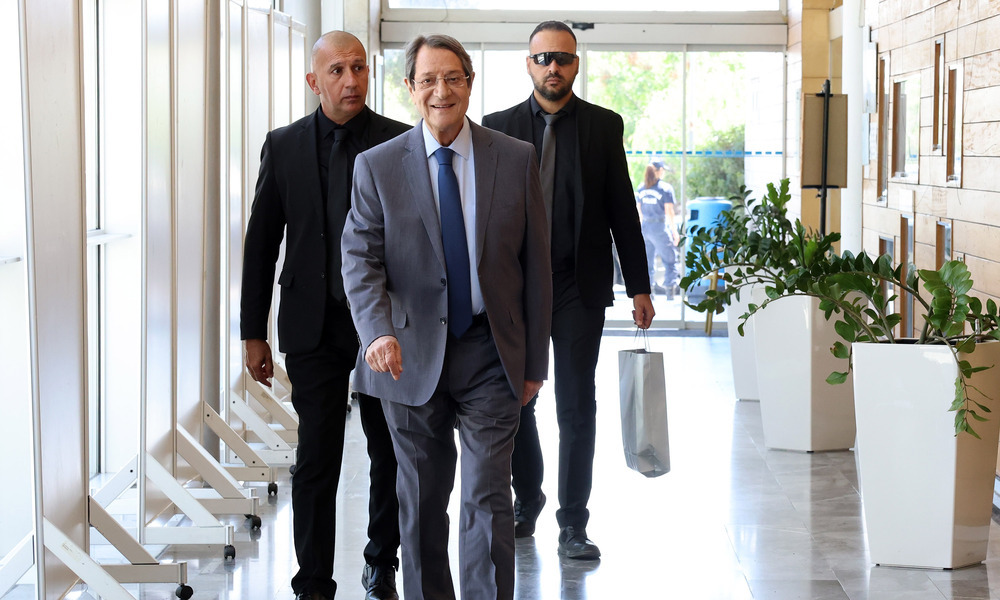
Responding to criticism that he failed to provide evidence over payment of the flight, he said the burden of proof lay with the accuser. “It is the first time I hear that when someone calls you an elephant, you must prove you are not,” he said.
He described his relationship with Rybolovlev as merely social acquaintance, noting the businessman had invested €500 million in Bank of Cyprus, later lost after a Eurogroup decision.
Focus case
On the Focus case, Anastasiades said the then attorney general had concluded in 2016 that the available evidence did not point to criminal offences, as undeclared party funding was not a criminal offence at the time.
He said investigators dismissed as “false and unfounded” claims he had personally appropriated €550,000 intended for political party DISY.
However, investigators found a possible abuse of power linked to his contacts with then attorney general Costas Clerides. Anastasiades denied wrongdoing, questioning what personal benefit he could have derived and why no complaint had been made at the time.
“It is unprecedented and regrettable to attribute potential criminal conduct to a former president without giving him the right to be heard,” he said.
Laiki Bank payment
Addressing a reported €250,000 payment from Laiki Bank in 2011 allegedly linked to his election campaign, Anastasiades again said he had not been asked to respond during the inquiry.
He rejected the suggestion of passive trading in influence, arguing that such an offence presupposes an improper advantage and noting the claim concerned a period before he assumed the presidency.
OCCRP, Pandora Papers
Anastasiades also referred to reports by OCCRP (2019) and the International Consortium of Investigative Journalists (2021) linking his former law firm to alleged money laundering schemes and interventions in naturalisations.
He noted the reports themselves stated there was no evidence his law firm had broken the law. He said he had requested an investigation by Cyprus’ anti-money laundering unit, MOKAS.
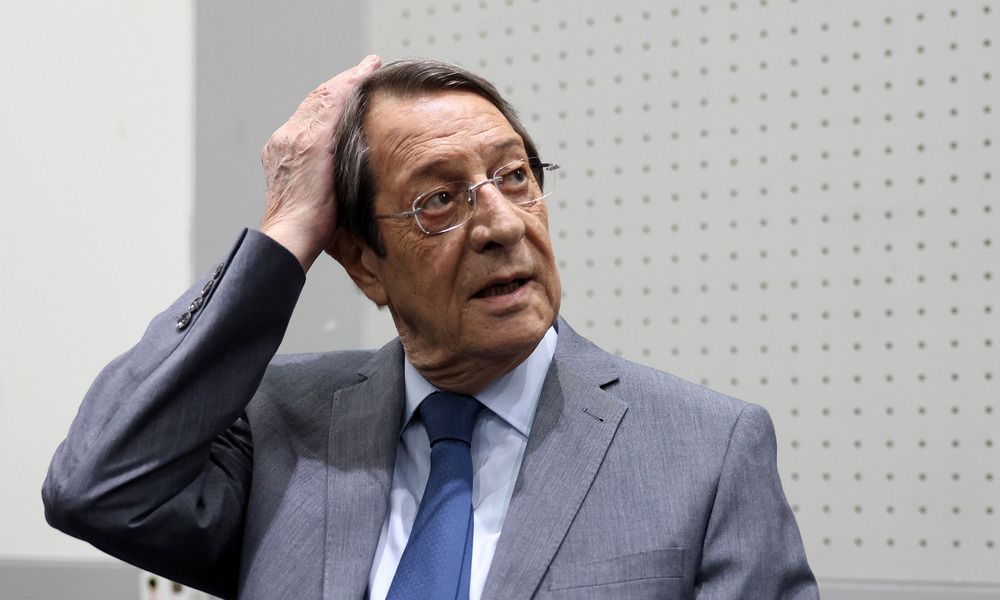
The Anti-Corruption Authority criticised that move as a potential abuse of power. Anastasiades rejected that view, saying it was “absurd” to suggest a president asking for an investigation into corruption allegations constituted wrongdoing.
Dromolaxia property
On a Dromolaxia property dispute, Anastasiades said investigators found no evidence he had acted improperly to advance a private company’s interests.
He also denied allegations he had ordered the unlawful crossing of a Turkish national, calling the claim “arbitrary” and based on an unreliable narrative.
Criticism of Drousiotis
Anastasiades said that after 2.5 years of investigation, involving 150 witnesses and extensive documentation, allegations by the Mafia State’s author, Makarios Drousiotis, that were not included in the official findings had not been substantiated.
He questioned why no legal action had been taken against the author if false information had been knowingly submitted.
On institutions and accountability
Asked whether he bore responsibility for declining public trust in institutions, Anastasiades pointed to the role of social media, “tiktokers” and “fabricated narratives”, while acknowledging that political leadership had also made mistakes.
He said he did not believe issues of immunity arose but would waive it if necessary. He added he was willing to undergo a tax audit.
“Smear campaigns and mud affect one’s legacy,” he said, reiterating his call for a swift and independent criminal investigation.
Source: CNA