A Human Rights Watch investigation has raised fresh questions over the United Arab Emirates’ alleged role in Sudan’s war, after documenting what it says was a recruitment and transit network that moved Colombian private military contractors through the UAE and into areas controlled by the Rapid Support Forces.
The report, titled From Bogotá to El Fasher, alleges that hundreds of former Colombian fighters were apparently hired through Global Security Services Group, an Abu Dhabi-based security company, before being deployed to support the RSF, the paramilitary force fighting Sudan’s army since April 2023.
The findings add to mounting scrutiny of the UAE, which has repeatedly denied supporting the RSF. They also put renewed pressure on the European Union, whose public statements on Sudan have condemned “external actors” fuelling the conflict but have stopped short of naming Abu Dhabi.
A route through UAE military sites
According to Human Rights Watch, Colombian contractors interviewed by the organisation described being flown into the UAE under unusual conditions, transferred to military facilities and later sent onwards towards Sudan through regional transit points.
One contractor said he had received training from Emirati nationals at a military base before leaving Abu Dhabi on a flight that stopped in eastern Chad and continued to Nyala, the capital of South Darfur and a key RSF stronghold.
HRW says it also analysed videos, photographs, satellite imagery, documents and social media material to identify transit points, including military-linked facilities in Abu Dhabi emirate. The organisation said the route involved several countries, with contractors moving through locations including eastern Libya, Chad and Somalia’s Puntland region before reaching Sudan.
The company at the centre of the investigation, Global Security Services Group, is described by HRW as an Abu Dhabi-based security firm with links to senior UAE political and business circles. The report calls for the company and its chief executive, Mohamed Hamdan Al Zaabi, to be investigated.
The UAE has denied the allegations. In comments reported by the Associated Press, the UAE Foreign Ministry said the country does not allow its territory to be used for the recruitment, training, financing or transit of foreign fighters to any conflict, including Sudan.
Watch: How HRW Traced the Route to Sudan
In a video accompanying the investigation, Human Rights Watch outlines how Colombian private military contractors were allegedly recruited, moved through UAE-linked facilities and later identified alongside RSF fighters in Sudan.
El Fasher and the war crimes allegations
The investigation also places Colombian fighters near the scene of some of the gravest abuses of the Sudan war.
El Fasher, the capital of North Darfur, fell to the RSF in October 2025 after a long siege. The city had been the last major urban centre in Darfur still held by the Sudanese Armed Forces and allied groups. Its fall was followed by reports of mass killings, abductions, sexual violence and attacks on civilians.
Human Rights Watch says witnesses in El Fasher described foreign fighters standing alongside RSF members during abuses against civilians, including people with disabilities. The organisation believes those fighters were most likely Colombian private military contractors.
UN investigators have said atrocities committed during the RSF assault bore the “hallmarks of genocide”. HRW says the alleged deployment of foreign contractors, if linked to UAE-backed support channels, could amount to substantial assistance to forces accused of war crimes and crimes against humanity.
Why Brussels is under pressure
The EU has condemned the war in Sudan and called for an immediate ceasefire, humanitarian access and accountability for violations. In its statement marking three years of the conflict, Brussels said “external actors must stop fuelling the war” and supported expanding the International Criminal Court mandate and UN arms embargo beyond Darfur to the whole of Sudan.
But rights groups argue that the language is too vague given the volume of allegations against the UAE. EUObserver’s article by HRW researcher Joey Shea argues that the bloc has avoided naming Abu Dhabi because of its economic, diplomatic and security ties with the Gulf state.
The criticism comes as the EU continues to provide humanitarian support to Sudan while also maintaining close relations with the UAE. HRW is calling on the EU and its member states to use diplomatic and economic leverage, including trade negotiations and arms sales, to press the UAE to end any support to the RSF.
The UAE, for its part, says its role in Sudan is humanitarian and diplomatic. Its Foreign Ministry has said it supports an immediate ceasefire, full humanitarian access and a civilian-led transition. Abu Dhabi has also highlighted its financial aid to Sudan and rejected accusations that it is backing one side in the war.
A war with regional consequences
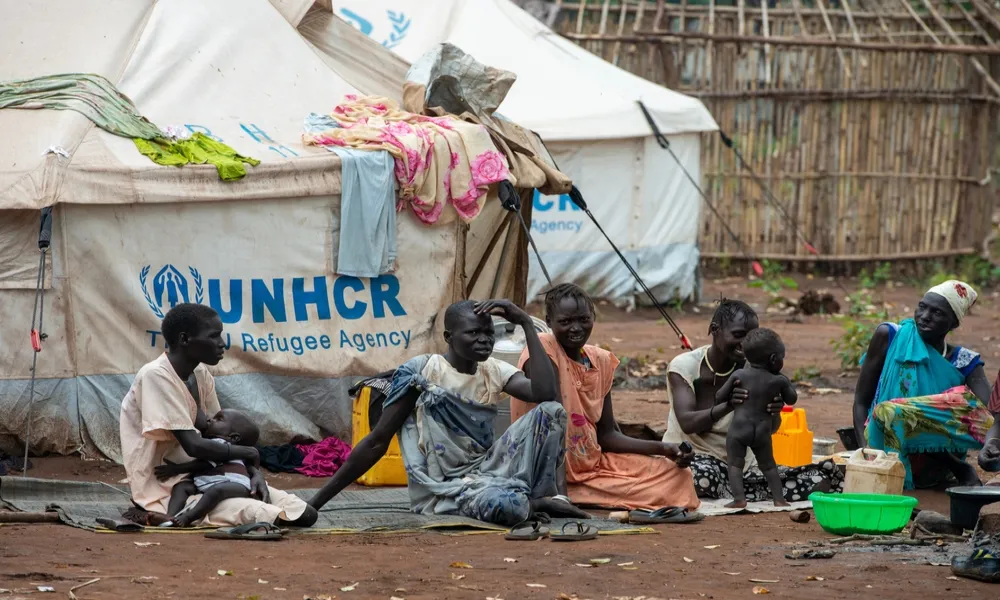
Sudan’s war has become one of the world’s worst humanitarian crises. Millions have been displaced inside the country and across its borders, while famine, disease and attacks on civilians have deepened the emergency.
The conflict began as a power struggle between Sudan’s army and the RSF but has since drawn in wider regional interests, arms networks and allegations of foreign backing. The RSF, which grew out of the Janjaweed militias accused of atrocities in Darfur in the early 2000s, has been accused by rights groups and international investigators of widespread abuses during the current war.
For the EU, the HRW investigation poses a direct policy question: whether Brussels can continue to speak broadly about unnamed foreign actors while one of its important Gulf partners faces specific allegations of enabling RSF operations.
Human Rights Watch says the answer should be no. It wants investigations into Global Security Services Group and its leadership, possible targeted sanctions and stronger action to prevent weapons, personnel or logistical support from reaching the RSF.
The allegations remain denied by the UAE, but the investigation has intensified calls for Europe to move beyond general statements and confront the supply lines that rights groups say are helping prolong Sudan’s war.
Source: Human Rights Watch