
The Ministry of Justice is moving ahead with expanding the use of electronic monitoring for convicted prisoners, based on recommendations from the Council of Europe’s Committee for the Prevention of Torture and the Legal Service.
A draft bill has been prepared allowing significantly more prisoners to serve the remainder of their sentences outside prison under electronic surveillance through an ankle monitor. Under specific conditions, prisoners will be able to work or study while serving their sentence.
At the same time, the measure is expected to help address overcrowding in the Central Prisons.
The bill, titled the Prison (Amendment) Law of 2026, provides for the extension of electronic monitoring to more categories of prisoners, both during conditional release and during sentence serving, with revised age and time criteria. It also includes provisions to facilitate the integration of vulnerable groups, such as elderly inmates and individuals undergoing addiction treatment programmes, strengthening the framework for social reintegration and alternative sentencing.
The proposed legislation was posted for public consultation last Tuesday, with the Ministry of Justice inviting comments until 8 July 2026. After that, it will be revised based on feedback and is expected to be approved by the Council of Ministers and submitted to Parliament before the end of the year.
What changes
The bill provides:
-
The Parole Board will be able to impose electronic monitoring on prisoners granted conditional release, to ensure compliance with conditions.
-
Extension of the time frame for electronic monitoring for prisoners sentenced to more than 12 months and up to five years, who have served half their sentence. The relevant limit increases from 12 to 18 months.
-
Electronic monitoring will also apply to prisoners sentenced to less than 18 months, instead of the current 12, once they have served one third of their sentence.
-
For prisoners in drug rehabilitation programmes or aged 70 and over, placement in the Open Prison will no longer be required as a condition for electronic monitoring.
How it works
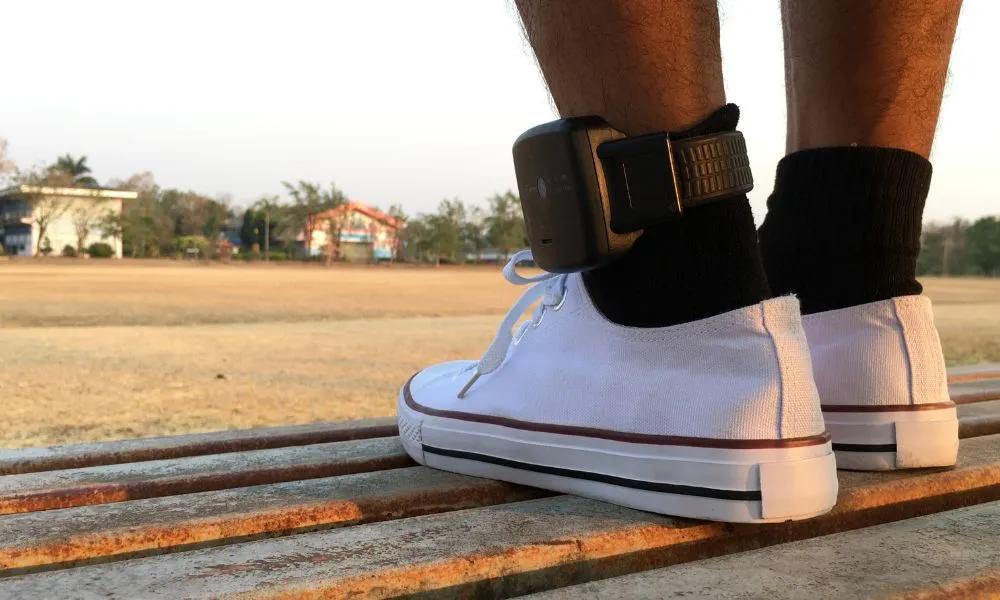
The electronic ankle monitor is fitted to a limb and connected to Central Prisons as well as the prisoner’s residence or other approved locations.
If the device is tampered with, movement limits are exceeded or conditions are violated, an alarm is triggered and the nearest police station is alerted. The prisoner is then arrested and returned to prison.
EU practice
Electronic monitoring is already widely used in many European countries, not only for convicted prisoners but also for suspects awaiting trial.
According to a 2024 survey by European parliaments, 14 member states allow its use for pre-trial detainees, mainly to prevent flight or interference with evidence.
In the remaining six countries, including Sweden and Poland, the measure is not applied in such cases.
In nine countries, including Greece and France, the decision is taken by courts, either on their own initiative or upon request by prosecutors or defendants.