
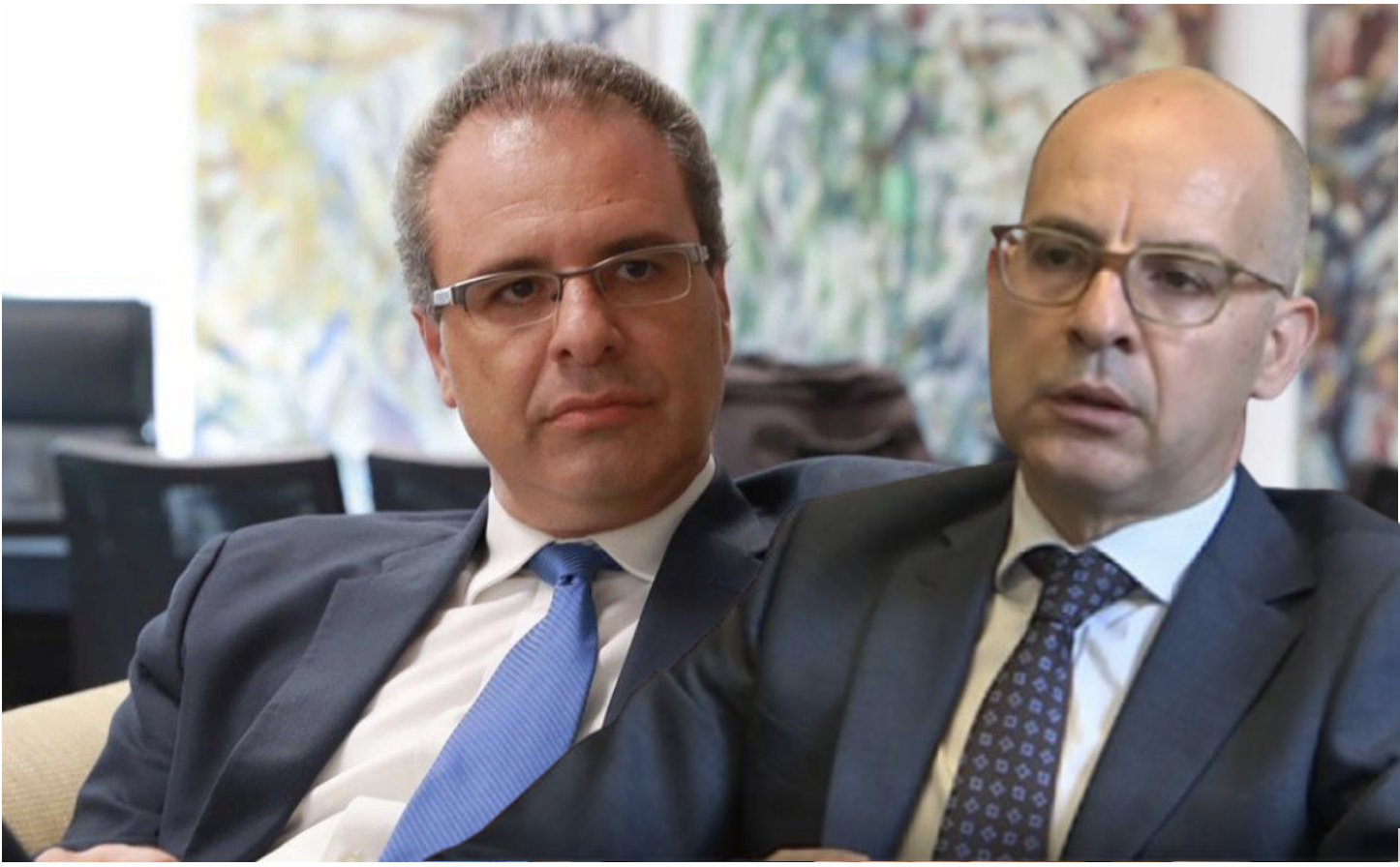
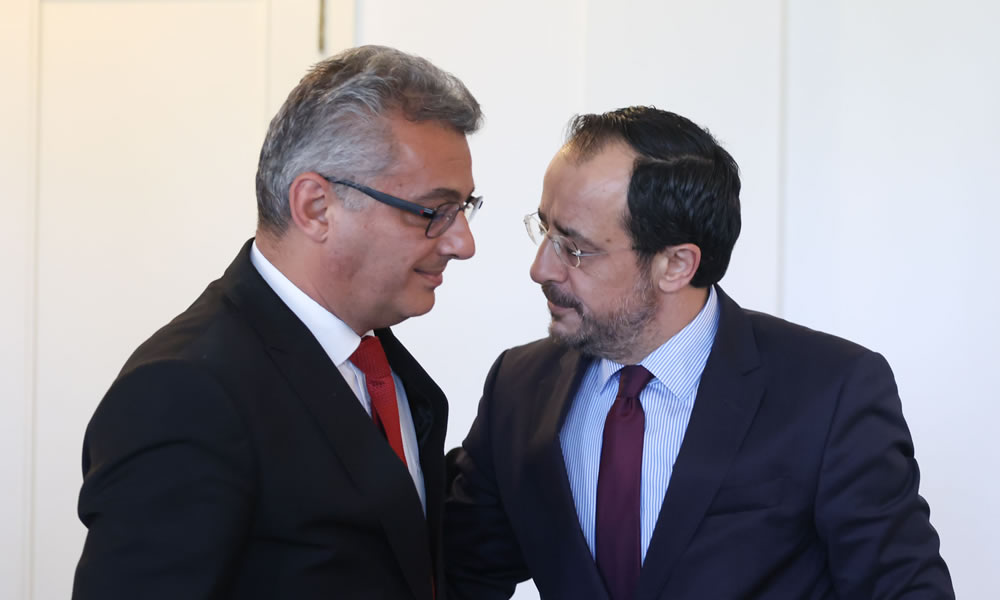
The opening of new crossing points and convergences in the negotiating process were at the centre of a meeting between the two sides' chief negotiators, Menelaos Menelaou and Mehmet Dana, on Thursday. The session in Nicosia ran from 11am to 1pm, aimed at preparing for the meeting between President Nikos Christodoulides and Turkish Cypriot leader Tufan Erhürman on 26 August.
Two main points
According to a source close to Politis with knowledge of the proceedings, yesterday's meeting moved along two tracks: crossing points and convergences.
On the crossing points, the Greek Cypriot proposal pairs Mia Milia with a route linking Athienou to Aglandjia via Pyroi, treating that Athienou-Pyroi-Aglandjia corridor as a single crossing point, so that the pairing yields two crossings in total. The Turkish Cypriot side reads the same map differently. It has long treated Athienou-Pyroi and Pyroi-Aglandjia as two distinct checkpoints, a distinction that would put the Greek Cypriot proposal at three crossings, not two, measured against an original package of four agreed in principle. That divergence in how the two sides count a single stretch of road is what keeps drawing Louroujina back to the table, paired with the neighbouring village of Lympia, as the Turkish Cypriot side's way of restoring the numbers it believes the package has lost.
The Greek Cypriots' position is that Louroujina-Lympia cannot return to the package without Kokkina alongside it. For the Turkish Cypriot side, a route through Kokkina, a Turkish army-controlled enclave on the island's northwest coast, is a demand it has shown little appetite to entertain, seen less as a genuine crossing than as a fifth checkpoint tilted toward Greek Cypriot communities in the area, offered without anything comparable in return.
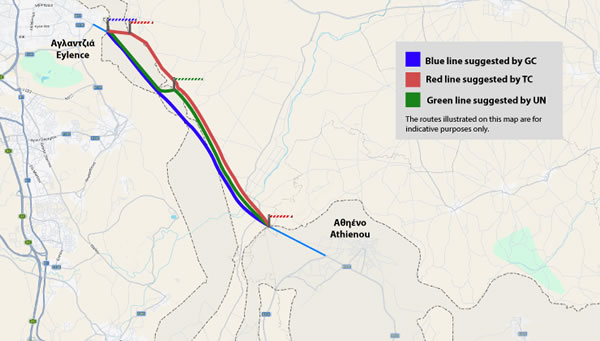
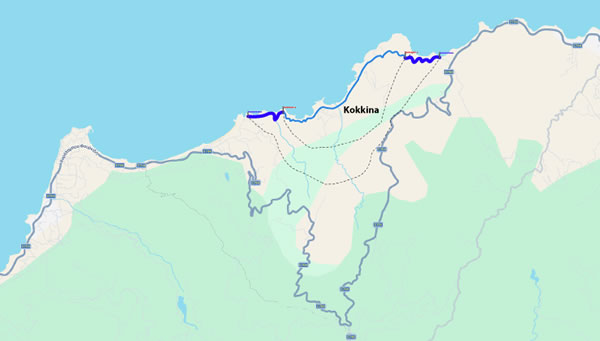
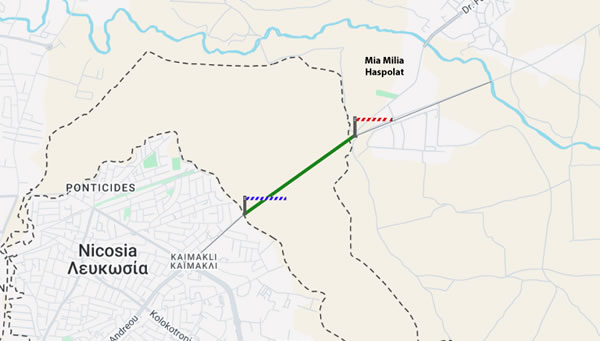
Beneath this arithmetic sits a second, more stubborn disagreement over the Athienou-Pyroi-Aglandjia corridor. The Greek Cypriot side wants traffic routed largely along the old Nicosia-Larnaca road, which cuts through the buffer zone for much of its length. The Turkish Cypriot side wants the road built north of the buffer zone instead, on new infrastructure it would fund itself. Neither map has persuaded the other side.
It remains to be seen how the two sides will ultimately count the crossing points on the table, and whether they can settle on a single route for the Athienou-Aglandjia link, during the 26 August meeting.
Recording the convergences
Government spokesman Konstantinos Letymbiotis said President Christodoulides would arrive at the 26 August meeting with a constructive stance, reiterating that the UN Secretary-General's proposal for the simultaneous opening of crossings at Athienou and Mia Milia should be taken into account. On the recording of convergences, he said the process had already begun and was expected to be completed in the coming weeks.
On the second track, that of the convergences, according to the same Politis source, the task has been assigned to Canadian UN official John McGarry, who is recording the two sides' longstanding points of convergence, in contact with both, with the aim of producing a single document that will facilitate the resumption of talks. The goal is to complete it towards the end of August or the beginning of September, so that it can be handed to both sides and presented by María Ángela Holguín. The Colombian diplomat has herself confirmed, in an interview with Politis, that she has been working on the document for months, based on UN records up to and including Crans-Montana.
The two pillars
The Greek Cypriot side's aim for the 26 August meeting is a substantive discussion on the issues raised during Guterres' visit to Cyprus last month, with an emphasis on preparation for a future expanded 5+1 conference. In practice, the two points discussed on Thursday map onto two of the three prerequisites the United Nations, through Secretary-General Guterres, has set for the process to move to its next stage: confidence-building measures, methodology and substance. Progress on crossing points speaks directly to the first, while the convergences document, confirming the negotiating acquis reached to date, potentially lays the groundwork for the second and third. All three remain preconditions the UN has attached to convening a new expanded conference.
According to Politis' source, should agreement be reached on convergences and checkpoints at the 26 August meeting, a joint statement upon its conclusion is not ruled out, which would make convening a new five-party metting within the coming months more feasible. Conversely, failure to agree on crossing points, or a dispute over the recording of convergences, could further delay the resumption of talks, which have remained stalled since the collapse of Crans-Montana in 2017.