

Cyprus's higher education sector is undergoing a period of significant change and rising expectations. In recent years, the country has sought to establish itself as an international education hub, investing in the quality of study programmes, research, innovation and the internationalisation of its universities. At the same time, it faces long-standing challenges around student welfare, the link between studies and the labour market, and creating real prospects for young people so that they choose not only to study in Cyprus, but to build their futures there.
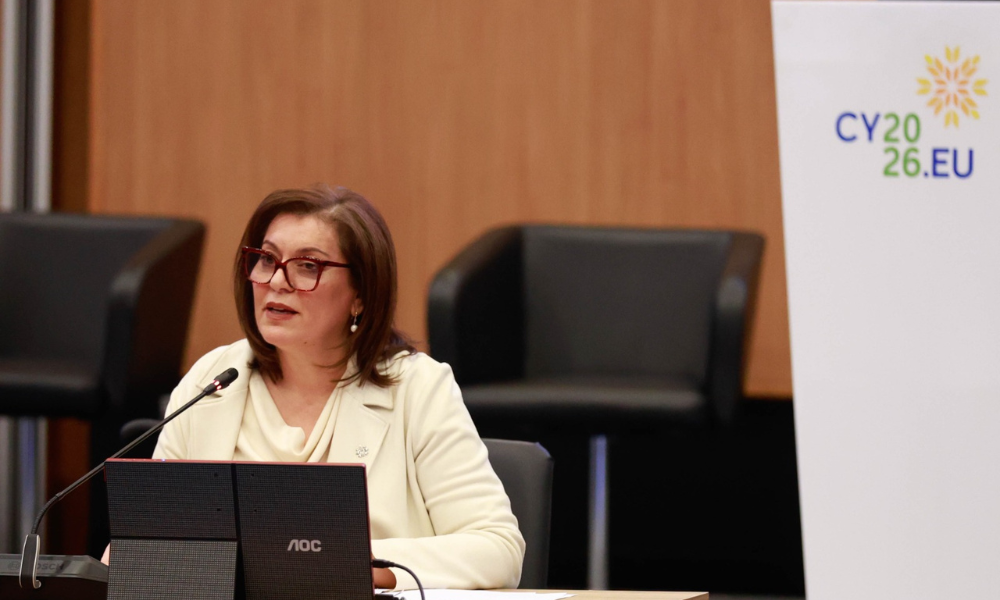
The Minister of Education, Sport and Youth, Athina Michaelidou, set out the government's vision and policies for the future of Cypriot higher education.
Internationalisation strategy
Cyprus has invested in recent years in the development of higher education and in attracting students from abroad. What is the strategy today to establish the country as a credible education destination, rather than simply a market for studies?
The goal of the government, and by extension the Ministry of Education, Sport and Youth (MOESY), is for Cyprus to become a Centre of Higher Education and Excellence, with the quality of education provided playing a primary role. This is the core of MOESY's Strategic Plan for the Improvement and Upgrading of Higher Education in Cyprus, which focuses on internationalisation, academic excellence, research and innovation, and the connection between higher education institutions and the labour market.

Both the Cyprus Agency of Quality Assurance and Accreditation in Higher Education (CYQAA), which applies strict external evaluation and accreditation procedures for higher education institutions and their study programmes based on European standards and guidelines for the European higher education area, and MOESY's Higher Education Directorate, apply policies and exercise the necessary oversight to safeguard quality and establish Cyprus as a credible education destination.
As mentioned, MOESY aims to internationalise Cyprus's higher education sector and promotes agreements and memoranda of understanding on higher education with third countries. To achieve this goal, the ministry takes part, together with higher education institutions, in education fairs and other activities to promote our higher education abroad. At the same time, the mobility of academics, researchers and students is being promoted, along with research and academic partnerships with foreign academic institutions.
Quality assurance
With the growing number of universities, faculties and study programmes, how is it ensured that the expansion of higher education is accompanied by genuine quality, and not merely more choices for students?
Establishing Cyprus as a quality regional centre for education and research remains, as noted, a standing strategic goal for MOESY. To that end, a strict and institutionalised control framework has been drawn up, ensuring that the growth of Cyprus's higher education ecosystem does not come at the expense of quality.

A key pillar of this mechanism is CYQAA. As an independent authority, CYQAA applies strict evaluation criteria in line with the European Standards and Guidelines (ESG) for higher education. All Cyprus higher education institutions and the study programmes they offer are submitted to CYQAA for evaluation and accreditation. Both institutions and their study programmes are evaluated at specific, regular intervals, as set out in the relevant legislation, by international panels of experts, who recommend for or against accreditation. At the same time, MOESY, through evidence-based policies developed and implemented by the Higher Education Directorate on the basis of relevant legislation, safeguards the quality of education provided, aiming for the long-term sustainability of higher education institutions and high standards of study.
State support
Beyond the quality of programmes, the support a student receives during their studies is decisive. What are the government's current priorities on student welfare, financial support, housing and access to psychosocial support services?
Government policy on financial support for students, housing, and access to psychosocial support services is aligned with the priorities of the European higher education area regarding the strengthening of the social dimension of higher education. The central aim of this approach is to ensure equal opportunities for access to, and participation in, higher education by addressing social, economic and geographical barriers. Particular emphasis is also placed on supporting students from vulnerable social groups, providing financial assistance and student welfare services, and developing counselling and psychological support structures.

In this context, the Grants and Benefits Service of the Ministry of Finance is the main body providing financial support to students and their families. Student welfare, which includes the student grant and student benefits, is awarded on the basis of socioeconomic criteria. For the 2025-2026 academic year, the relevant benefits cover needs related to housing, food, air fares, and financial support for first-year students.
Further financial support is provided through the Cyprus State Scholarships Foundation, which awards scholarships for study based on predetermined criteria.
At the same time, higher education institutions operating in the Republic of Cyprus offer scholarships and other forms of financial assistance to their own students.
On psychosocial support, both public and private universities in the country have developed organised counselling and psychological support services, aimed at promoting student wellbeing and supporting students throughout their studies.
The labour market
The link between studies and the labour market is a long-standing issue. How can the state ensure that study programmes meet the real needs of the economy, without universities being reduced to mere mechanisms for producing a workforce?
Linking higher education to the labour market does not mean restricting the autonomy of higher education institutions to determine the content of their study programmes based solely on labour market needs. It is the state's duty to provide valid and reliable data, so that higher education institutions are able to design and revise their study programmes while also taking labour market needs into account. Our aim is for institutions, beyond scientific knowledge, to equip students with the appropriate skills to increase their employability after graduation.
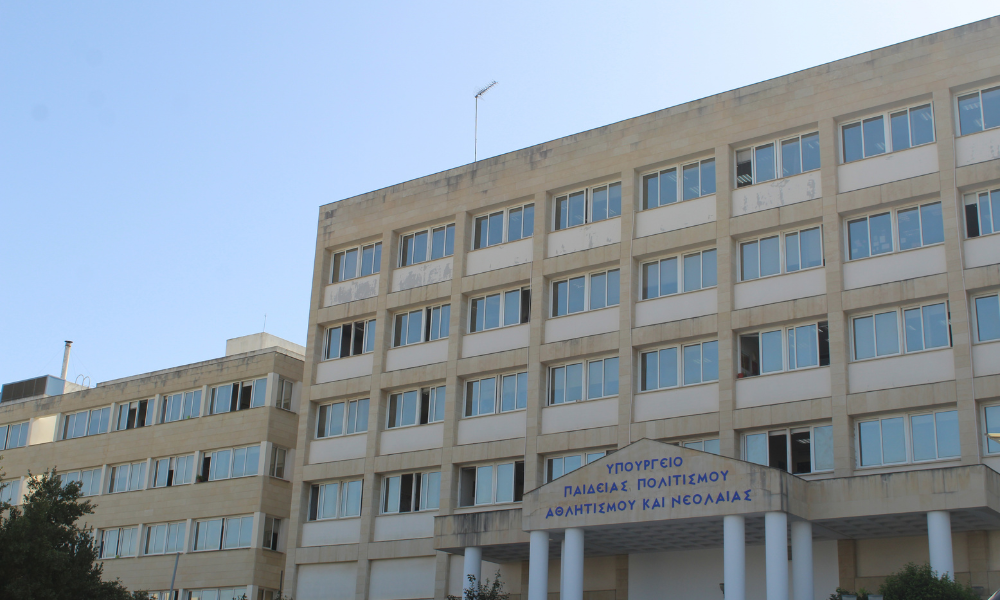
For precisely this reason, MOESY's Higher Education Directorate has developed and is implementing, under the Recovery and Resilience Plan, the Higher Education Graduate Tracking Mechanism (CYGraduates) and the National Employer Survey (CYEmployers). Through CYGraduates, we now have data on graduates' career paths, the relevance of their studies to their work, and how they use the skills acquired during their studies. The National Employer Survey records current and future labour market needs in terms of skills, workforce adequacy, difficulties in filling positions, and graduates' readiness for work. In addition, the CYSkills-AI project, in which MOESY's Higher Education Directorate participates, aims to develop a Skills Intelligence System that will record trends and forecasts in skills demand.
The value of these surveys and information systems lies not only in data collection, but in their dissemination and use by the ministries and policymaking bodies involved, higher education institutions, and also by students, pupils and parents.
Retaining talent
Many young people choose to study or work abroad, while at the same time Cyprus is trying to attract students from other countries. How can higher education help ensure that young graduates have real prospects in Cyprus, rather than seeing emigration as the only option?
Higher education plays a decisive role in ensuring a steadily growing number of our young people remain in Cyprus for their studies, based on three pillars.
First, by providing quality, internationally competitive study programmes that make Cyprus a country worth studying in.
Second, by strengthening research and innovation at higher education institutions, which creates career opportunities for young researchers and graduates.
Third, by genuinely linking higher education to the labour market, through the mechanisms mentioned above, so that the study programmes on offer meet labour market needs with the aim of increasing graduates' employability.
Attracting foreign students is not at odds with the goal of keeping young Cypriots studying at home. A quality higher education system can serve both objectives at the same time.