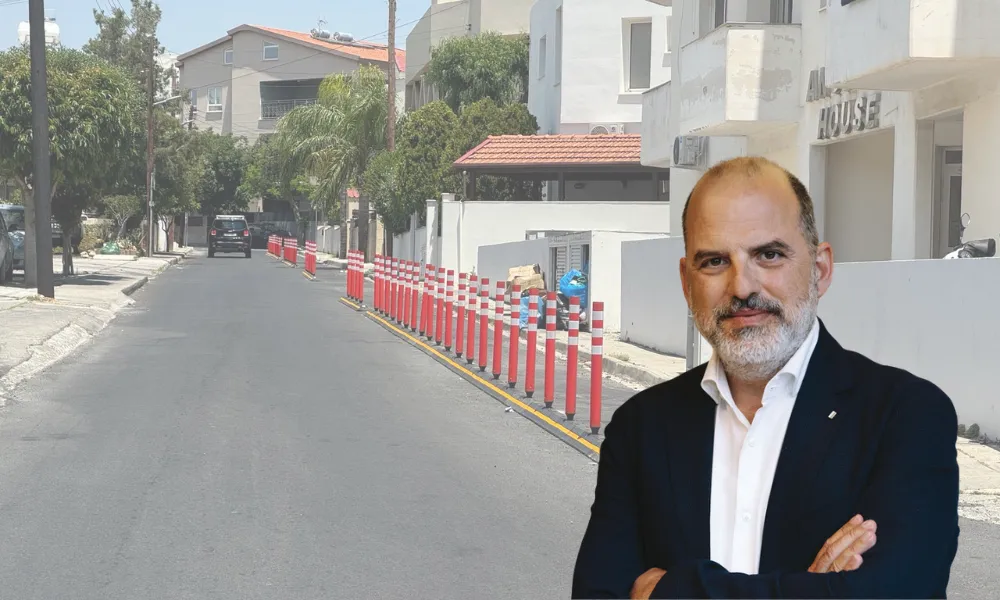

The need for improvements to ongoing works on Theklas Lysiou, Emmanouil Roidi, Nikou Pattichi streets and in the Courts area was highlighted by Limassol mayor Yiannis Armeftis, speaking on Politis radio 107.6 and 97.6.
Responding to public reactions over bus lanes and the bollards installed on city roads, Armeftis acknowledged that there is justified frustration, noting that while the objective of the works may be useful for traffic management, the way they are implemented is creating problems.
As he explained, the specific works fall within the framework of the Sustainable Urban Mobility Plan, with the relevant studies prepared years ago and the implementation carried out by the Public Works Department.
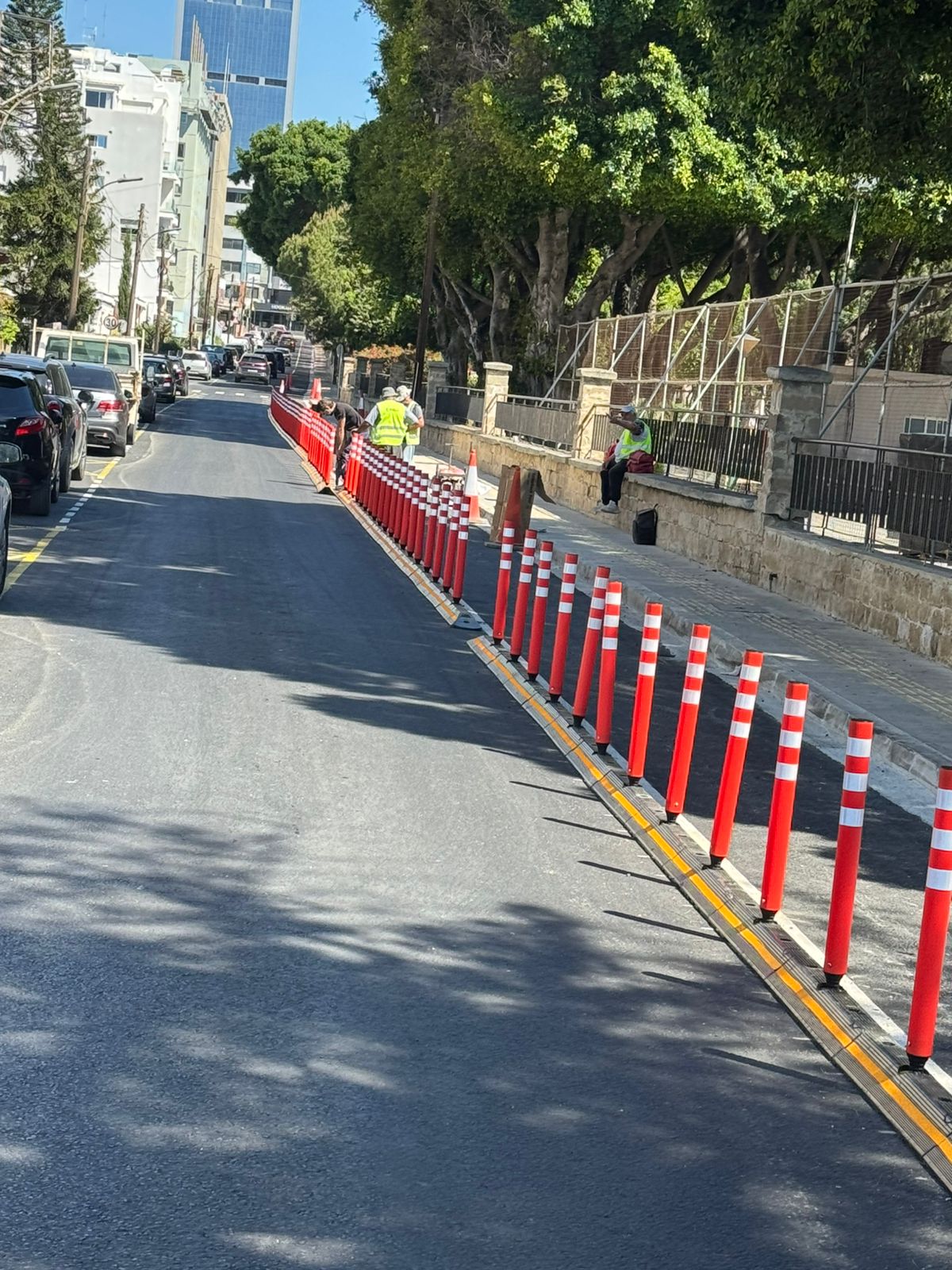
The projects are not carried out by the Municipality
The mayor clarified that the Limassol Municipality has no responsibility in the execution of the project nor participates in the management of the relevant contract.
At the same time, he said both the previous and the current Municipal Council had expressed concerns and submitted recommendations regarding the city’s functionality and traffic impact.
“These studies were carried out by consultants and Public Works. Consultations took place and specific conditions were set for them to operate,” he said.
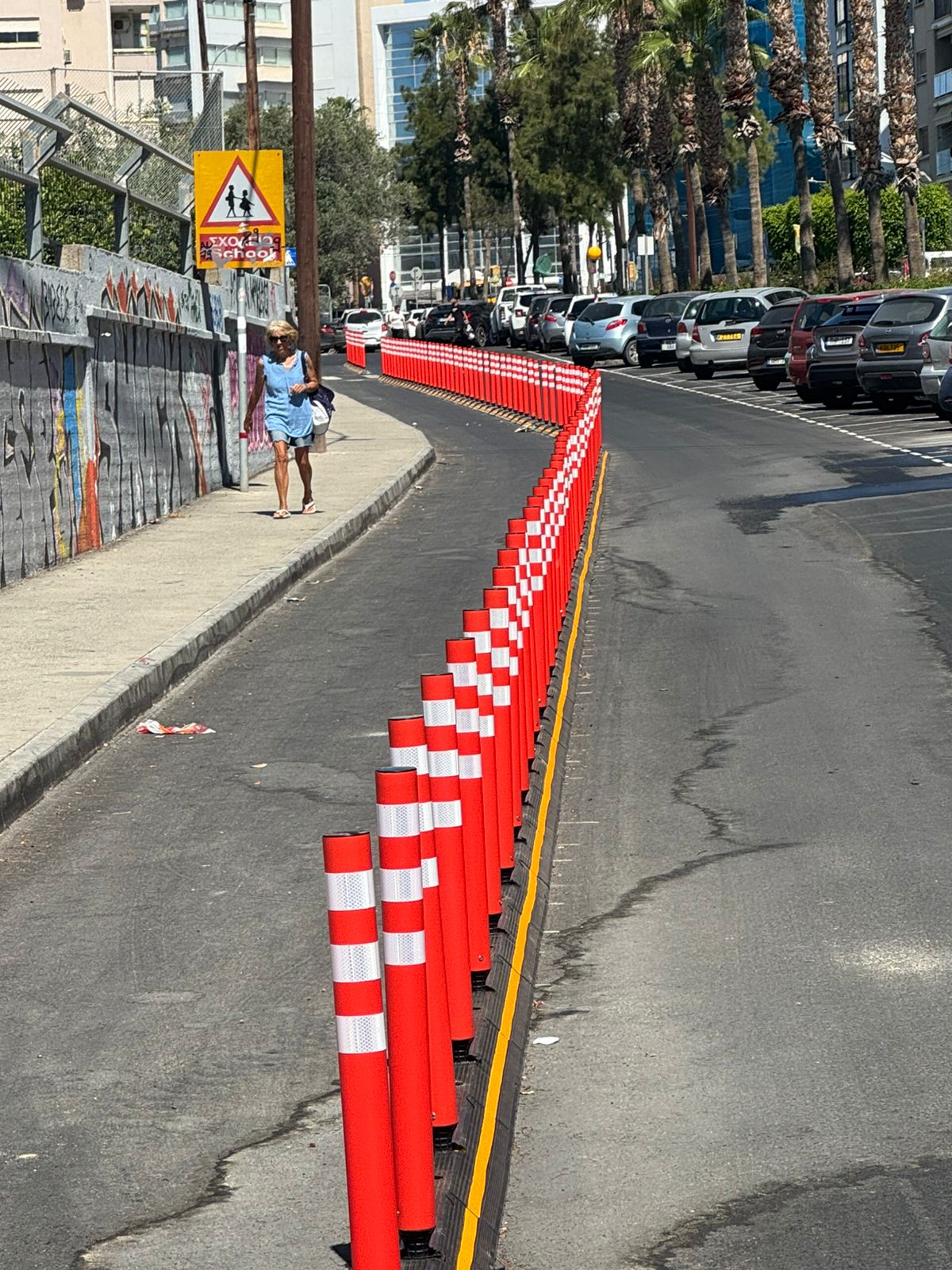
Bus lanes and the need for frequent services
Armeftis argued that bus lanes can only be effective if they are supported by a reliable public transport system.
“For a bus lane to function, a bus must pass every five to ten minutes. If it passes every half hour or every hour, it is not a bus lane,” he said.
He added that bus lanes cannot function in a fragmented way across small sections of roads, but require unified planning, linked to parking areas and an integrated transport network.
He also referred to the pilot We Drive programme, noting that such flexible transport solutions can help change mobility culture in Limassol.
Improvements after the first phase
The mayor said that areas requiring improvement have already been identified and that the municipality will seek specific interventions after the completion of the first phase of the works.
Among others, he referred to the creation of short‑stay parking spaces to serve residents and businesses, drop‑off and pick‑up zones for students, as well as widening pavements.
He added that the creation of additional parking spaces and other arrangements to facilitate the daily life of residents and professionals in the area is also under consideration.
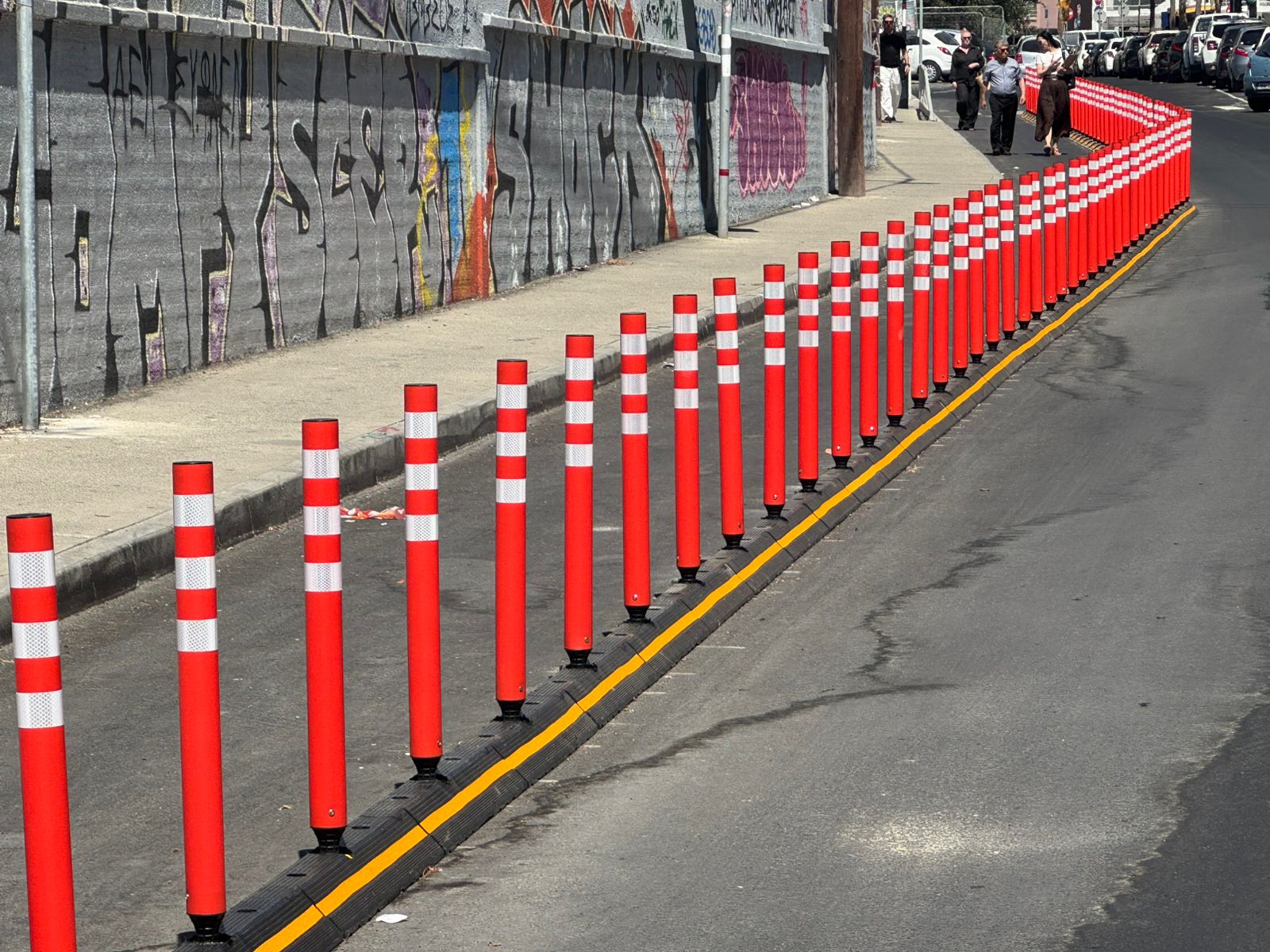
“I do not like the bollards either”
He made particular reference to the bollards that have sparked reactions.
“There is a negative aesthetic, it is problematic. People see them and get irritated. I do not like what I see. And people are justifiably annoyed,” he said.
At another point he added: “I do not like the bollards.”
However, he clarified that any changes must ensure the protection of infrastructure and cycle lanes, leaving open the possibility of examining alternative solutions after the completion of the first phase.
“People are suffering and are right to react”
Referring more broadly to Limassol’s traffic problem, Armeftis described the situation as particularly difficult, noting that the city needs both immediate and long‑term interventions.
As he said, projects such as the northern bypass road are necessary infrastructure for decongesting the city, while coordinated action from all competent authorities is also required.
“Every day people suffer and are justifiably angry and reacting,” he said, underlining that the aim is to fix the problems and maintain the city’s functionality without abandoning the effort for sustainable mobility.