
The ratification of the 2019 maritime memorandum between Turkey and Libya by Libya’s eastern-based House of Representatives has been brought before the UN Security Council by Greece, which described the deal as unlawful. Egypt and Israel have also issued strong objections. Their statements add to earlier reactions from Cyprus, Italy and the European Union.
Greece raises the issue in closed consultations
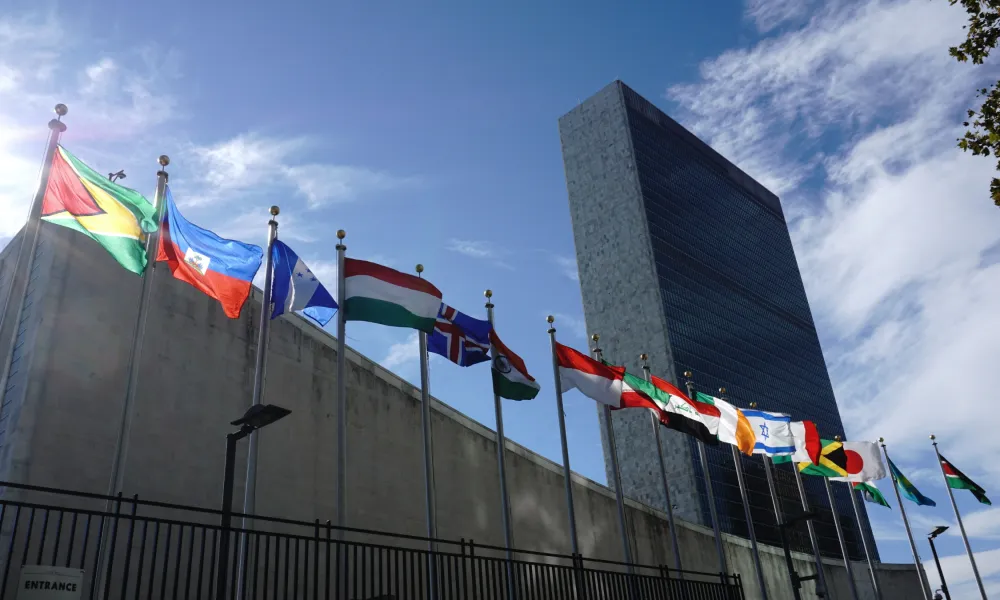
The matter was raised by Greece’s Permanent Representative to the United Nations, Ambassador Aglaia Balta, during closed-door consultations, on the instructions of Foreign Minister Giorgos Gerapetritis.
Ms Balta spoke in her national capacity, as Greece holds the presidency of the Security Council this month. She highlighted the risks the ratification poses to security and stability in the Eastern Mediterranean.
According to information reported by Philenews, Ms Balta stressed that “geography does not change” and that unilateral decisions cannot rewrite the international law of the sea. She added that Greece had approached the Libyan authorities in good faith and had engaged in talks on the delimitation of maritime zones.
Earlier positions submitted to the UN
This was the Council’s first discussion of the issue. Until now, the parties involved had set out their positions to the UN through official letters and maps.
Several countries in the region, including Cyprus, Egypt and Italy, had already reacted and sent related correspondence to the UN. France, a permanent member of the Security Council, has described the memorandum as void since 2020.
Libya’s stability and neighbouring states
Ms Balta reiterated Greece’s long-standing position in favour of ending foreign interference in Libya, saying the country should not become an arena for geopolitical rivalry.
Greece reaffirmed its support for the unification of Libyan institutions and for advancing the political process. However, it said these goals cannot be pursued at the expense of the sovereignty and sovereign rights of third countries. Nor, it said, can Libya’s stability be achieved by causing instability beyond its borders.
Egypt rejects the ratification
Egypt’s Ministry of Foreign Affairs issued a statement rejecting the ratification and warning Ankara that it would not accept any challenge to its sovereign rights in the Eastern Mediterranean.
“The Arab Republic of Egypt expresses its categorical rejection of the ratification, by the Libyan House of Representatives, of the Memorandum of Understanding signed in 2019 between the ‘Government of Fayez al-Sarraj’ and the Republic of Turkey,” the statement said.
Egypt said the memorandum is entirely void, has no legal force and produces no legal effect for Egypt, and that its ratification creates no legal consequences for Cairo.
According to the statement, the memorandum violates the principles of the international law of the sea and the provisions of the 1982 United Nations Convention on the Law of the Sea (UNCLOS) on the delimitation of the Exclusive Economic Zone and the continental shelf, which are based on the principles of justice and equity. Egypt described it as a clear infringement of its sovereign rights in its Exclusive Economic Zone and continental shelf.
Cairo recalled that it had already firmly opposed the memorandum and rejected any action by any party based on it. “To the extent that this Memorandum contravenes Egypt’s declared maritime boundaries, Egypt reserves its right to protect the rights guaranteed to it by international law and to confront any attempt to violate them,” the statement concluded.
Israel condemns the decision
Israel’s Ministry of Foreign Affairs also set out its position in a post on X.
“Israel strongly condemns the decision of the Libyan House of Representatives to ratify the Maritime Jurisdiction Memorandum between Turkey and Libya. This agreement violates the sovereign rights of our close allies in the region,” the ministry wrote, in an apparent reference to Greece and Cyprus.
“Unfortunately, once again we see Turkey acting to destabilise the Eastern Mediterranean region,” the post added.