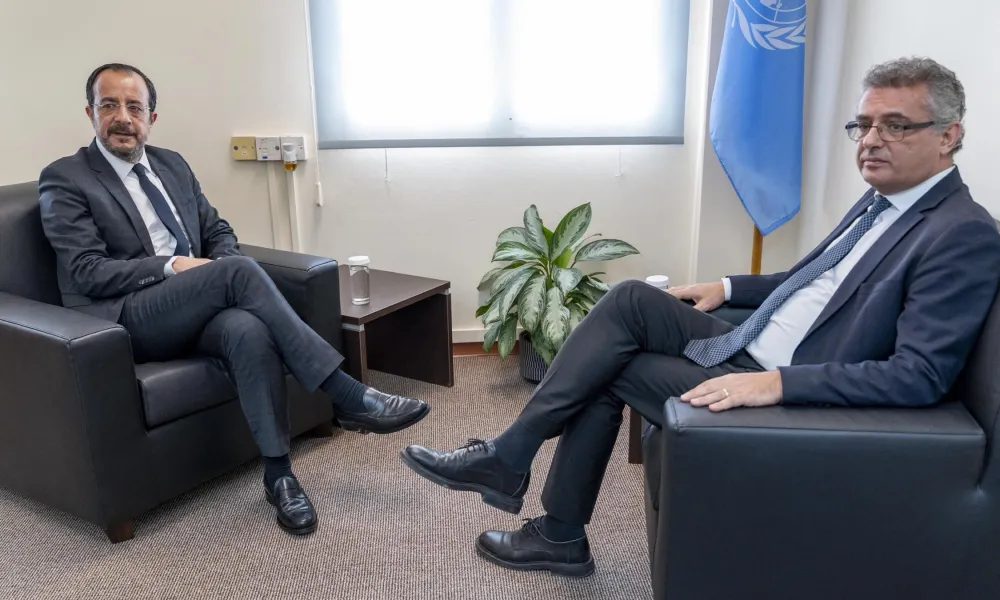

The two leaders will meet next Tuesday with three groups of Greek Cypriots and Turkish Cypriots tasked with finding ways to work together for the greater good of both communities.
According to sources, the leaders will hold a scheduled meeting 9am on Tuesday at the UN Good Offices in the Nicosia buffer zone, after which they will jointly attend consecutive meetings of the Technical Committees on Cultural Heritage and Youth, as well as the Standing Committee of the Consultative Body on Civil Society.
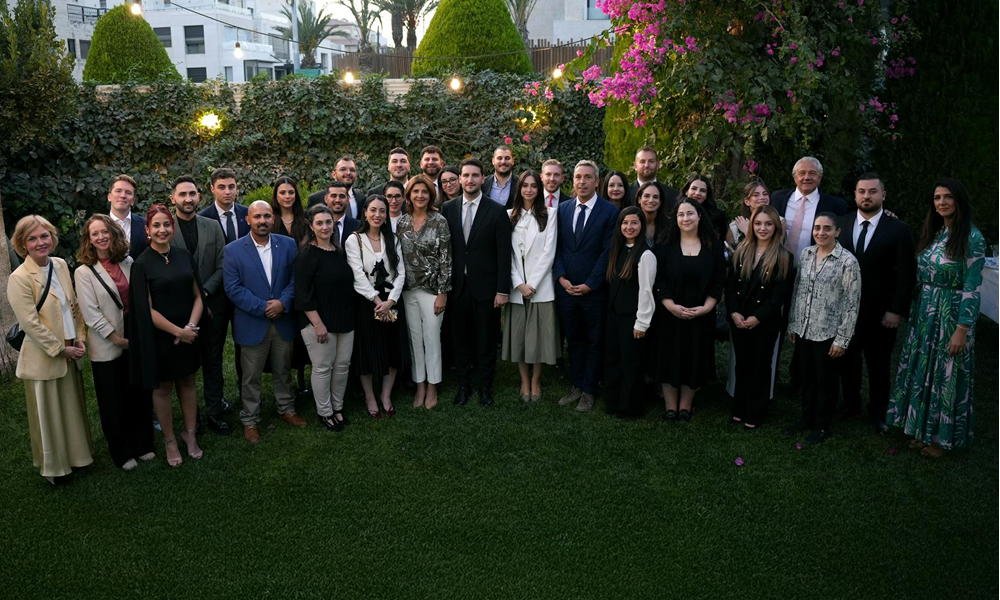
The meetings will provide a rare opportunity for the leaders to express political support to bicommunal efforts while giving both a chance to see up close how the three groups work together and, either over many years or in a brief space of time, have established effective mechanisms of cooperation.
Working together
Last Saturday, UN Personal Envoy María Ángela Holguín called on the leaders to start “working together” and to explore co-existence based on political equality.
Three days later, President Nikos Christodoulides and Turkish Cypriot leader Tufan Erhürman met, agreeing to jointly attend three bicommunal meetings and to proceed with initiatives on the environment and the exchange of cultural artefacts. Politis has learned the environmental measures relate to addressing microplastics and providing accessible information on island-wide air quality.
The leaders have agreed to meet again this Tuesday, followed by a joint attendance of three bicommunal meetings, ahead of Holguín’s expected arrival in Cyprus on Thursday.
Cultural heritage
The Technical Committee on Cultural Heritage (TCCH) is one of the most active and successful bicommunal committees. Established in 2008, the committee has over the years established a successful mechanism for cooperation on the maintenance, preservation, protection and restoration of shared cultural heritage across the island.
Since 2012, the committee has worked with EU funding and UNDP support to restore, conserve, structurally support or physically protect over 210 cultural heritage sites throughout Cyprus.
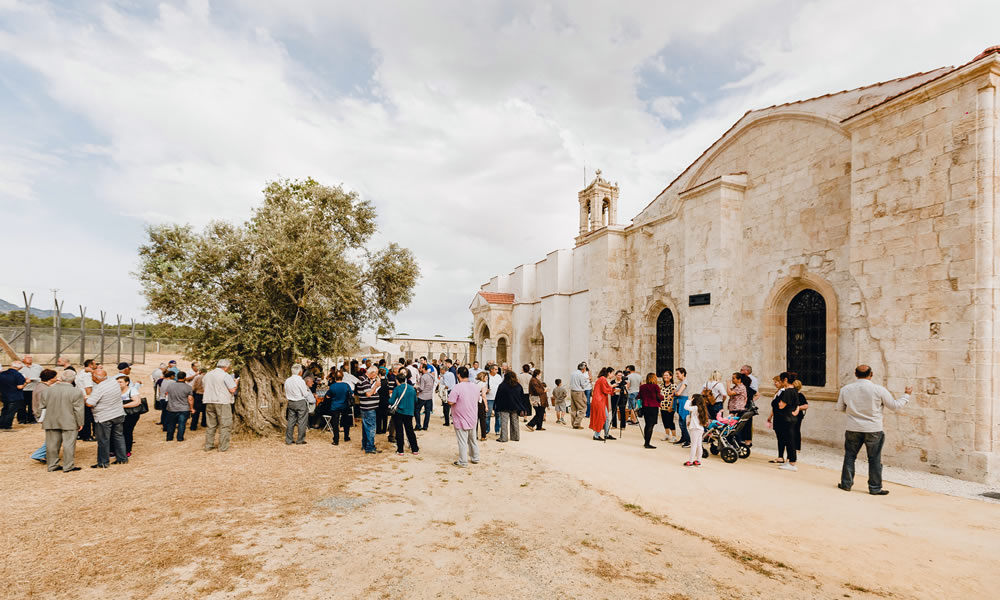
It has approached the issue from a shared heritage perspective, one that reflects multiple cultures and civilisations – allowing work to be done in an area formerly seen as a source of pain and condemnation.
Today, renovating a mosque, church or other monument of cultural heritage is seen as adding value to both former and current inhabitants of the location where it is situated, while simultaneously building trust and a culture of peace across the island. These attributes cannot be taken for granted in Cyprus, particularly when not all viewpoints consider the island’s cultural heritage as 'shared’.
Youth
This is the youngest ‘technical committee’, both in terms of date of establishment and as the name suggests, the average age of participants.
It comprises 32 members (an equal number of Greek Cypriots and Turkish Cypriots), from across the political spectrum, who meet at least twice a month at the Ledra Palace Hotel, and sometimes online too.
Co-chair Amalia Avraam told Politis that the last time the committee met with both leaders was at its inaugural meeting in May 2025 (when Ersin Tatar was in power).
Now, the leaders will have a chance to hear the committee’s achievements to date “and see first hand how well we collaborate”. The good relationship within the committee is what makes it successful, argued Avraam.
No hill too big to climb
“Of course, there are challenges, but we never got stuck anywhere. We keep going. We don’t face a deadlock that cannot be worked on. It’s a real-life example of how Greek Cypriots and Turkish Cypriots can work together,” she said.
The purpose is not to get stuck on repeating positions but to find ways to bring the youth from both communities closer together, she added.
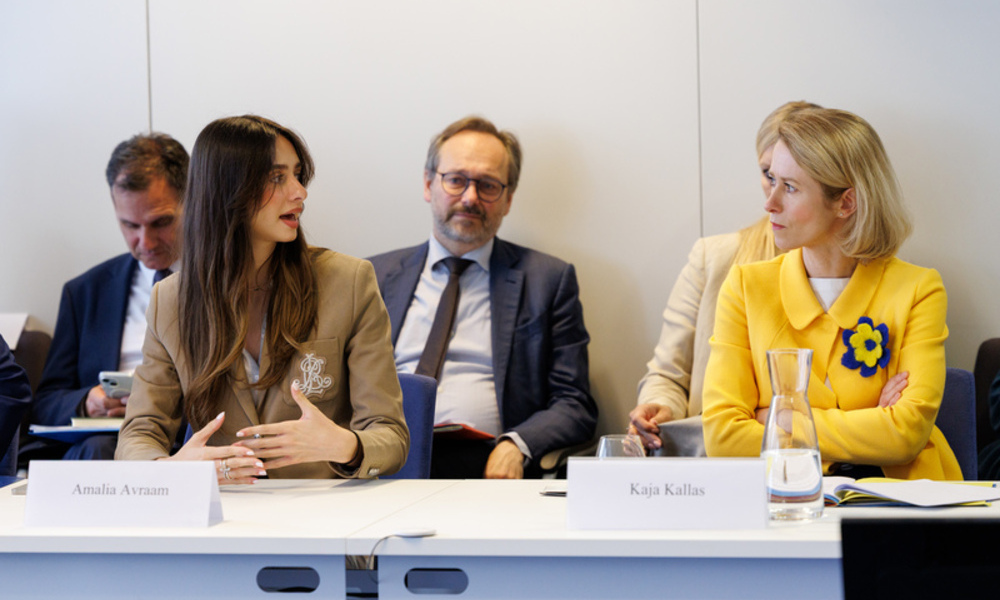
“We don’t see it as two representations within a committee… it’s one committee. If someone has an idea, we build on it.”
Avraam said the committee is currently drafting a policy paper for the leaders on the challenges facing youth in Cyprus and potential solutions, which she hopes the leaders will utilise. The committee is also preparing an event for youth to meet with professionals from both communities to discuss needs, opportunities, working environments.
Youth in peace talks
Another member, Christos Parmakkis, told Politis that the message he personally would like to give the leaders is to stress the importance of youth representation in the peace talks.
He referred to UN Security Council Resolution 2250 (2015) on Youth, Peace and Security, which recognises that young people are not merely victims of conflict or vulnerable to radicalization, but can be positive agents of peacebuilding, conflict prevention, reconciliation and social cohesion.
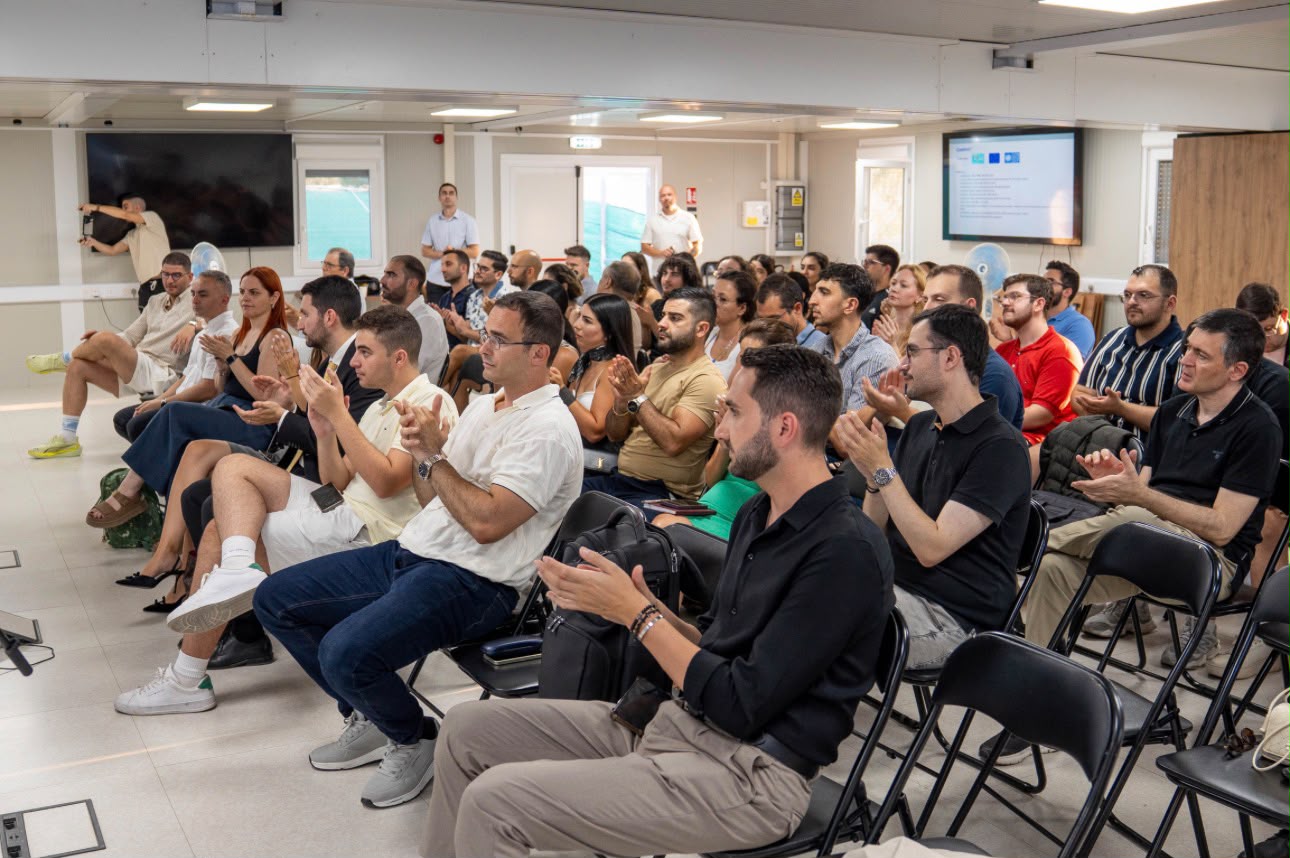
Parmakkis also suggested if a solution is reached, the body should become institutionalised, like a federal advisory council on youth.
Civil society
Lastly, the leaders will also meet on Tuesday with the 10-member Steering Committee of the Consultative Body for Civil Society.
Committee members were announced by the two leaders less than two months ago. One member, Alexandros Lordos, told Politis that the aim is to hold a first civic assembly in February or March 2027.
The Steering Committee meets roughly every two weeks to prepare the ground for this civic assembly which aims to be widely representative of society in both communities and to give a voice to the people on substantive issues.
The committee has a lot of practical issues to address before convening the first civic assembly, including the methodology of the process and ensuring that what is discussed by everyday people in the assembly will be conveyed to the leaders and seriously taken into account.
“This concerns us a lot,” said Lordos.
He argued that negotiations behind closed doors can sometimes lose sight of the needs of people. The civic assembly is a “good opportunity to anchor the talks on real concerns of the public” and to convey the pulse of the public to the leaders.
“We don’t expect it to impact core issues of the Cyprus issue, but to put a true social dimension to the talks.”