
Few cinematic experiences rival the thrill of fear. Horror films and thrillers have long attracted devoted audiences, but in recent years they have transcended genre boundaries, drawing in wider viewers while continuing to deliver suspense, dread and unforgettable atmosphere.
The films below are more than horror stories. They are journeys into strange worlds and distant eras, inviting audiences into landscapes where every shadow matters and every sound feels loaded with menace. This Halloween, dim the lights, make some popcorn and revisit a collection of classics that continue to define the art of cinematic fear.
These are films that teach us how old wood creaks in the dark, how rain falls on deserted bridges and how fear can seem almost tangible.
A dark, monochrome Europe
The journey begins in Germany in 1922, when cinematic horror was still taking shape.
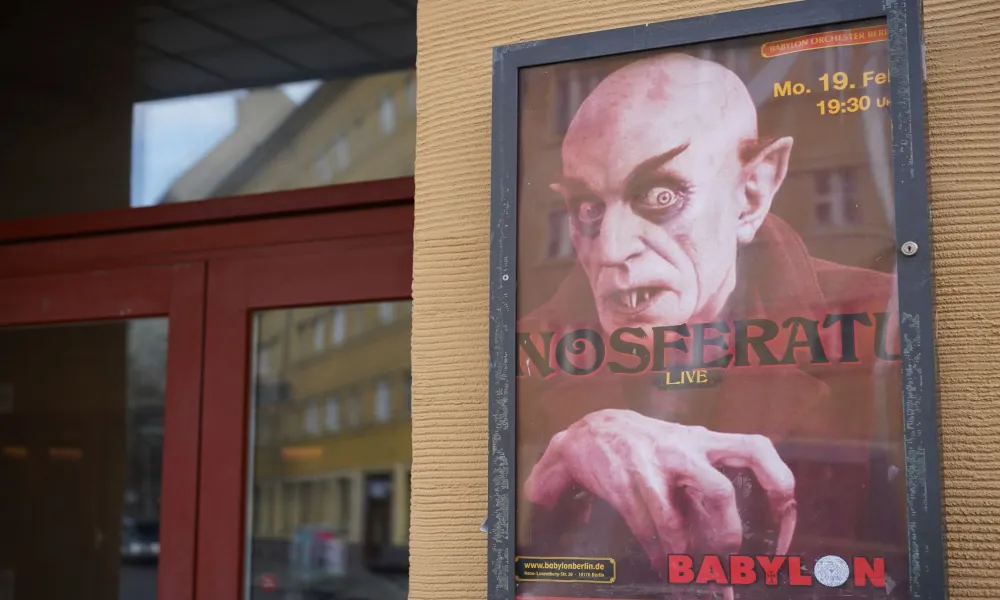
Nosferatu remains one of the foundations of the genre. F.W. Murnau's silent masterpiece travels from the legendary landscapes of Transylvania to the northern port city of Wisborg, passing through rattling bridges, smoky railway carriages and a castle that seems almost alive. In its shadows, interwar Europe becomes the backdrop for one of cinema's earliest nightmares.
Alongside it stands Vampyr (1932), Carl Theodor Dreyer's dreamlike tale set in rural France. Its dimly lit rooms, deserted countryside and ghostly imagery create an atmosphere that feels suspended between fairytale and nightmare, where unease lingers in every frame.
A leap forward brings us to Victorian England and The Innocents (1961), a haunting story centred on a governess, two children and a remote country house where the line between reality and imagination steadily dissolves. Acclaimed filmmaker Guillermo del Toro has described it as one of his favourite horror films, while François Truffaut once called it the best British horror film made after Alfred Hitchcock left for America.
Crossing the Atlantic
The journey continues with The Haunting (1963), adapted from Shirley Jackson's novel The Haunting of Hill House.
The film follows four paranormal investigators who spend time inside the infamous Hill House, a mansion with a deeply unsettling reputation. Its atmospheric black-and-white cinematography, innovative sound design and tightly controlled suspense have ensured its reputation as one of the genre's finest achievements.
From there, the route leads to New York City and Rosemary's Baby (1968).
Set largely within an Upper West Side apartment building, Roman Polanski's classic transforms Manhattan into a modern urban nightmare. A young couple move into a new apartment and find themselves surrounded by increasingly strange neighbours and disturbing events. When Rosemary becomes pregnant under mysterious circumstances, growing paranoia and fear begin to dominate her life.
Winter horrors and coastal nightmares
In The Shining (1980), Stanley Kubrick created one of the most iconic settings in horror cinema.
The snowbound Overlook Hotel in Colorado becomes a place of isolation, madness and supernatural terror. Aspiring writer Jack Torrance takes a winter caretaker job at the remote resort, hoping for inspiration. Instead, both he and his family become trapped in a waking nightmare as the hotel's dark forces slowly take hold.
The same year, John Carpenter's The Fog transported viewers to a small coastal California community haunted by a dark secret from its past.
As an eerie fog rolls in from the sea, so too do spirits seeking revenge. More than four decades later, the film remains one of horror cinema's most beloved cult classics.
Scotland and Venice after dark
The wild coastlines of Scotland provide the backdrop for The Wicker Man (1973).
The story follows a deeply religious police officer who travels to the isolated island of Summerisle to investigate the disappearance of a young girl. What he encounters is a secretive pagan community whose rituals become increasingly disturbing. Few films build dread so effectively while remaining so rooted in their setting.
Further south lies Venice, a city often associated with romance but capable of appearing far more sinister.
Don't Look Now (1973) follows a grieving couple who travel to Venice after the death of their daughter. There, they encounter two elderly sisters, one of whom claims to possess psychic abilities and delivers a chilling warning from beyond the grave.
The film's innovative editing and fragmented sense of time helped reshape the language of psychological horror and established it as one of the genre's true masterpieces.
From Germany to Japan
The journey returns briefly to Germany with Suspiria (1977), also noting the acclaimed 2018 remake.
Set within an elite ballet academy in Freiburg, the film follows a young dancer whose arrival coincides with a series of increasingly bizarre and terrifying events. Director Dario Argento transforms the school into a surreal labyrinth of colour, music and nightmare imagery, creating an experience that feels like a dark version of Alice in Wonderland.
The final destination is Japan.
Kwaidan (1964) remains one of the most visually distinctive ghost films ever made. Structured as an anthology of four supernatural tales, it combines traditional Japanese folklore with extraordinary imagery: paper-screen houses, glowing snow-covered landscapes and stylised faces that seem suspended between life and death.
Each story unfolds with patience and precision, relying on atmosphere and ancient legends rather than shocks to create its haunting effect.
The full Halloween watchlist
- Nosferatu (1922)
- Vampyr (1932)
- The Innocents (1961)
- The Haunting (1963)
- Kwaidan (1964)
- Rosemary's Baby (1968)
- The Wicker Man (1973)
- Don't Look Now (1973)
- Suspiria (1977)
- The Shining (1980)
- The Fog (1980)
Source: Travel.gr