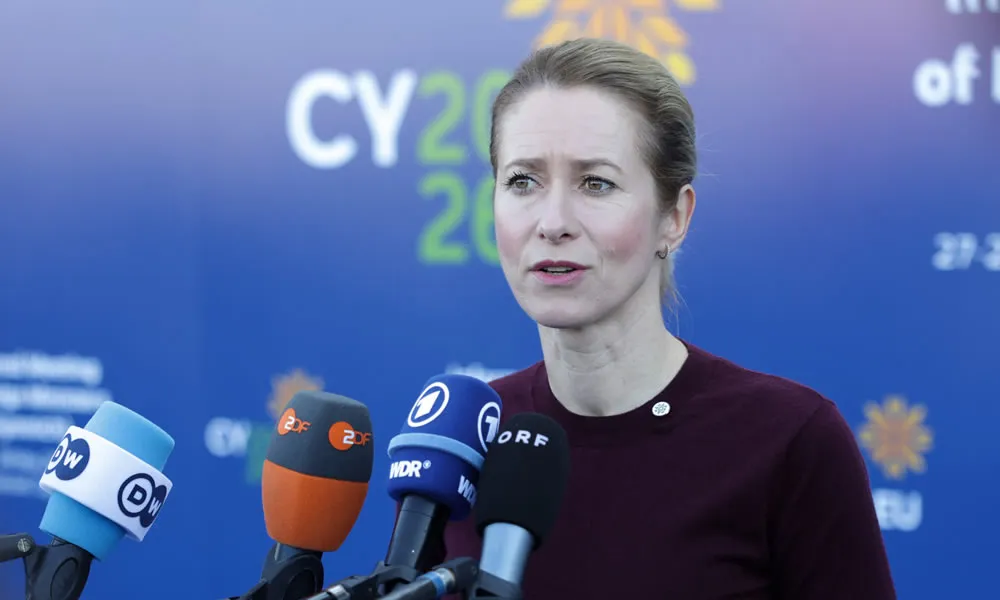
EU High Representative for Foreign Affairs and Security Policy and Vice-President of the European Commission Kaja Kallas, EU Commissioner for Enlargement Marta Kos, and EU Commissioner for Internal Affairs and Migration Magnus Brunner concluded a visit to Ankara on Tuesday, issuing a joint statement alongside Turkish Foreign Minister Hakan Fidan. The four officials voiced "support to the efforts by the UN Secretary-General on the Cyprus issue" and agreed on "the importance of regional stability and good neighbourly relations."
Broad agenda covering key EU-Turkey issues
Discussions covered EU-Turkey relations across a range of policy areas, including economic and trade cooperation, connectivity, migration, security, and foreign and security policy. The officials recalled Turkey's candidate status and acknowledged the strategic value of EU-Turkey relations in promoting regional stability and economic resilience amid a shifting geopolitical landscape.
On Ukraine, all four agreed that the European Union and Turkey share a commitment to upholding Ukraine's sovereignty and territorial integrity and to supporting a just and lasting peace based on international law. On the South Caucasus, they agreed to coordinate complementary efforts to contribute to regional peace and prosperity.
Trade, migration and financial cooperation
On the Customs Union, the officials reaffirmed their willingness to continue efforts to improve its implementation and pave the way for its modernisation, also agreeing that Turkey's potential participation in the Single Euro Payments Area (SEPA) would be beneficial. They welcomed the gradual resumption of European Investment Bank (EIB) operations in Turkey and underlined the importance of cooperation in trade, energy, transport and digitalisation.
On migration, the four acknowledged the geopolitical situation and its possible impact on population movements, expressing determination to work together on border management and the fight against migrant smuggling. They also discussed the Visa Liberalisation Dialogue and visa application procedures for Turkish citizens.
The EU side stressed the need to strengthen the rule of law, the protection of fundamental rights and high democratic standards, and recalled the importance of preventing the circumvention of EU sanctions by all states.
All four agreed to meet again and schedule further rounds of high-level dialogues before the end of the year, covering economy, trade, migration, security, health, science and innovation, and agriculture.
Cyprus issue: where talks stand
Cyprus has been divided since 1974, when Turkey invaded and occupied its northern third. Repeated rounds of UN-led peace talks have so far failed to yield results. The latest round of negotiations, held in July 2017 at the Swiss resort of Crans-Montana, ended inconclusively.
Following informal meetings in 2025 and a subsequent hiatus, deliberations are now under way for a new meeting in a broader format, as the term of UN Secretary-General António Guterres nears its end. María Ángela Holguín, Guterres' Personal Envoy on Cyprus, is tasked with engaging the parties.